
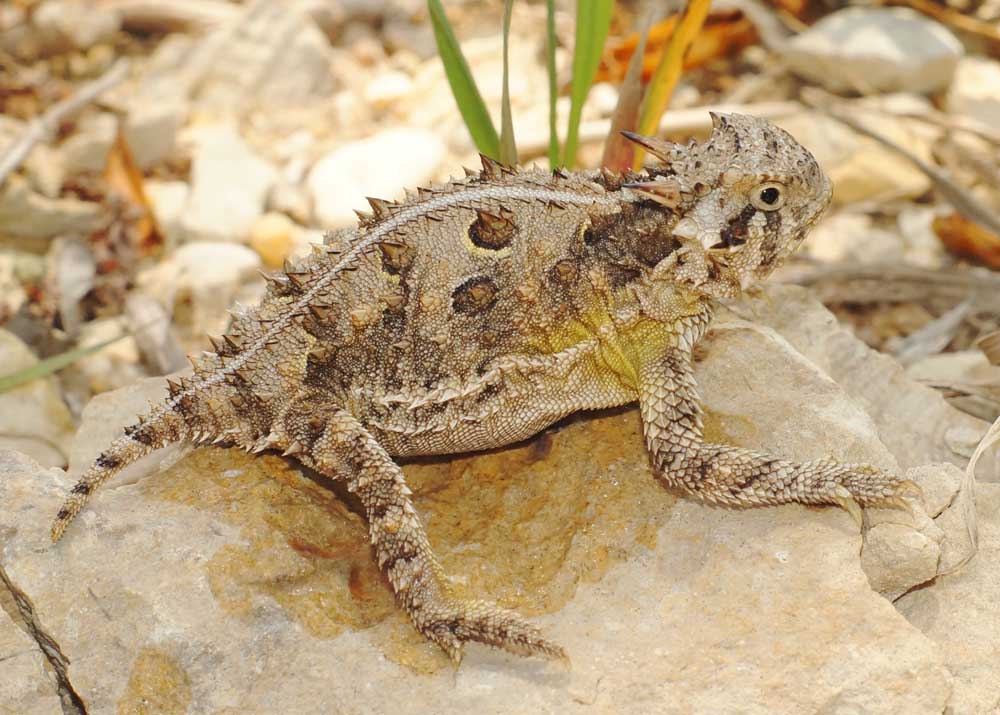
The zoo has built habitats designed specifically for mating pairs of the horned lizards and once the eggs are laid, they are moved to an incubator to increase their chances of survival.
The Caldwell Zoo in Texas announced that it has completed its 6th season hatching Texas horned lizards (Phrynosoma cornutum) , and in 2026, the zoo hatched three clutches for a total of 64 hatchlings.
“We had three different clutches, and all together, we have 64 hatchlings,” Dallas, with the zoo said in a video showcasing the lizards. “This breeding program is super special and important because Texas horned lizards are disappearing throughout the state. So working together with Texas Parks and Wildlife, we are able to breed them and have lots of little baby hatchlings, grow them up big and strong, and then be able to release them back out onto the landscape.” The little lizards lay about 15 to 30 eggs per clutch, though the clutch size can range from 10 to 40 eggs. Females lay one clutch a year and it takes about 6 to 8 weeks for the eggs to hatch, depending on the temperature.
The zoo has built habitats designed specifically for mating pairs of the horned lizards and once the eggs are laid, they are moved to an incubator to increase their chances of survival. As they hatch, the lizards are moved to a climate controlled environment where they are fed termite larva, frutflies and crickets.
Texas Horned Lizard Information
Horned lizards (Phrynosoma), often called “horny toads” or “horned frogs” are quite possibly the most gregarious genus of lizard species in North America. Of the 15 known horned lizard species in the United States, the Texas horned lizard is the most widely distributed. Once abundant in much of the Southwest, the Texas horned lizard has disappeared from much of its range in Texas and Oklahoma. It is listed as Threatened by the state. This is due to a variety of factors, including loss of habitat, planting of non-native grasses, conversion of land to pastureland and agricultural use, and the introduction of the invasive fire ant, which preys upon the native ants that horned lizards require to survive. These little dinosaurs do not make good pets because they require a steady diet of harvester ants.