
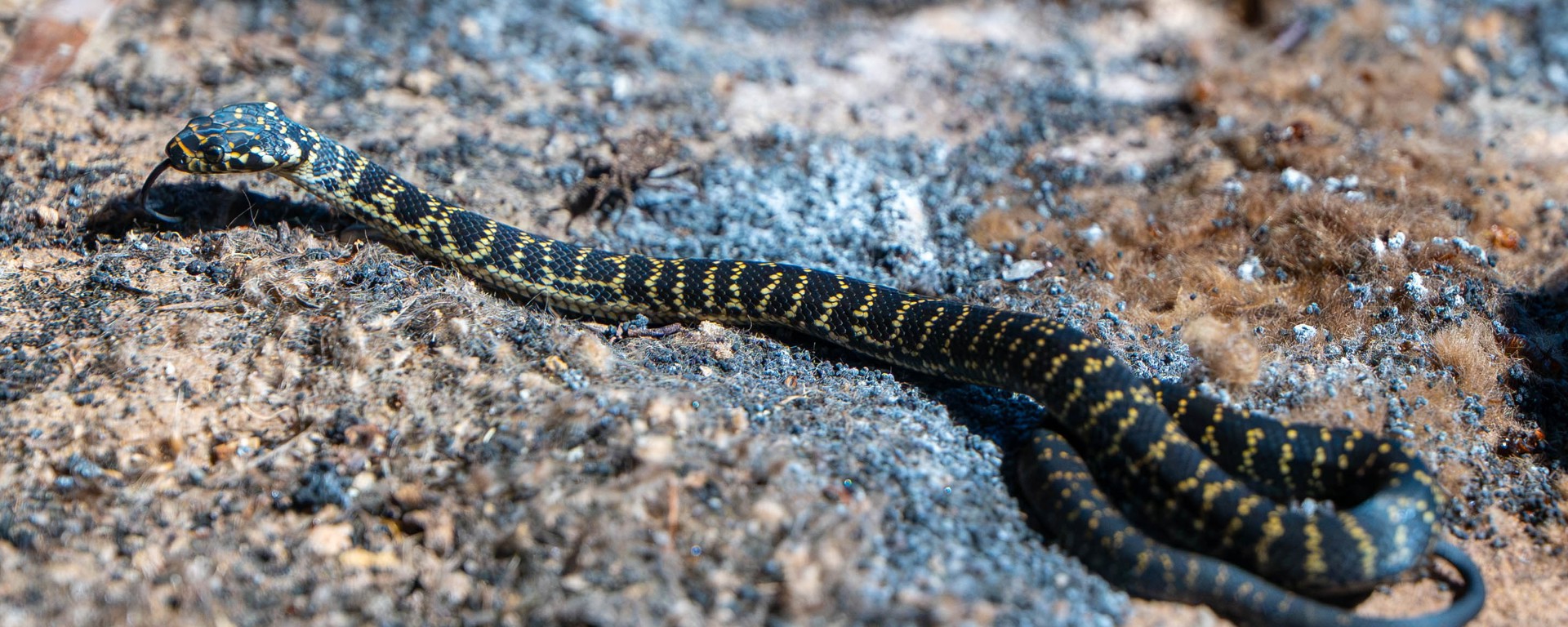
The world-first reintroduction project is led by UTS wildlife ecologist Professor Jonathan Webb, who has studied the species for more than 34 years.
Four of six captive-bred juvenile broad-headed snakes (Hoplocephalus bungaroides), one of Australia’s most endangered snakes, have survived the critical first few months following their release into the wild, according to a news article in the University of Technology Sydney. The snakes are part of a reintroduction program led by the University of Technology Sydney (UTS), conservation organization Aussie Ark, and Traditional Owners of the Shoalhaven region.
The world-first reintroduction project is led by UTS wildlife ecologist Professor Jonathan Webb, who has studied the species for more than 34 years. Eight snakes have been bred through the Aussie Ark program, which began in October 2024. Two were retained for their genetic value, while six juveniles were released at habitat restoration sites in May 2026.
Webb’s long-term monitoring revealed that the population declined during the 2017-2019 drought. The 2020 bushfires further affected the species, with little breeding recorded over the following three years. By 2023, the monitored population had declined by approximately 64 percent.
Broad-headed snakes have a slow reproductive cycle, taking up to five years to reach adulthood, with females reproducing only every two or three years. This makes populations particularly vulnerable to habitat loss and other disturbances.
Removal of Sandstone Rock for Decorative Purposes Harms Australian Broad-headed Snake
The reintroduction project also involves Indigenous rangers, who are receiving training and support to monitor the snakes and protect their habitat. Researchers are conducting fortnightly surveys to track survival and assess the effectiveness of the release sites.
The juvenile snakes were released beneath specially designed artificial rocks developed by UTS researcher Dr. Benjamin Croak. The structures mimic the thermal properties of natural rocks and provide shelter, protection, and access to prey.
Broad-headed Snake Information
Broad-headed snakes are nocturnal and spend the day sheltering beneath rocks, where they also rely on retained heat to regulate their body temperature.
The species is restricted to rocky escarpments in the Sydney sandstone basin and surrounding ranges. Habitat destruction, bushfires, drought, and the removal of natural bush rocks for landscaping have contributed to its decline.
Webb and his partners plan to restore additional habitat and release more captive-bred snakes at selected locations as the program progresses.