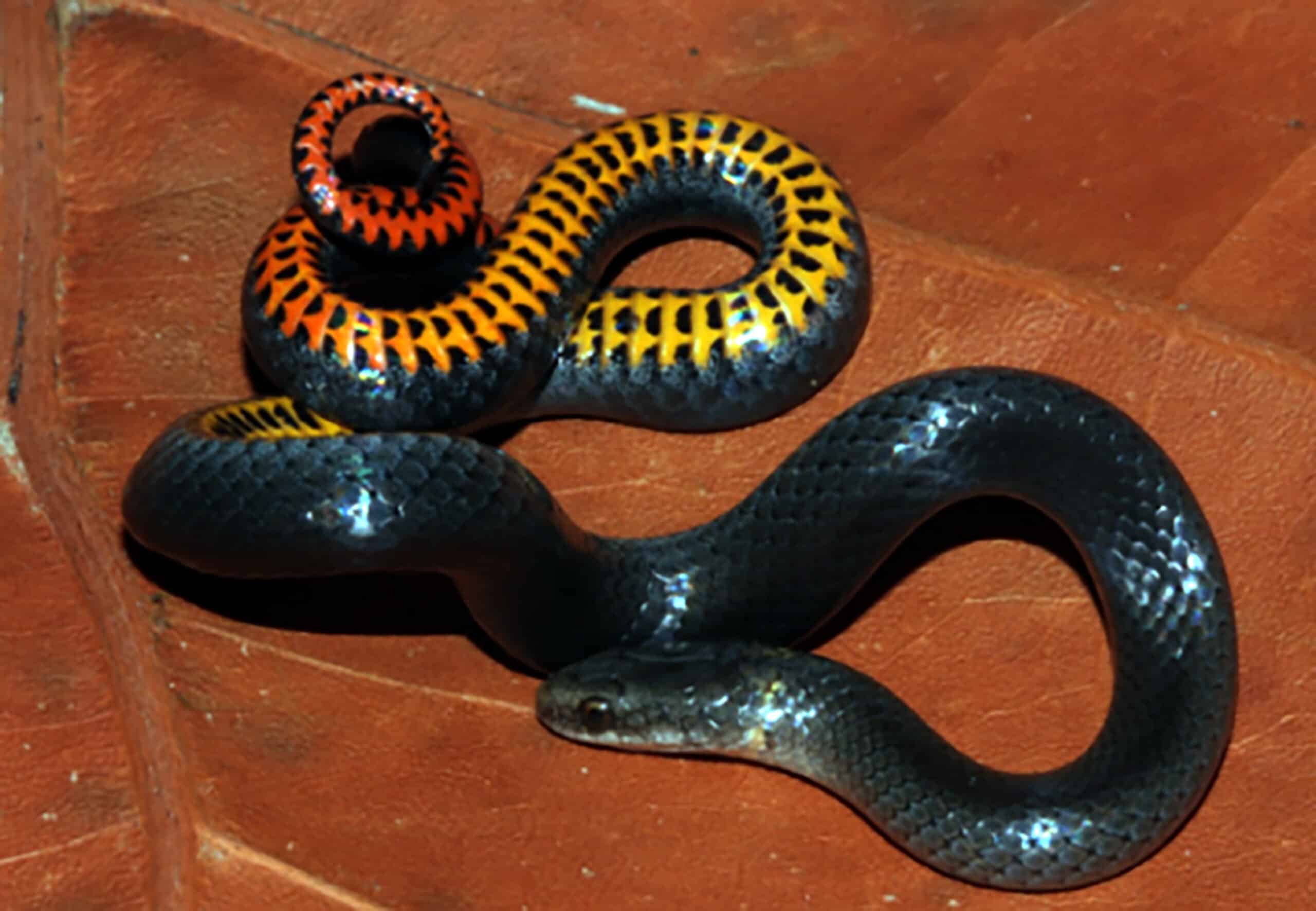
The Key ring-necked snake and the rim rock crowned snake are small, non-venomous snakes that are found in limestone outcroppings.
Two of the rarest snakes in the state of Florida have been listed by the U.S. Fish and Wildlife Service as endangered in an effort to help conserve the two species. The snakes, the Key ring-necked snake (Diadophis punctatus acricus) and the rim rock crowned snake (Tantilla oolitica) are small, non-venomous snakes that are found in limestone outcroppings in the state’s pine docklands and dockland hammocks. These are ecosystems unique only to Florida and the Bahamas. The Key ring-necked snake is only known to exist in the Florida Keys. Rim rock crowned snakes are found in Miami Dade County and certain parts of the Florida Keys. They are both protected under Florida law and are listed as threatened species by the state.
USFWS Proposes Listing Rim Rock Crowned Snake, Key Ringneck Snake As Endangered
“Florida’s extraordinary wildlife and habitats are found nowhere else in the world, and protecting them takes strong partnerships and sound science,” said U.S. Fish and Wildlife Service Southeast Regional Director Mike Oetker. “This listing reflects our commitment to working with landowners, tribes, state and local agencies, and other partners to conserve these species and the ecosystems they depend on, ensuring they remain part of Florida’s natural heritage for future generations.”
Key Ringneck Snake Information
Key ringneck snakes (Diadophis punctatus acricus) are tiny snake that grows to about six inches in length. It is gray in coloration with a red and yellow belly. It also has a muted orange ring around its neck that is often absent in certain individuals. It is only known to exist in the Florida Keys
Rim Rock Crowned Snake Information
Rim rock crowned snakes (Tantilla oolitica) was once found throughout Central Florida south to the Keys in pine rocklands. It is currently listed as threatened in the state. The snake is listed as Endangered by the International Union for Conservation of Nature (IUCN) Red List of Threatened Species. It is currently only known to exist in Dade and Monroe County in Florida, as well as the Florida Keys. The reptile grows to about 11.5 inches in length. It has a black head and tan and beige coloration on its back. The feed on invertebrates, including spiders, centipedes, worms, other insects and their larva and scorpions. The snake is named after the Miami rim rock land and oolitica refers to the oolitic limestone where the species is found.