
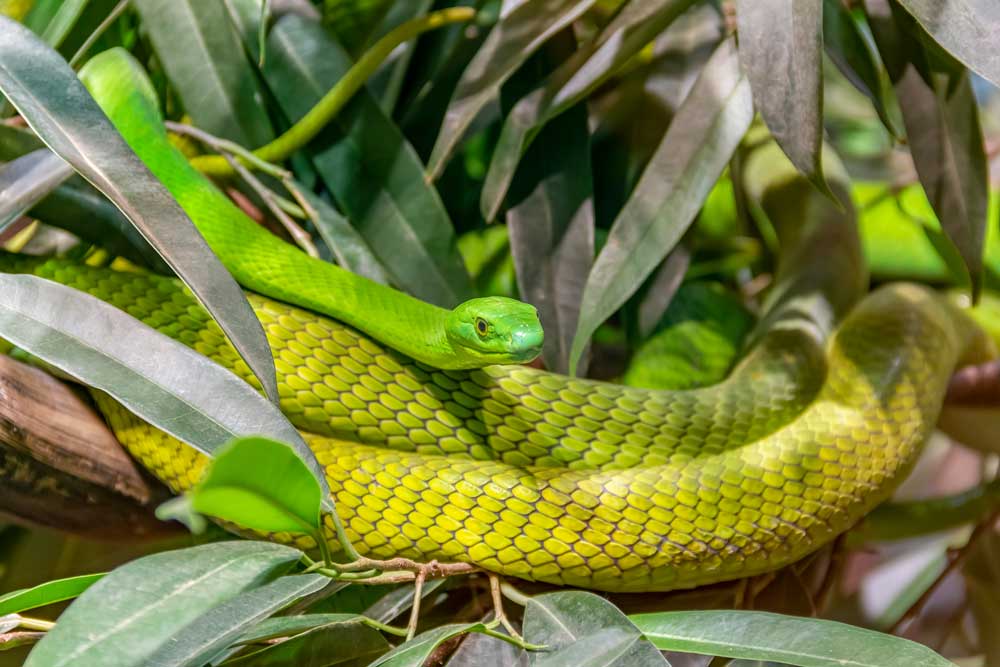
The most colorful snakes are likely venomous, according to a study published in the Journal of Animal Ecology. Like poison frogs that are a wide array of colorations, many snake species that have bright or unique colorations are likely venomous.
The most colorful snakes are likely venomous, according to a study published in the Journal of Animal Ecology. Like poison frogs that are a wide array of colorations, many snake species that have bright or unique colorations are likely venomous. These colorations and patterns, the study says, warn other animals that these reptiles may pack a venomous punch.
Researchers Amy Duclaux, Michel Dugon and Kevin Healy of the Zoology Department, School of Natural Sciences, University of Galway, Galway, Ireland note that there is more to the warning signs than the bright colorations. While these colorations may deter predators, a venomous snake’s coloration can also be connected to its venom and the ecosystem in which it lives.
Snakes are an ideal group for studying warning colorations because they come in bright colors, like coral snake species, as well as camouflaged colorations like many of the pit viper species. The researchers studied whether the ppearance of these reptiles are linked to their ability to defend themselves and if their habitats and daily activity and type of prey they consume may influence how bright their colorations are.
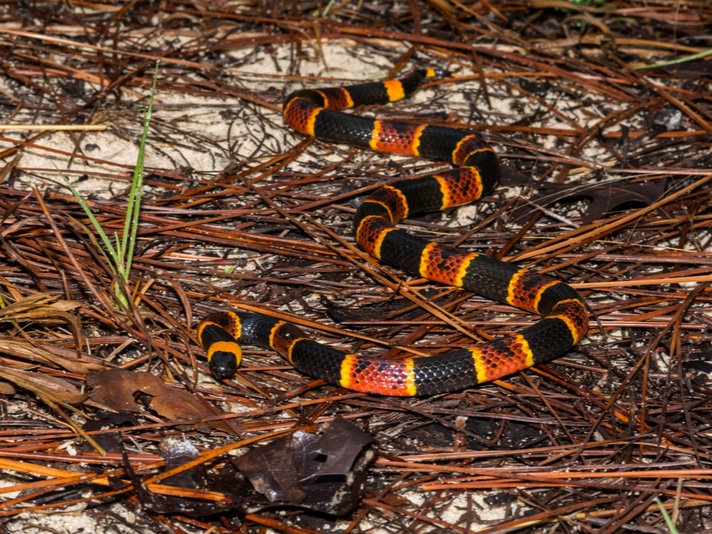
The venomous Eastern coral snake. Photo by Jay Ondreicka/Shuttertstock
The researchers used photographs of snakes taken in their natural surroundings. Databases such as iNaturalist provided thousands of photographs of accurately identified snakes. This gave the researchers the information they needed to compare coloration and habitat across many snake species.
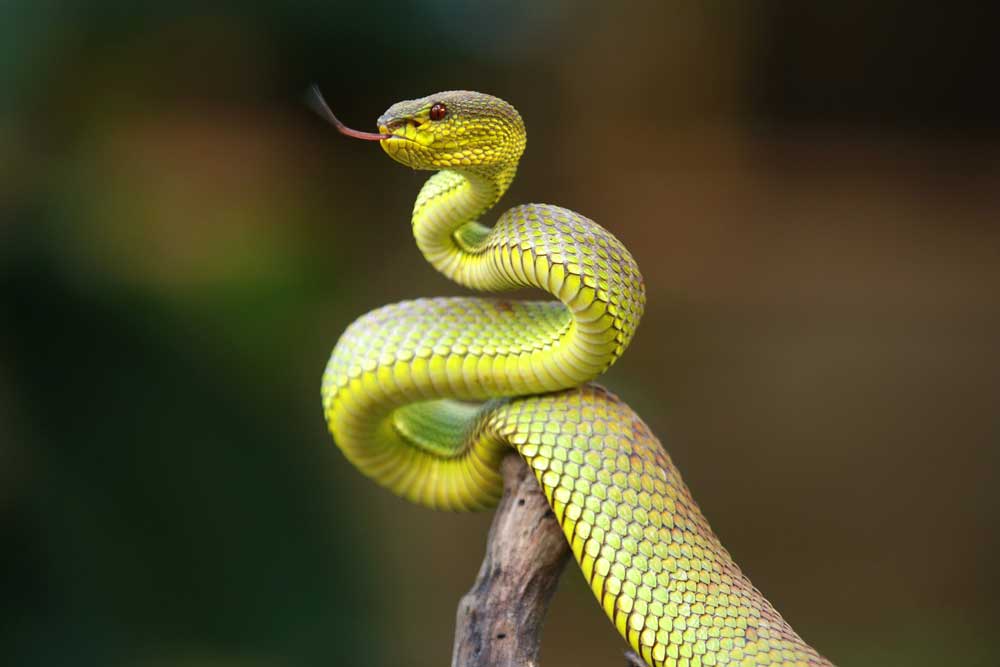
Green mangrove pit viper. Photo by Mufti Adi Utomo/Shutterstock
The study focuses on several characteristics, including whether a species is venomous, how powerful its venom is and whether its venom contains components that cause pain. The researchers also examine whether snakes with banded or otherwise distinctive patterns are more likely to be conspicuous.
The researchers believe that snakes with more obvious warning colors will be more likely to be venomous and may have venom specifically suited for defense. They also suggest that snakes with highly conspicuous colors may have less powerful venom because predators could learn to avoid them after previous encounters.
The study also looked at snakes that are active during the day and those that are primarily nocturnal. A snake that encounters visually oriented predators during daylight hours may face different pressures than one that spends most of its time hunting at night.
Habitat could play another role. Snakes living in trees, on the ground or in water face different predators and may be visible from different directions. A snake’s coloration may therefore reflect not only what predators can see, but where those predators are likely to encounter it.
The researchers considered snakes are predators themselves. While conspicuous colors may warn predators to stay away, they could potentially make a snake easier for its own prey to spot. The importance of that trade-off may depend on what a snake eats and how well its prey can see color.
The complete paper, Contextually conspicuous species are more likely to be venomous: Habitat-dependent aposematic colouration found throughout snakes” can be read on the Journal of Animal Ecology website.