
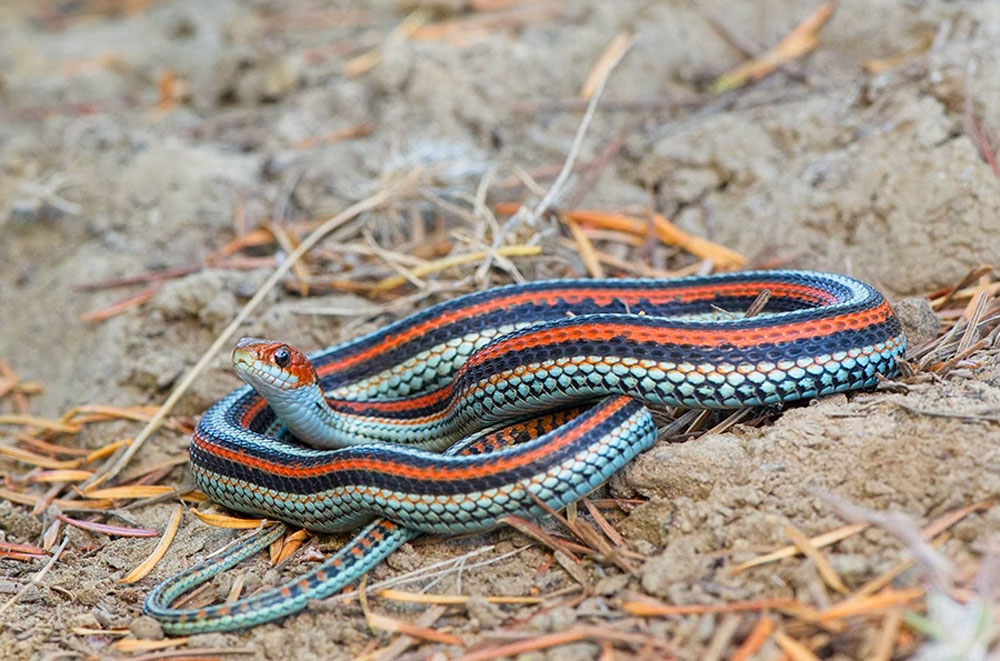
The San Francisco garter snake is endemic to San Mateo County and a small portion of Santa Cruz County. It was among the first species protected under the Endangered Species Act
Sixty-two captive-raised San Francisco garter snakes (Thamnophis sirtalis tetrataenia) have been released into the wild in San Mateo County, California, marking the first successful release under a collaborative head-starting program designed to help the endangered species to recover.
The snakes were born and raised at the San Francisco Zoo after pregnant females were collected from a healthy population on a Midpeninsula Regional Open Space District (Midpen) preserve in 2025. Following birth, the females were returned to the wild, while their offspring remained at the zoo until they reached a size that improved their chances of surviving predation and competition for food.
“This is an extraordinary accomplishment for everyone who has worked for generations to protect this remarkable species,” Midpen biologist Karine Tokatlian said in a San Francisco Zoo press release. “Seeing these young snakes returning to the wild represents years of research, collaboration, habitat restoration and careful conservation work.”
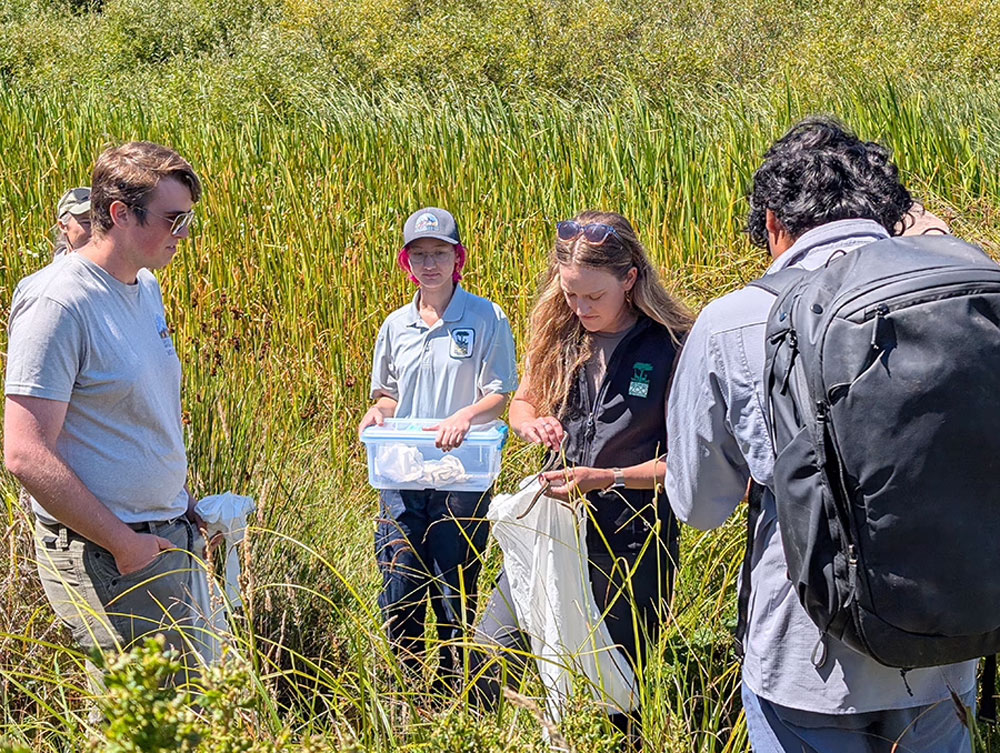
San Francisco garter snakes about to be released. Field photos courtesy of Vishal Subramanyan and Midpeninsula Regional Open Space
The San Francisco garter snake is endemic to San Mateo County and a small portion of Santa Cruz County. It was among the first species protected under the Endangered Species Act and appeared on the U.S. Fish and Wildlife Service’s first endangered species list in 1967. It is estimated that a few thousand individuals remain in the wild.
Before release, each snake underwent genetic testing to help determine appropriate release locations and improve genetic diversity among existing populations. Approximately one-third were returned to their mothers’ original habitat, while the remaining snakes were distributed among other populations.
Largest Number Of San Francisco Garter Snakes Found On San Francisco Airport Land
The species faces numerous threats, including habitat loss and fragmentation, drought, disease, invasive species, declining prey populations, vehicle strikes and illegal collection. Habitat restoration efforts also benefit California red-legged frogs, an important food source for the snakes.
“This effort illustrates what can be achieved when partners prioritize rigorous scientific research, genetic testing, habitat conservation, and specialized care,” Justin Sloan of the U.S. Fish and Wildlife Service said.
The project involves Midpen, San Francisco Zoo & Gardens, the U.S. Geological Survey, National Park Service, U.S. Fish and Wildlife Service, California Department of Fish and Wildlife and other conservation organizations.
More than 130 additional San Francisco garter snakes were born at the zoo in 2026 and are being raised for release in 2027. Researchers will monitor released snakes to evaluate survival and determine how the program affects wild populations.
The long-term recovery goal is to establish at least 10 viable, self-sustaining populations, each containing a minimum of 200 snakes, a requirement for potential removal from the federal endangered species list.
San Francisco Garter Snake Information
The San Francisco garter snake was placed on the Endangered Species list in 1967. It has been estimated that only 1000 to 2000 adult snakes remain in the wild. It feeds primarily on the California red-legged frog and can be found in densely vegetated bodies of water with ample areas for basking. The species is at risk due to decline of the California red-legged frog and the introduction of the American bullfrog to the garter snake’s natural range. The bullfrog feeds on the snake and the California red-legged frog.