
The USFWS cited the incoming high tides and potential dangerous surf conditions resulting from Hurricane Polo, which is churning off the Baja Peninsula and is currently a Category 5 Hurricane.
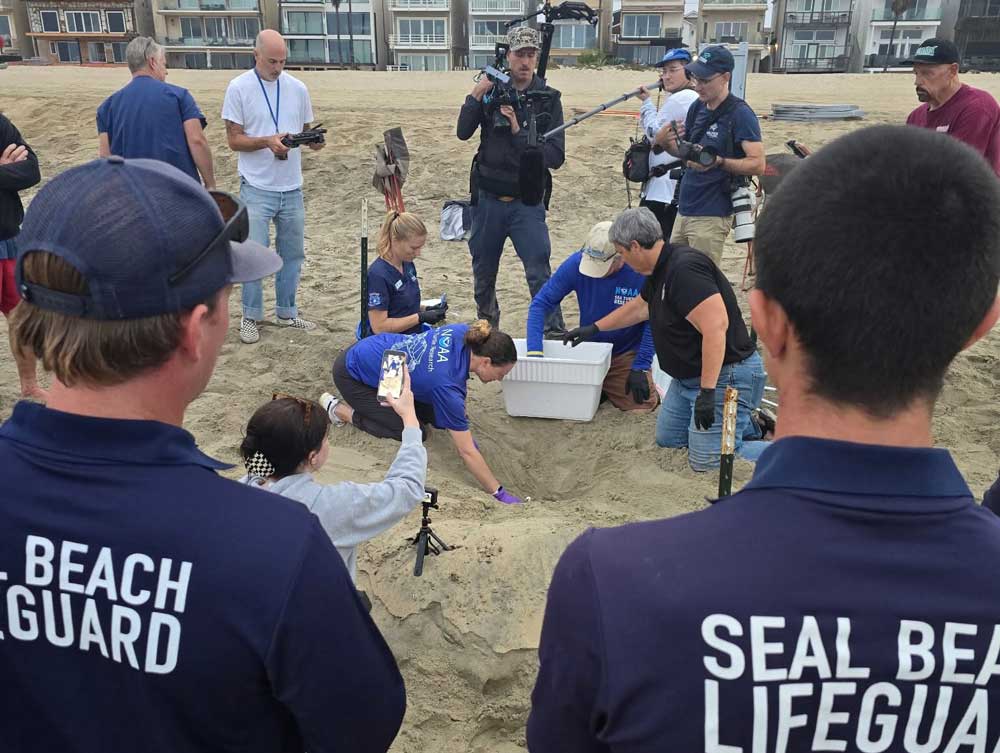
The U.S Fish and Wildlife Service announced September 25 that it has moved more than 200 olive ridley (Lepidochelys olivacea) sea turtle eggs that were laid in two nests in Seal Beach and Huntington Beach, California. The USFWS cited the incoming high tides and potential dangerous surf conditions resulting from Hurricane Polo, which is churning off the Baja Peninsula and is currently a Category 5 Hurricane with sustained winds of about 180 mph (285 km/h). Large swells are expected to hit Huntington Beach Sunday through Thursday.
The eggs were moved to the Aquarium of the Pacific in Long Beach where they will be incubated in a temperature-controlled environment in hopes that they hatch in 45 to 60 days.
NOAA Fisheries West Coast announced September 22 that an olive ridley sea turtle (Lepidochelys olivacea) was observed digging a nest and laying her eggs on a beach in Surfside, CA. This marked the first-ever recorded sea turtle nesting event of any species on the West Coast of the United States. And three days later, according to NOAA, a second olive ridley sea turtle was observed a few miles south laying her eggs in Huntington Beach, near that city’s world famous pier.
Olive Ridley Sea Turtle Lays Eggs On Southern California Beach
The olive ridley turtle is the smallest of the sea turtles, reaching about 100 lbs and about 2.5 to 3 feet in length. They live up to 50 years and are found worldwide, but primarily are found in the tropical waters of the Pacific, Indian, and Atlantic oceans. The Pacific populations primarily nest in Mexico, Nicaragua, Costa Rica and Panama. This is the first recorded occurrence of any sea turtle nesting on a Southern California beach.