
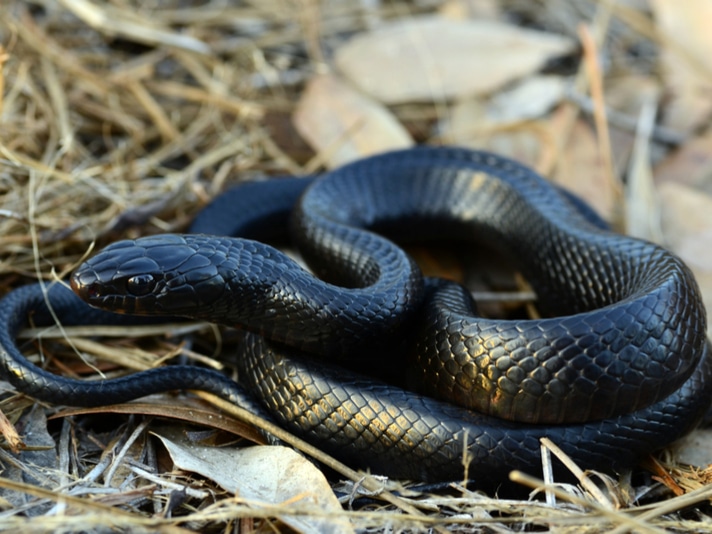
The Nature Conservancy’s Apalachicola Bluffs and Ravines Preserve (ABRP) in the Florida Panhandle were the recipients of 21 eastern indigo snakes on April 28, with 21 released into Alabama’s Conecuh National Forest on May 8.
A total of 42 juvenile Eastern indigo snakes (Drymarchon couperi) have been released in the state of Florida as part of a captive breeding effort designed to reintroduce the non-venomous snakes into restored habitat. The captive breeding program and release effort, led by the The Nature Conservancy and the Central Florida Zoo’s Orianne Center for Indigo Conservation, is the 10th release effort since the programs inception in 2017. The Nature Conservancy’s Apalachicola Bluffs and Ravines Preserve (ABRP) in the Florida Panhandle were the recipients of 21 eastern indigo snakes on April 28, with 21 released into Alabama’s Conecuh National Forest on May 8.
“Every release adds another layer of critical data that helps us understand how these snakes are adapting, surviving, and reproducing in the wild,” Dr. James Bogan, Director for the Central Florida Zoo’s Orianne Center for Indigo Conservation said in a statement released to the media June 4. “Over time, that information is what transforms a reintroduction effort into a self-sustaining population recovery.”
Eastern Diamondback Rattlesnake Survives Getting Swallowed By Eastern Indigo Snake
The snakes are bred and hatched at the OCIC and reared with participating wildlife facilities until they’re released into restored habitat. The snakes are cared for and monitored for one year before they are transferred to a partner agency, where they grow for an additional year before they are released into the wild.
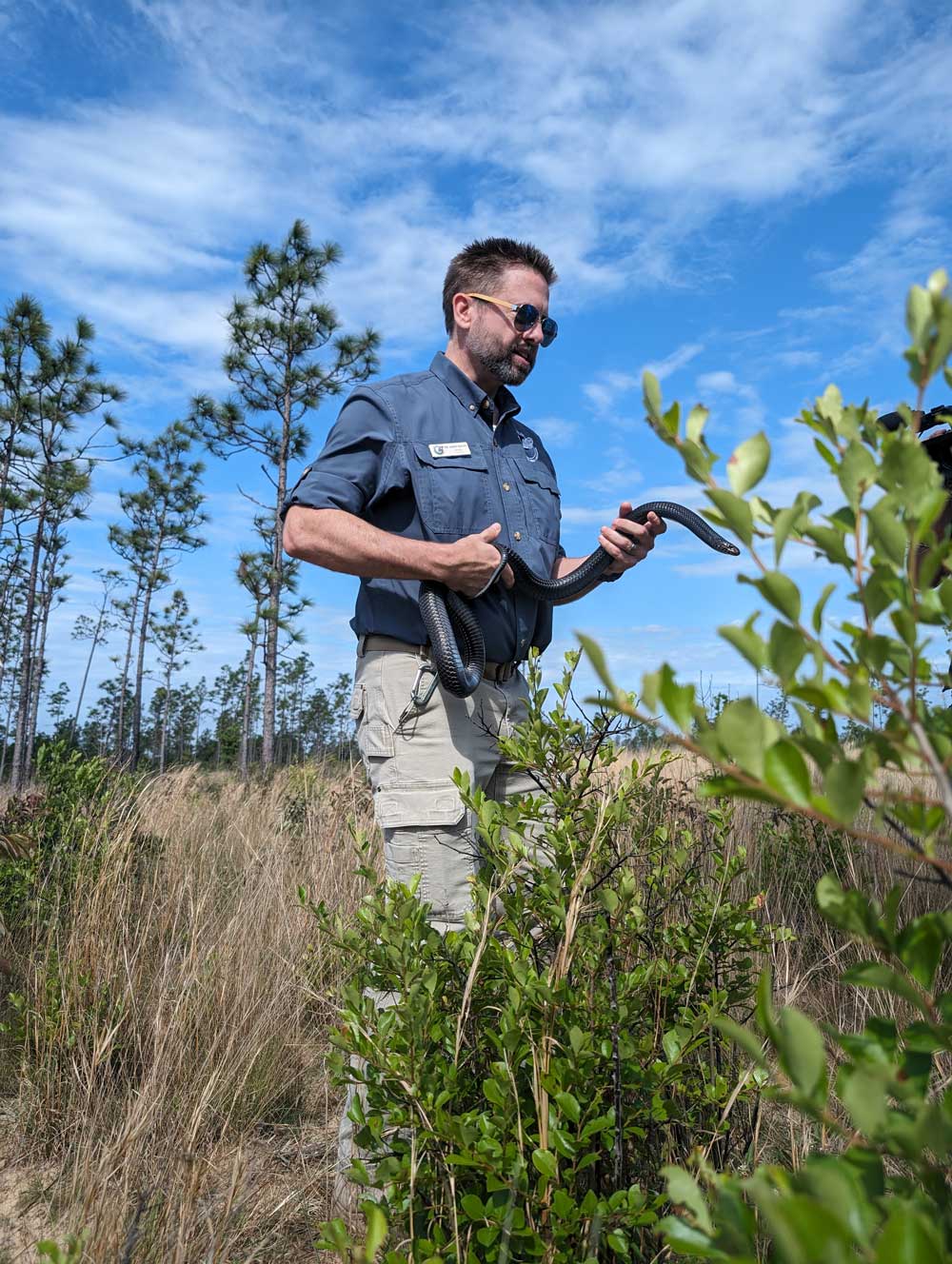
Dr. James Bogan of OCIC and an Eastern indigo snake April 30, 2024. Photo credit The Nature Conservancy in Florida
The released snakes are tagged and monitored and signs of success are documented. A survey in 2024-2025 yielded a female snake released in 2019 and 19 other snakes released between 2020 and 2024. A six foot long male and two wild born hatchlings from parents of the captive breeding group have also been observed. This, the researchers say, shows continued progress toward establishing a population that can stand on its own in their native range.
“With each monitoring season, we’re seeing stronger evidence that these snakes are not just surviving, but integrating into the ecosystem,” OCIC biologist Michelle Hoffman said. “That progress is incredibly encouraging and speaks to the resilience of the species when given the right habitat and support.”
Eastern Indigo Snake Information
The Eastern indigo snake is the longest native snake in the United States. It is known to sometimes reach more than 8 feet in length. The snake is a federally threatened species and certain restrictions are in place with regard to possessing them. A member of the Colubridae family, indigo snakes feed on a variety of animals. These include small mammals, amphibians, birds, lizards, baby turtles, and other snakes, including every species of venomous snake found in Florida.
Depending on their geographic location, the Eastern indigo snake lives in long leaf pine, sandhill habitats, flat woods, dry glades, stream bottoms, cane fields, riparian thickets and other locales with abundant prey items. They also are known to inhabit gopher tortoise burrows in Georgia. The snake was historically found in southern Georgia, Alabama, eastern Mississippi and throughout much of Florida.