
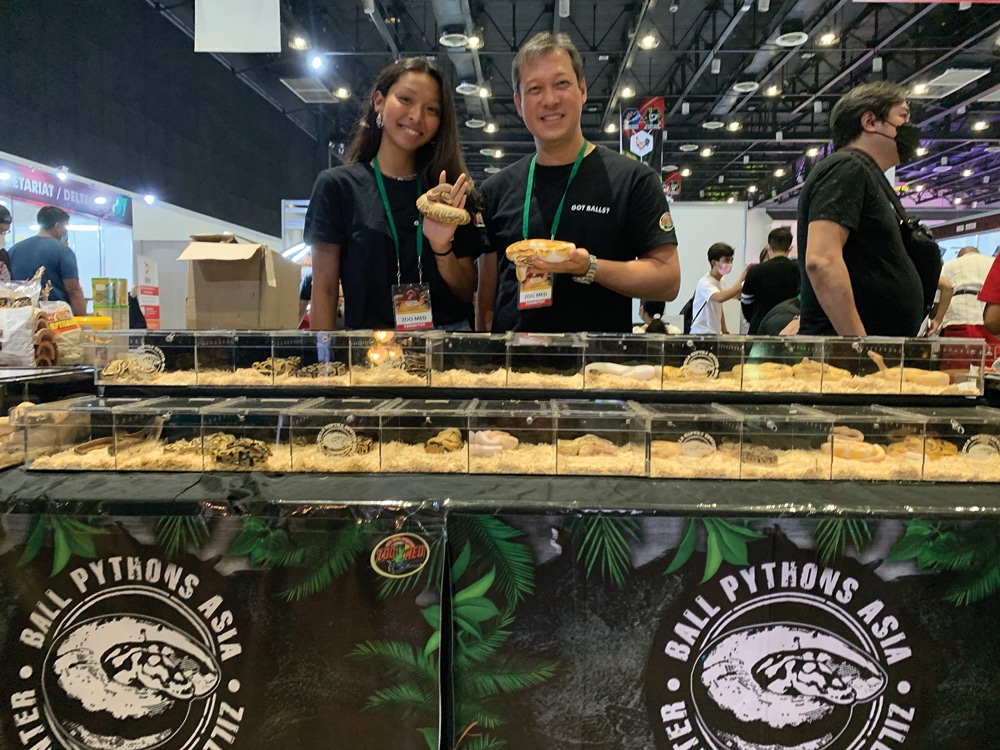
The first Zoo Med Philippines Reptile Expo took place on February 25-27 2022 at the World Trade Centre in Pasay, Philippines.
The first Zoo Med Philippines Reptile Expo took place on February 25-27 2022 at the World Trade Centre in Pasay, Philippines. The three day show was attended by an estimated 7500 reptile fans who came to see 70 exhibitors. It was organized by Q Market Pet Products, Zoo Med’s distributor in the Philippines, headed by its General Manager Lendl Lin. Aside from Zoo Med Laboratories, the expo was also sponsored by Hikari Pet Food of Japan and SERA of Germany.
Ball python (Python regius) morphs dominated the show with prices ranging from $120 USD for a normal ball python to $1500 USD for an albino het pied morph. There were more snake exhibitors than the rest of the other reptile exhibitors combined.
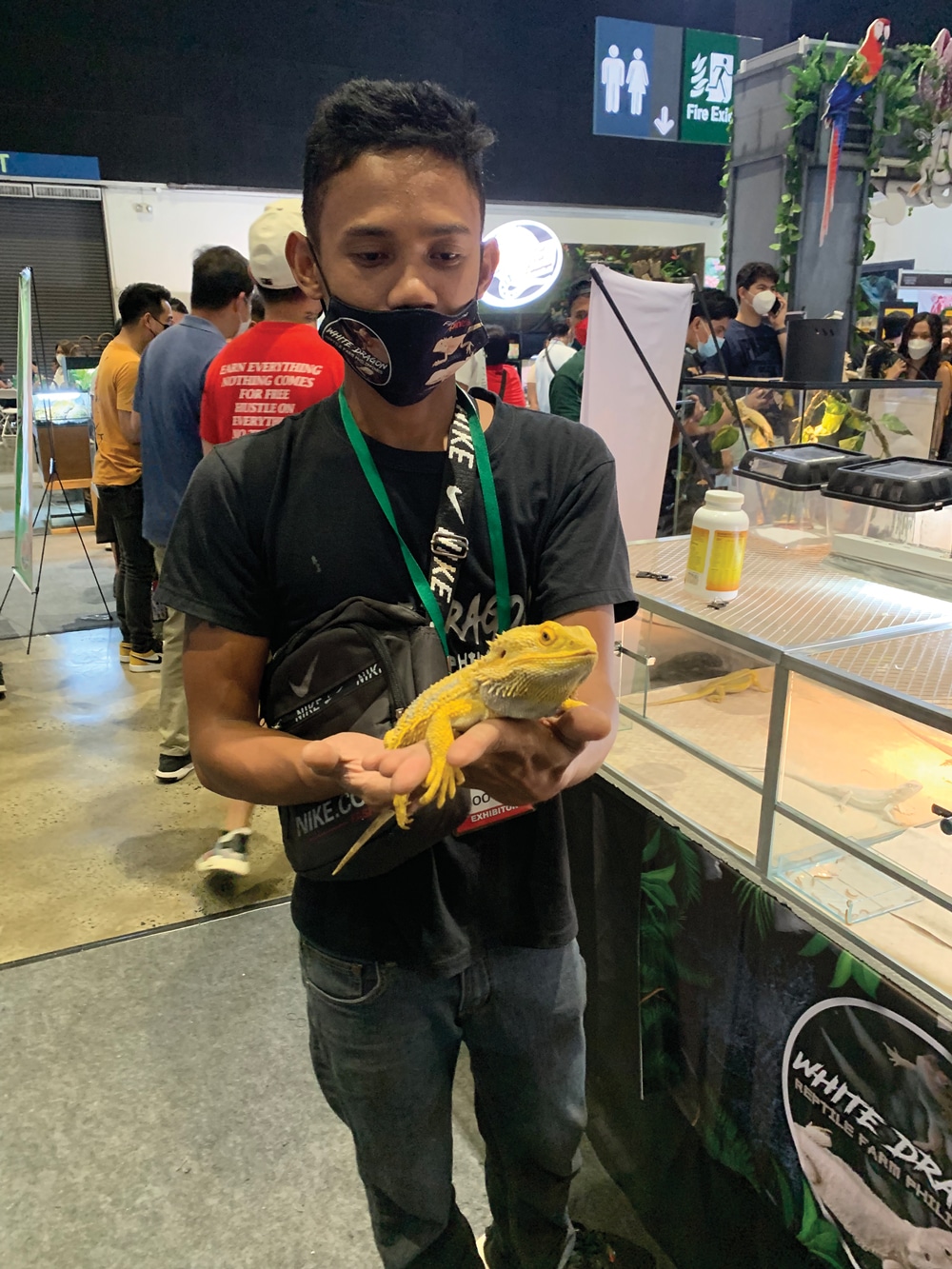
Leopard geckos (Eublepharis macularius) and bearded dragons (Pogona vitticeps) came second and third of the popular reptiles at the expo, a few of which were awarded as raffle prizes to the visitors. The bearded dragons appealed to the younger audience as much as they did the adults.
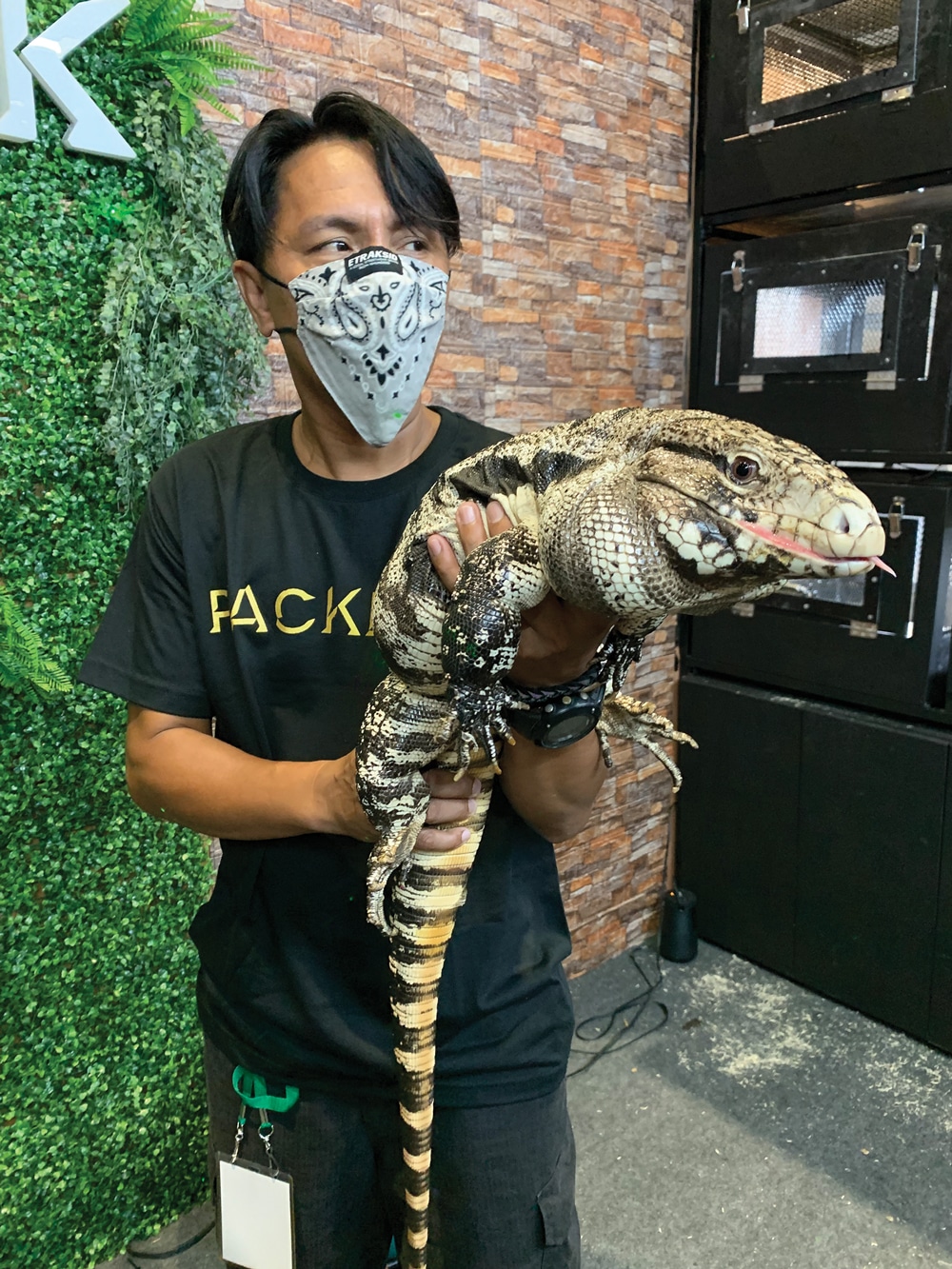
Green iguanas (Iguana iguana) were present at the expo in both red and green colorations. So were tegus. An adult green iguana and an Argentine black and white tegu (Salvator merianae) were show stealers, with people queuing up to get photos taken with the animals. A beautiful Colombian red tegu (Salvator rufescens) was showcased by exhibitor Concrete Jungle.
Lin said that iguanas have become popular, this popularity being the result of the availability of morphs in the market. “However due to their size when they turn into adults, not everyone in Manila is able to keep an iguana in a 60-square meter apartment,” he added.
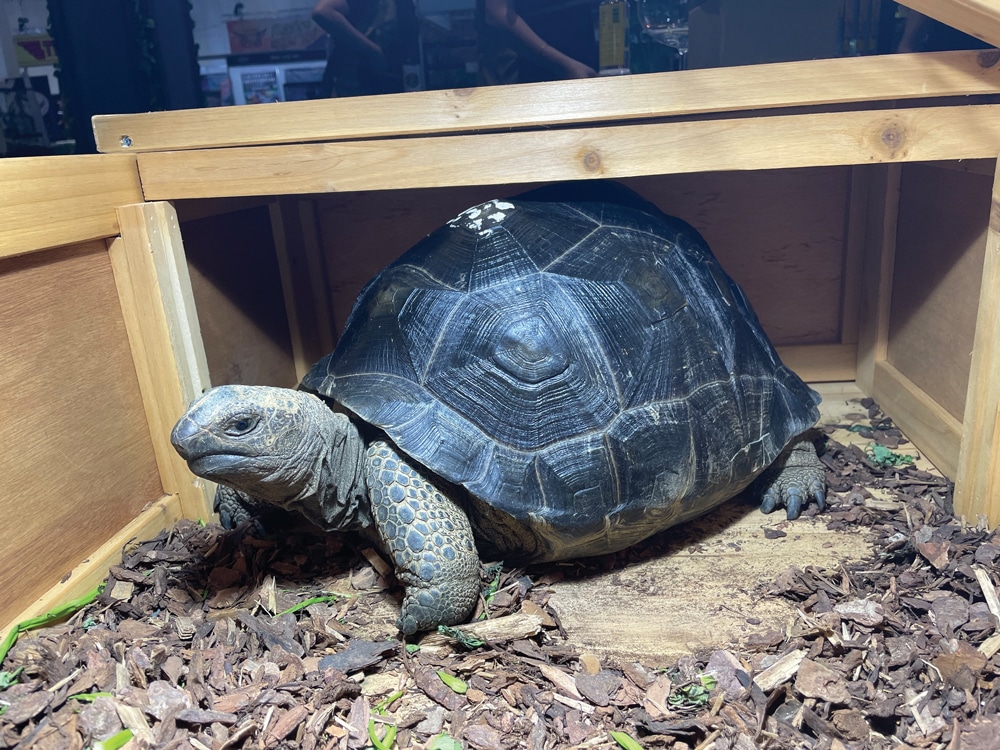
Aldabra tortoise. Photo by BP Ross
Vendors showcased a few red-footed tortoise (Chelonoidis carbonaria) hatchlings, sulcata tortoise (Centrochelys sulcata) hatchlings, albino red-eared sliders (Trachemys scripta elegans), pink-bellied side necked turtles (Emydura subglobosa), and a juvenile Aldabra tortoise (Geochelone gigantea). Other tortoise species popular among reptile keepers in the Philippines include elongated (Indotestudo elongata), yellow-footed (Geochelone denticulata), Indian star (Geochelone elegans) and radiated tortoises (Astrochelys radiata). Popular turtles amongst the Filipino reptile keepers include the pink-bellied side necked turtles, river cooters, musk turtles (Sternotherus odoratus), albino red-eared sliders, and yellow-spotted side necked turtles (Podocnemis sp.).
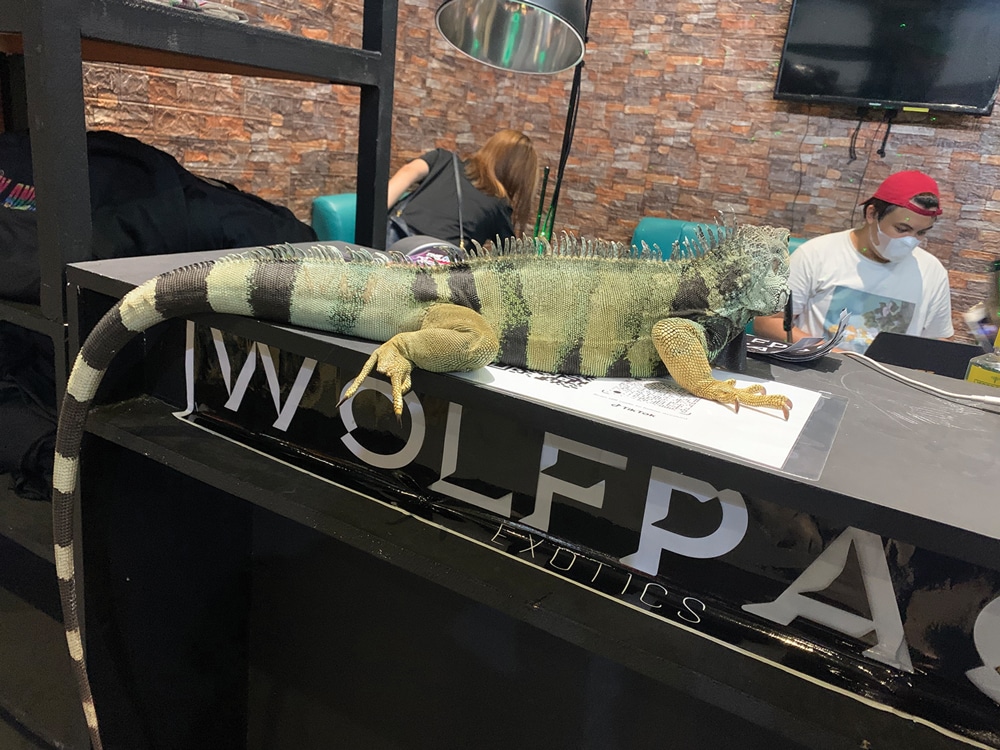
The green iguana is one of the most popular pet reptiles in the Philippines. Photo by BP Ross
Also present at the show were a few Guyana spectacled caiman (Caiman crocodilus) hatchlings. The parents were originally imported from Hong Kong seven years ago and were able to successfully produce its first clutch in November last year. Congo Charlie Farm manager Shon Ortiz explained that factors resulting to reproduction include male and female maturity, enclosure, and breeding environment. The hatchlings sell for $600 USD each at the farm. They were fed dubia roaches which were also available for sale at the expo together with super worms and rat pups.
Endemic reptile species were represented by the yellow-headed water monitor (Varanus cumingi).
Reptile breeder Jong Francisco from Davao City brought the hatchlings to the expo. Francisco said that although the lizards are a threatened species, the Department of Environment and Natural resources allows the sale of 10 hatchlings per clutch. “The yellow-headed water monitor rarely lays eggs,’ in captivity, Francisco said.
Francisco also brought to the show green tree pythons (Morelia viridis) imported from Indonesia, California kingsnakes (Lampropeltis getula californiae), and bearded dragons. His company, Percell Pets was the pioneer of breeding the bearded dragon in the country.
Reptile habitats by Zoo Med and other vendors were on display. Some featured bioactive enclosures for semi-arboreal reptiles complete with substrate, decor, isopods and springtails.
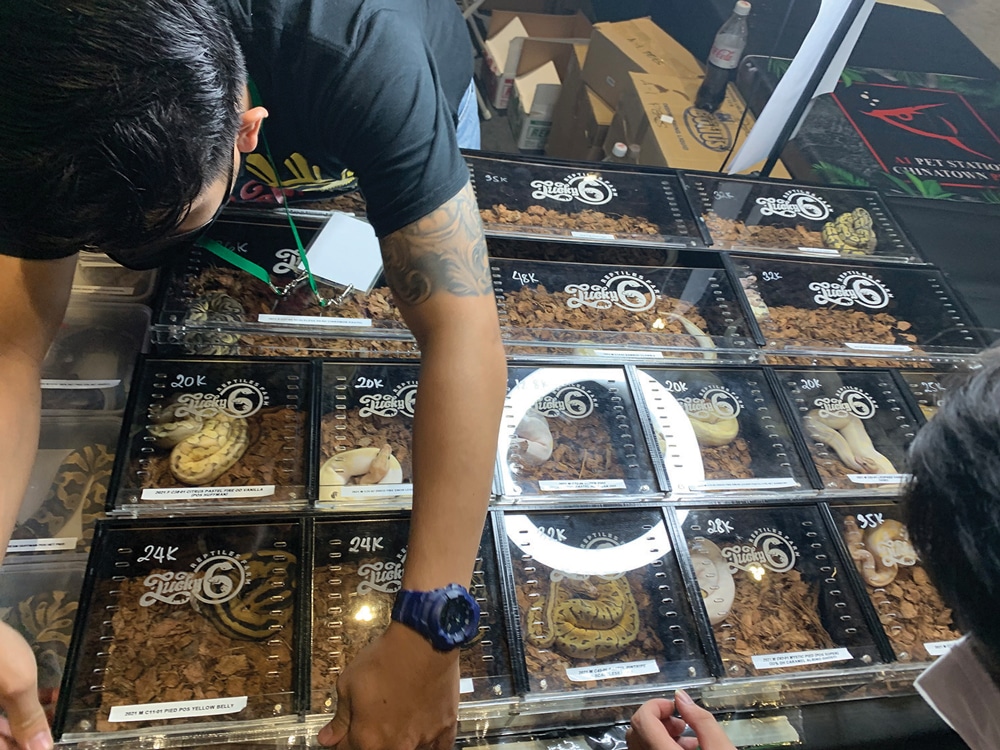
Ball python morphs for sale. Photo by BP Ross
There were no crested geckos in the expo. According to organizer Lin they may not be able to withstand the temperature in the Philippines. Crested geckos are a tropical species but do not need constant high humidity; in a captive environment this can lead to respiratory infections, Lin said.
Lin during an interview stated that reptile keeping has become popular in recent times especially during the country’s lockdown brought about by the COVID 19 pandemic.
“The government implementation of strict rules and regulations limited the number of reptile stores in the country. The government has banned importation of invasive reptiles like tegus, Mexican green iguanas, and red-eared sliders,” Lin added.
Lin said that Filipinos for a long time have kept local reptiles as pets. “The recent animal importation and wildlife farm permits have allowed them to keep reptiles that are above the ordinary. “Some people prefer to keep bearded dragons than any other animal as a pet,” he said.
When asked if there are restrictions in keeping native reptiles, Lin said,” Yes there are. Only legal wildlife farms are allowed to sell captive-bred and hatched animals to hobbyists which is also closely monitored by the government.”
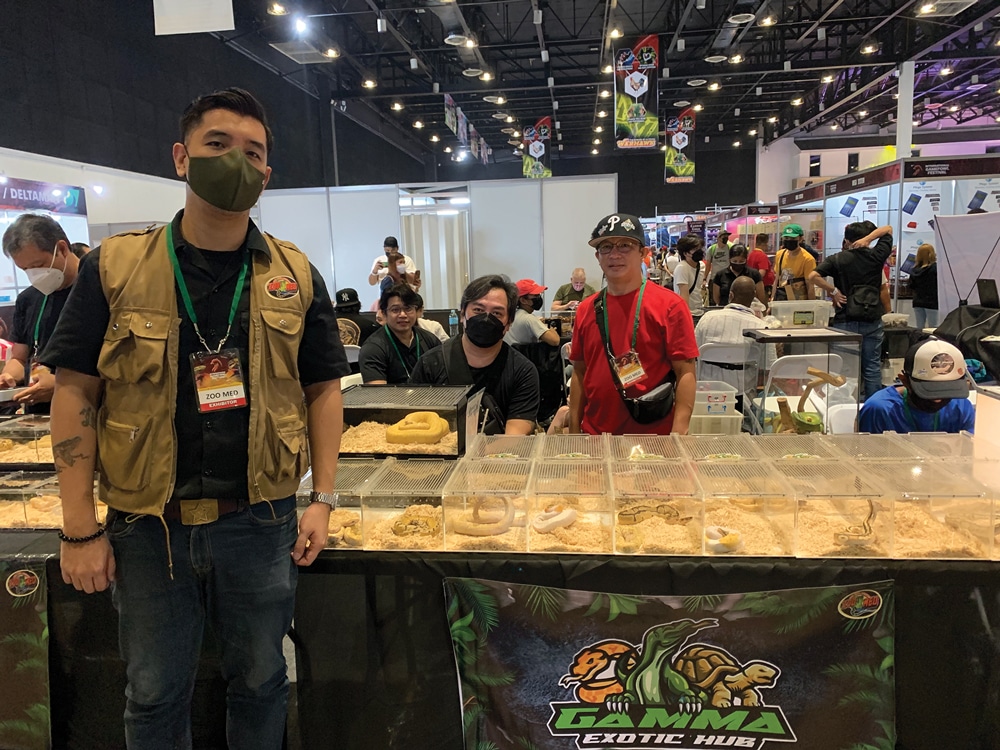
Q Market Pet Products General Manager Lendl Lin. Photo by BP Ross
One of the visitors of the expo was Erni Canlas. It was his first time at a reptile show and he enjoyed it. His favorite reptiles at the show were the bearded dragons, geckos and the ball pythons.
Canlas is a reptile keeper and a self-taught leopard gecko breeder. Erni who manages his Facebook page Geckotopia, is a grocery wholesaler and sells his geckos on the side. His gecko price range are between $50 USD to $600 USD. When asked why he didn’t join the show, he answered that the exhibitor fee was a bit high for him.
When asked what he was hoping to see in the show, Erni answered he wanted to see more rare reptile species. He wanted to see African fat-tailed geckos (Hemitheconyx caudicinctus), green anoles (Anolis carolinensis), and knob-tailed geckos (Nephrurus sp).
Aside from leopard geckos, Erni owns African fat-tailed geckos, bearded dragons, sulcata tortoise. He recently sold his uromastyx.
As a show attendee, Erni thinks the current reptile expo should have more exhibitors. He believes more reptiles expos should be made to further educate the Filipinos and promote the hobby.
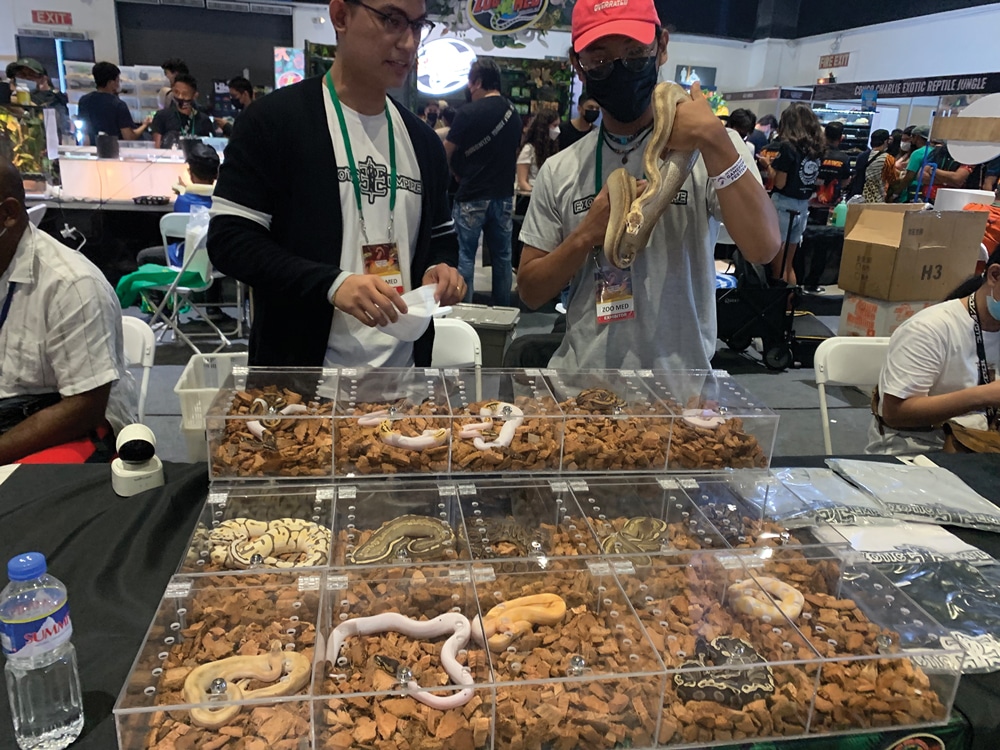
A collection of ball python morphs. Photo by BP Ross
Lendl Lin envisions Zoo Med Reptile Expo in the next five years to be bigger and better. He’s hoping to tap into the mainstream market due to the fact that reptilekeeping is still a growing market in the Philippines and has recently gained popularity. Being in the position he is in, he hopes that the government agencies involved would support the reptile industry and hobby further.
We did a quick interview with show attendee Erni Canlas, Jr. who also breeds leopard geckos.
REPTILES Magazine: When did you first get into reptiles and why?
Erni Canlas: I have always been fascinated with animals ever since I was a child, I have had the regular domesticated pets, like dogs, fish, hamsters, rabbits and birds. My love for reptiles, specifically leopard geckos, started last October of 2019. I was then looking for a pet that is less maintenance, a pet that is hardy, something that is not required to be fed everyday, an animal that will survive for a few days without feeding, so if I get busy with something else or If i go on a vacation out of town, I will have no worries about my pets starving or being lonely, and reptiles were the perfect candidate for what I am looking for.
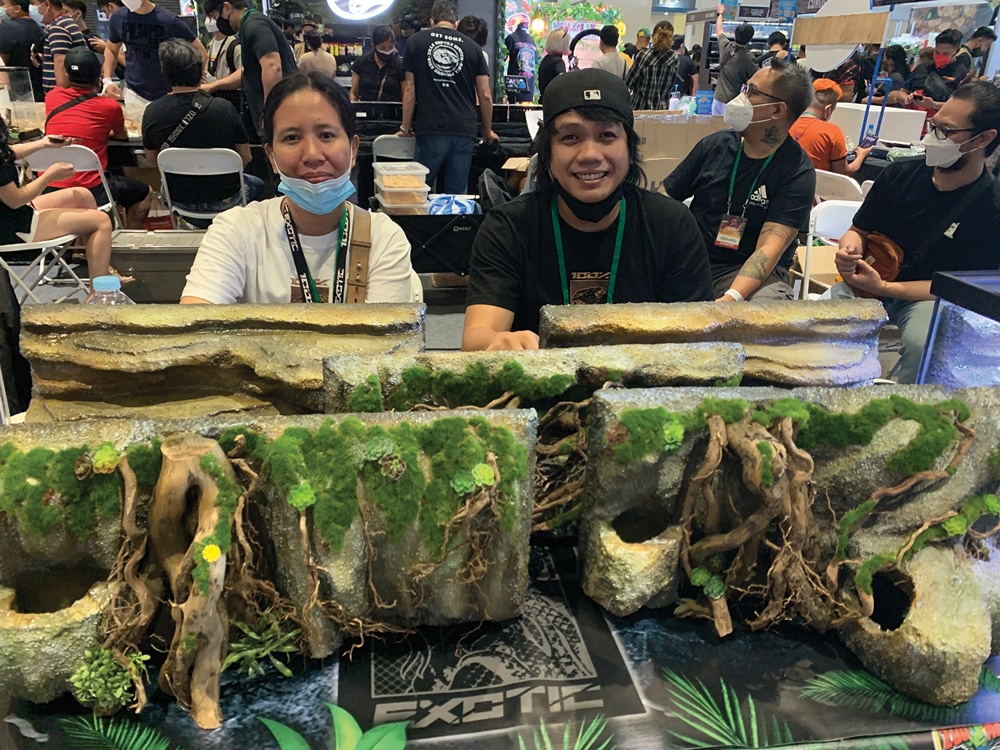
Some naturalistic backgrounds. Photo by BP Ross
RM: What influenced your passion for reptiles?
EC: No one really, no specific person but its the Internet that influenced me. I have found my perfect pet and before buying one, I took the time to research about basic husbandry and stuff like how they live in the wild in their natural habitat. Back then I told myself I would like to house my reptile in an enclosure that would mimic their natural habitat. I have not done this yet. This is still a self promise up to now.
RM: What was your first captive reptile?
EC: Leopard geckos, I bought from “Geckoboy” a local breeder here in the Philippines. When i got my first leopard gecko, I was amazed by the experience and found it very easy to care for, I then decided to get a pair. I’ve learned that there are tons of morphs and decided to breed them with the hope of creating my own signature line.
RM: When did you start breeding Leopard geckos?
EC: Just a short while after my first purchase and after learning the legalities of keeping and breeding them.
RM: What morphs do you breed?
EC: I am most fond of the Bandit morphs. I also bought a morph that is rare, only a handful of Filipinos own it, its called Rainwaters, I have three of these: two females and one male, unfortunately I have not been able to successfully breed them yet, this is still an ongoing project.
RM: How popular is reptile keeping in the Philippines?
EC: Based on my few years in the hobby, I can say that reptiles as pets are not as popular like cats and dogs, but the community is growing fast, most people are hesitant of owning a reptile because of lack of knowledge about husbandry, the availability of food, supplements, enclosures and lighting requirements. The common question I get from new aspiring owners is “Does it bite?”
RM: What do you feed your leopard geckos?
EC: Mostly insects, like superworms, mealworms, dubia roaches and the occasional treats like crickets and pinky mice.
RM: Do you also keep frogs?
EC: No, not yet. I had this one friend who would like to trade my gecko with Pacman frog, but that never happened.
RM: What other reptiles do you keep in addition to leopard geckos?
EC: Currently, I have African fat-tailed geckos, bearded dragons and a sulcata tortoise.
RM: What do you think is the most popular pet reptile in the Philippines?
EC: In my opinion its the green iguana, and multiple snake species as these have been in the market for the longest time. Next would be the geckos, bearded dragons and tortoises. REPTILES