
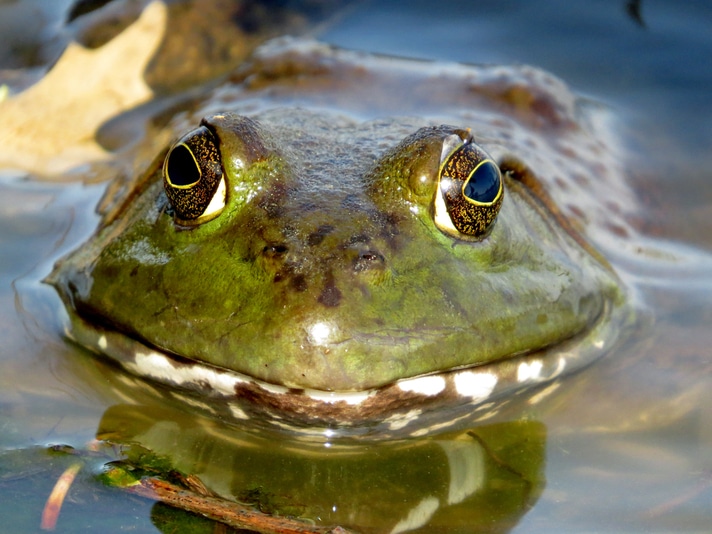
The researchers say that the American bullfrog potentially serve as carriers of Bd as they are widely traded globally and are tolerant of chytridiomycosis.
Batrachochytrium dendrobatidis (Bd), the amphibian killing fungal infection that has caused or suspected to be the cause of more than 90 amphibian species extinctions, originated from the US American bullfrog (Aquarana catesbeiana,) leg trade rather than the “out of Africa” hypothesis based on 1938 museum specimens of the African clawed frog (Xenopus laevis) that were infected with the fungus, researchers said in a new study about the fungal disease and its worldwide transmission. Recent discoveries of older Bd records (Japan in 1902, the USA 1888, and Brazil in 1894) turned the “out of Africa” notion on its head.
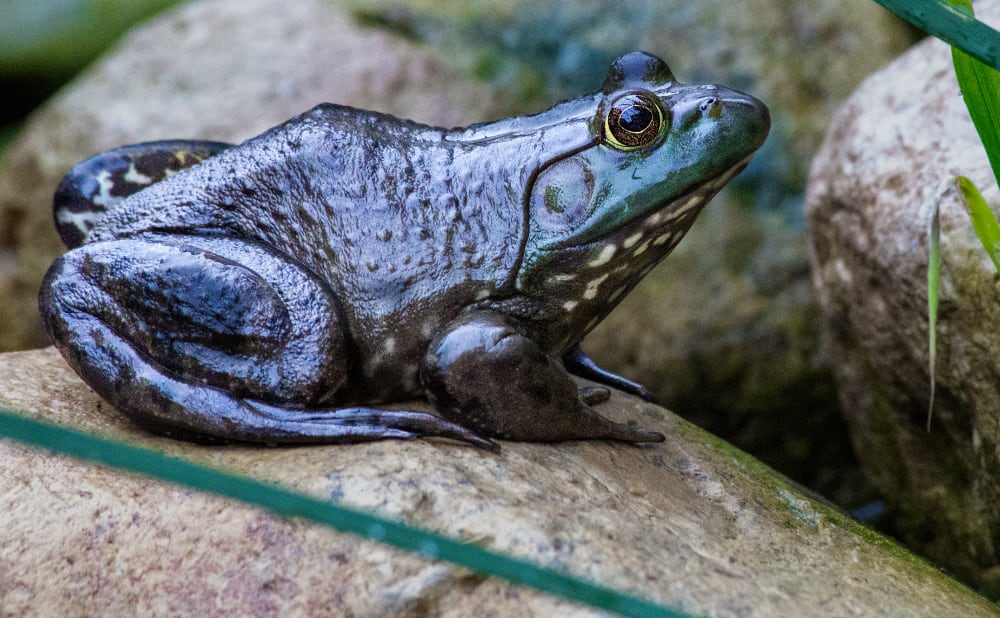
American Bullfrog. Photo by Lux Et Umbra Studio/Shutterstock
The researchers say that the American bullfrog potentially serve as carriers of Bd as they are widely traded globally and are tolerant of chytridiomycosis. The International trade of bullfrogs, which began in the 1920s for the food trade may have been the cause of the disparate Bd lineages that occur around the world. These include Bd-CAPE, detected in South Africa, West Africa, Europe, and Central America; Bd-ASIA-1, detected on the Korean Peninsula; Bd-ASIA-2/Bd-BRAZIL detected in Brazil, the USA, and Korean Peninsula; and Bd-ASIA-3, found in Southeast Asia. These are all Bd but have wide genetic diversity.
About Batrachochytrium dendrobatidis
Amphibians infected with Bd suffer from thickened skin, disrupted electrolyte balance and in severe cases, cardiac arrest. It has been linked to the decline of more than 500 amphibian species with more than 90 species confirmed or suspected to be extinct because of it. It spreads via water, contact between amphibians, contaminated equipment such as boots and water tanks and the wildlife trade.
The complete study, “Origin and global spread of an endemic chytrid fungus lineage linked to the bullfrog trade “ can be read on the Biological Conservation website.