
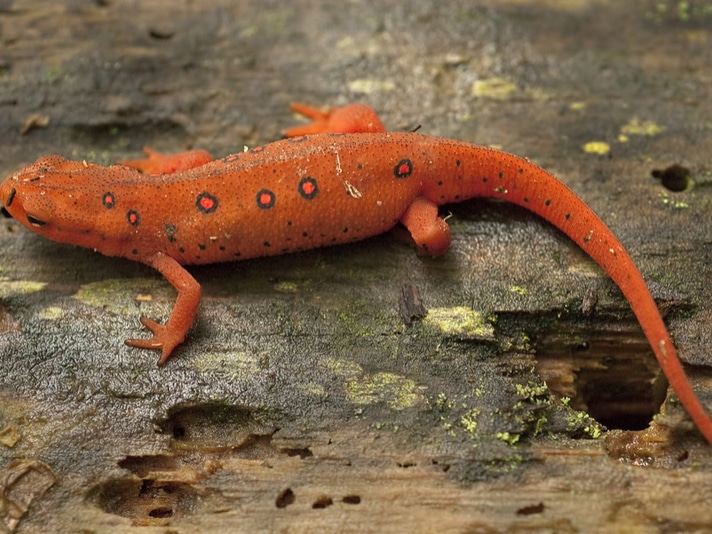
The award will help the state to bolster reptile and amphibian populations by upgrading road infrastructure to reduce road mortality.
The state of New Hampshire’s, Fish and Game Department’s Nongame and Endangered Wildlife Program was awarded a grant from the National Fish and Wildlife Foundation America’s Ecosystem Restoration Initiative to help support upgrading road infrastructure at four critical locations in the state to help wildlife.
“Wetland fragmentation and road densities pose direct threats to semi-aquatic turtles and vernal pool amphibians as they move through the landscape for reproduction, food, shelter, and dispersal,” Sandi Houghton, a Nongame and Endangered Wildlife Program biologist said in a statement released by New Hampshire Fish and Game.
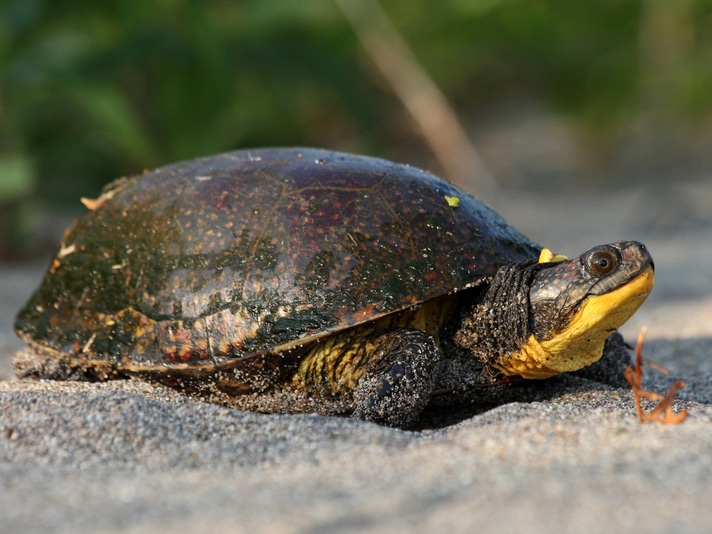
The Blanding’s turtle is a critically imperiled species native to New Hampshire. Photo by Ryan M. Bolton/Shutterstock
The grant, called the “Restoring Habitat Connectivity to Benefit At-Risk Wildlife in New Hampshire” will provide funding to help reduce wildlife mortality. It will help to ensure habitats are connected rather than fragmented. It will also help with wildlife safety, flood resiliency and culvert condition.
“The City of Keene is a strong supporter of amphibian conservation as demonstrated by the implementation of road closures on nights when amphibians are likely to migrate, as we have since 2018,” said Duncan Watson, Former Keene Department of Public Works Assistant Director. “We see the project as a natural progression in our efforts to conserve amphibians.”
The selected sites were chosen after being monitored for decades. The state will employ restoration techniques to help mitigate road mortality of the state’s wildlife. This will include new culvert underpasses and guide walls to help animals move via safe passages created by the state. This should help to mitigate road mortality and keep connectivity between populations. This connectivity helps with genetic diversity as well as population viability.
Turtle Road Mortality
“Turtle road mortality is widespread in New Hampshire, and a leading cause of population declines,” Joshua Megyesy, Nongame and Endangered Wildlife Program Turtle Biologist said in a statement released to the media. “Roads that bisect wetlands or upland nesting habitats lead to more females in the population getting hit by cars. With their late age of sexual maturity and low hatchling survival rates, population recovery is a real challenge, however new wildlife passages and upgrades show great promise in reducing this threat.”
Study Of Blanding's Turtles On New Hampshire Air Force Base Nears Completion