
The sea turtle eggs that were laid on Southern California's Sunset and Huntington Beaches in September have hatched and the olive ridley sea turtle (L
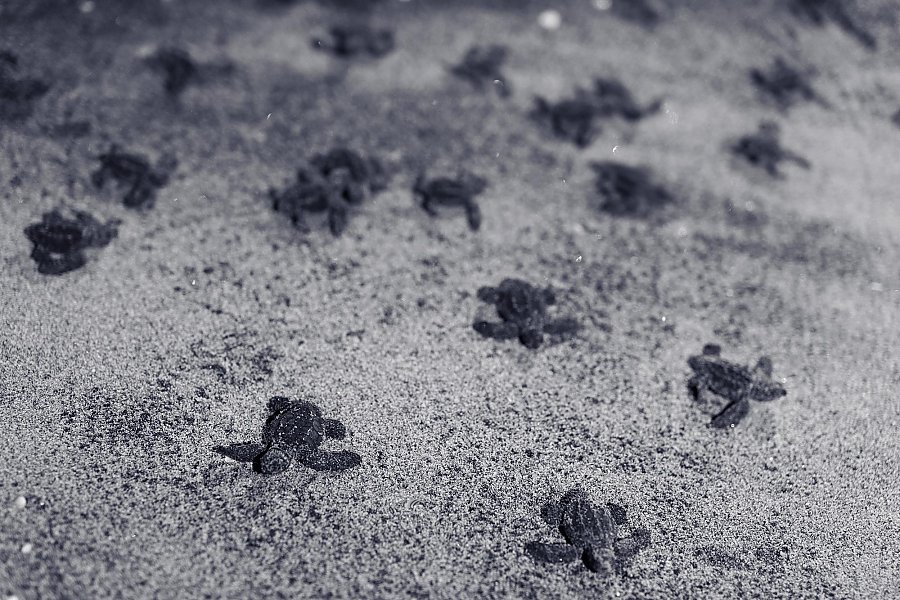
The sea turtle eggs that were laid on Southern California’s Sunset and Huntington Beaches in September have hatched and the olive ridley sea turtle (Lepidochelys olivacea) hatchlings have been released into the wild after they hatched under human care at the Aquarium of the Pacific in Long Beach, California.
The event follows the discovery of two olive ridley sea turtle nests in mid-September at Seal Beach and Huntington Beach. The discoveries marked the first confirmed natural sea turtle nesting events on the U.S. West Coast.
The eggs were relocated to the Aquarium on September 25 after federal officials and local wildlife partners determined that tropical storms posed a threat to the nests. Biologists carefully collected the eggs and transferred them to the Aquarium, where they were placed in closed incubators beneath sand in a secure, temperature- and humidity-controlled room.
“We’re pleased that some sea turtle eggs were viable and have not only already successfully hatched, but the hatchlings have also made their journey across the sand to the ocean,” said Dr. Lance Adams, Aquarium of the Pacific director of veterinary services.
Olive Ridley Sea Turtle Eggs Laid On SoCal Beaches Moved Ahead Of Hurricane Polo
The decision to relocate the eggs proved timely. Tropical Storm Rachel brought high surf and standing water to areas near both original nesting sites, potentially putting the nests at risk of being washed away.
It is not known why olive ridley sea turtles selected Southern California beaches for nesting. The activity could reflect changing environmental conditions or represent an unusual nesting event. Either possibility has implications for sea turtle conservation and management along the West Coast.
“Whether the reason for the nests in Southern California was because of our weather patterns, or a simple anomaly, this is an important conservation story,” said Jeff Flocken, Aquarium of the Pacific president and CEO. “Species that change and adapt are the ones that survive.”
Third SoCal Olive Ridley Sea Turtle Nest Found On Ventura County Beach
Olive ridley sea turtles are among the smallest sea turtle species and inhabit tropical and warm waters of the Pacific, Atlantic, and Indian oceans. The species’ breeding colony populations along Mexico’s Pacific coast are listed as endangered, while other populations are listed as threatened. Nesting season in Mexico generally runs from July through December.
On November 1, a third olive ridley nest was documented farther north in Ventura County, raising the possibility that additional turtles may have nested along Southern California beaches.
Wildlife officials are asking the public to watch for sea turtle tracks and report suspected nesting activity. Anyone who encounters a nesting sea turtle, an injured animal, or a suspected nest should notify a local lifeguard or call the 24-hour West Coast Sea Turtle Stranding Hotline at 562-506-4315. Sea turtles are protected under federal and state law, and members of the public should maintain a safe distance and avoid disturbing them.
Olive ridley hatchlings face significant challenges after reaching the ocean. They crawl toward the water and swim continuously for several days to reach deeper offshore habitat, where they face predators and other threats. Researchers estimate that only about one in 1,000 olive ridley hatchlings survives to adulthood.
Warming Planet Causes 99 Percent of Raine Island Sea Turtle Hatchlings To Be Female, Study Says
The Aquarium of the Pacific has experience caring for olive ridley sea turtles. It is home to two individuals, Theo and Lou, that hatched from eggs confiscated during an illegal wildlife trafficking investigation. The turtles were incubated under human care and transferred to the Aquarium in 1999.
The Aquarium also works with NOAA Fisheries to rehabilitate injured and sick sea turtles for eventual release. In January 2026, it opened an expanded sea turtle rehabilitation area that includes an approximately 4,000-gallon pool. The facility increased the Aquarium’s capacity to care for stranded and injured sea turtles from Los Angeles County and surrounding areas.
Aquarium volunteers also contribute to long-term research through the Southern California Sea Turtle Monitoring Project, which tracks green sea turtles living in the San Gabriel River along the Los Angeles and Orange County border. The monitoring data helps researchers better understand local sea turtle populations and their behavior.
The effort to protect the olive ridley eggs involved NOAA Fisheries, the U.S. Fish and Wildlife Service, California Department of Fish and Wildlife, Huntington Beach Fire Department Marine Safety, the cities of Huntington Beach and Seal Beach, Bolsa Chica Ecological Preserve, U.S. Navy Seal Beach, Seal Beach Marine Safety Department, Surfside lifeguards, and the Surfside Colony Community Association.