
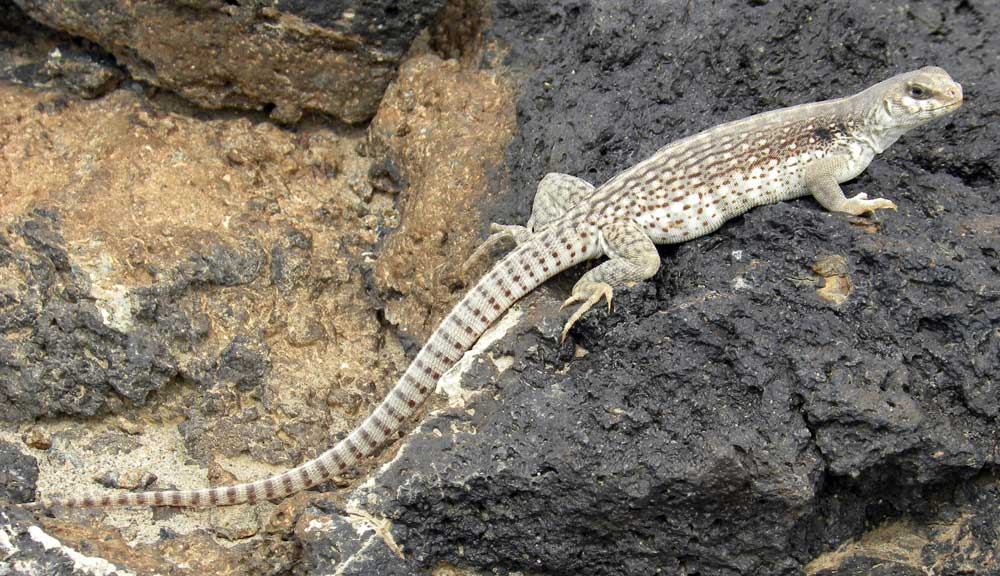
The desert iguana is a medium-sized, well-proportioned reptile with developed legs, expressive eyes, and large ear openings.
Desert iguanas (Dipsosaurus dorsalis) are medium-sized, long-tailed lizards in the Iguanidae family. As their name implies, they thrive in the desert climates of the southwest United States and northwest Mexico. Despite an ideal temperament and size for captivity, desert iguanas are uncommon pets and can be difficult to find at pet shops or other reptile dealers. Plus, certain jurisdictions restrict collection of this animal, so seek out captive breeders of the species.
Care requirements are slightly more intensive than more common lizards: they require very high temperatures in excess of 33º C (90º F) and a deep, sandy substrate, as well as a varied vegetable diet to both hydrate and provide proper nutrients. They make wonderful, long-lived pets given proper care. As of this article, my desert iguana, Zak, is about to celebrate his 18th birthday.
Desert Iguana Natural History
The desert iguana is a medium-sized, well-proportioned reptile with developed legs, expressive eyes, and large ear openings. Their legs and bellies are naturally cream colored but often dirtied tan by incessant burrowing, and their backs and sides are covered with a distinct brown pattern. This dorsum coloring will become darker in shade and lighten during prolonged basking. They reach an average 40 cm (16 in) in length, but can grow up to two feet including a long tail which is more than half their length. Hatchlings measure 4.5 to 5.5 inches in total.
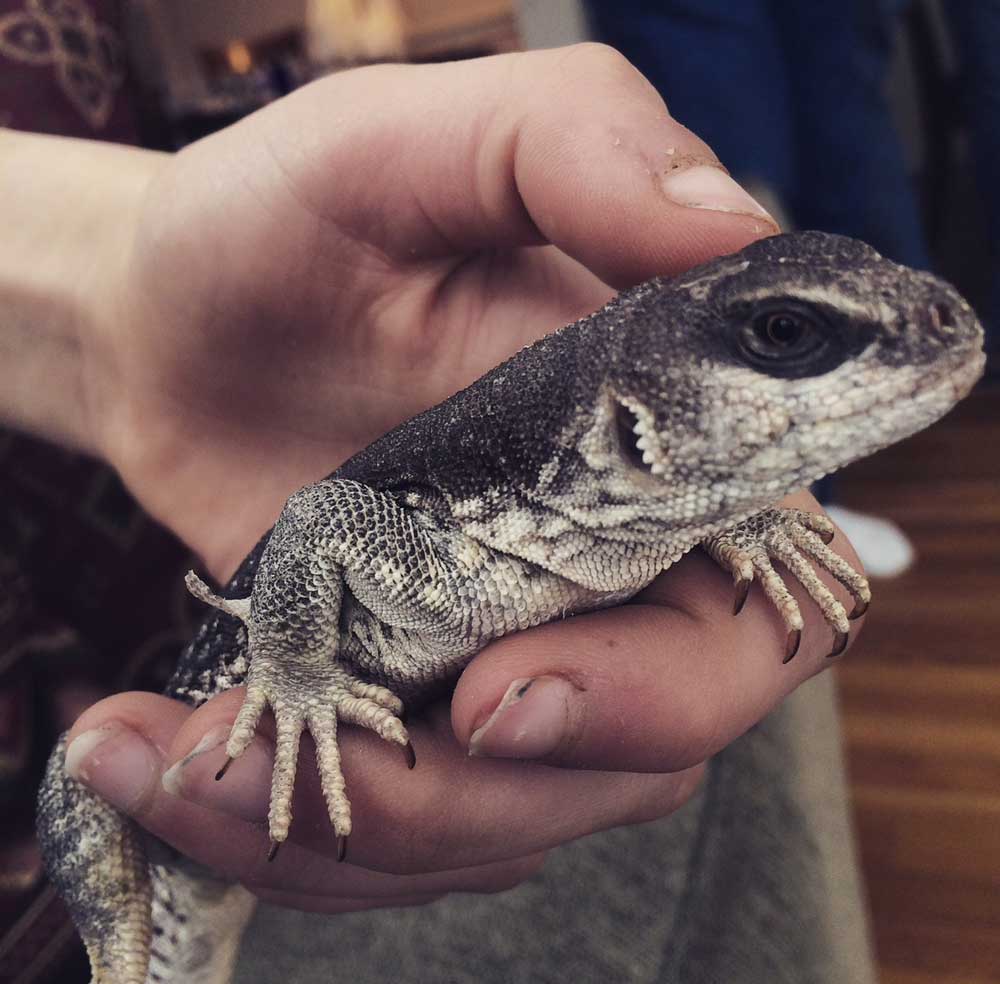
Zak at 18.Photo by Andrew Cohen
Males and females are very difficult to tell apart. During the breeding season, both sexes become pinkish ventrally. Males have enlarged femoral cones during these months, found as pale spikes on the inside of the thighs.
The expected lifespan of a wild desert iguana is around seven years. The relative scarcity of desert iguanas in captivity makes guesswork of their true longevity. The average lifespan of similar lizards is 10 to 12 years; one captured desert iguana lived to over 14 years in captivity; personal experience suggests maximum lifespan exceeds 18 years.
Taxonomy
The desert iguana, Dipsosaurus dorsalis, belongs to the Iguanidae family, a group of lizards including chuckwallas and the ubiquitous green iguana. The genus name Dipsosaurus comes from the Greek word dipsa (δίψα) for “thirsty,” meaning “thirsty lizard.” Desert iguanas are the only lizards native to the U.S. with an enlarged dorsal spine, a row of spiked scales forming a crest down the lizard’s back. The species name, dorsalis, comes from the Latin word dorsum, meaning “spike.” Genetic analysis suggests that Dipsosaurus is the basal extant member of Iguanidae, meaning it is the oldest evolutionary line of iguanids.
Habitat
Desert iguanas prefer dry and sandy climates, native to the scrublands of the Mojave and Sonoran deserts. Their population significantly overlaps the range of the creosote bush, whose flower is an important part of the iguana’s diet. The lizards are tolerant of extreme heat, foraging and exploring at temperatures reaching 40ºC (104º F) when most other desert animals have retreated to the shade. At higher temperatures, even the desert iguana will seek shade or a burrow. They dig extensively in the sandy substrate beneath desert shrubs like the creosote.
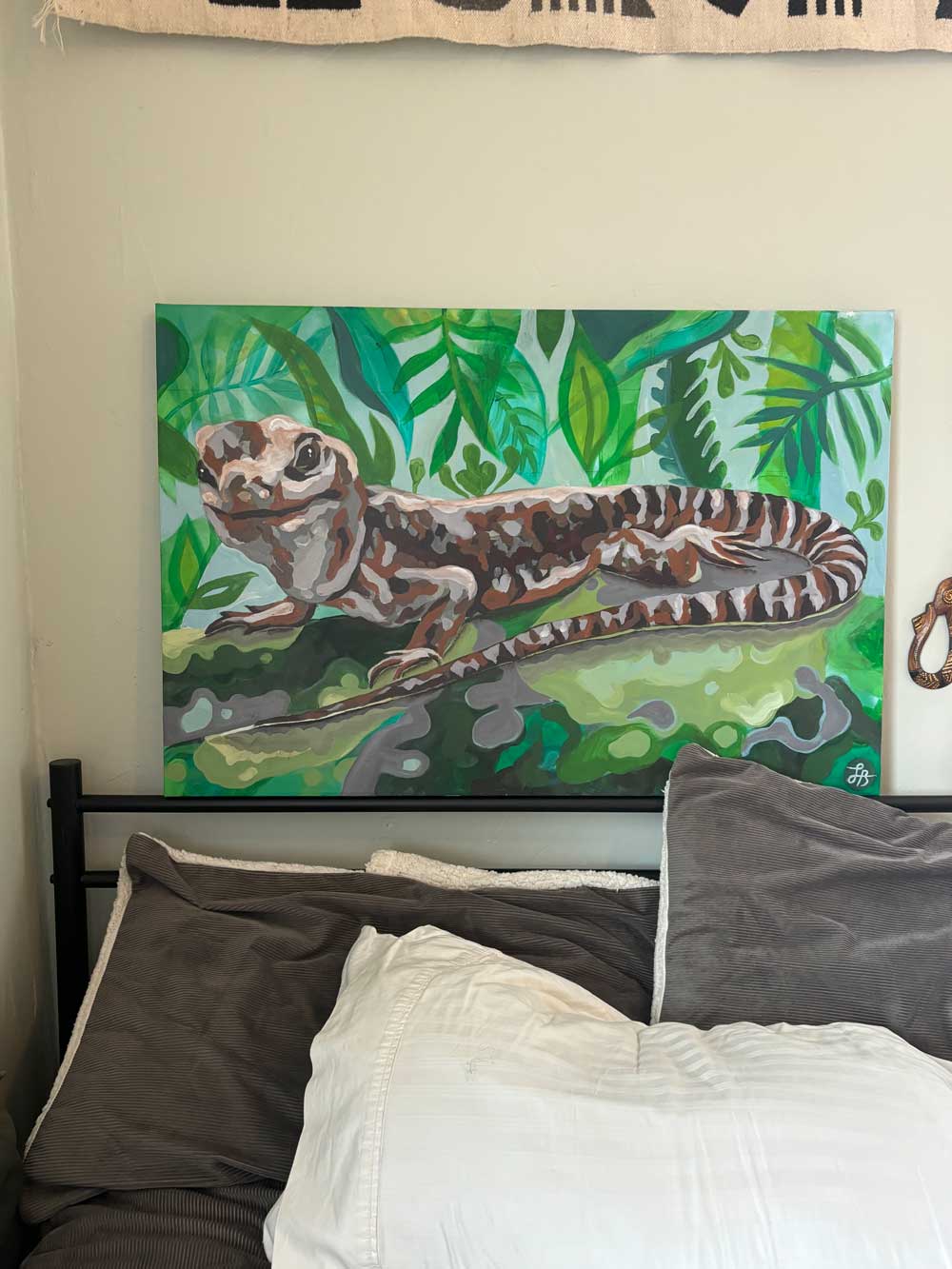
A portrait of Zak in the author’s room. Photo by Andrew Cohen
In Captivity
Obtaining a Desert Iguana
Desert iguanas are fairly uncommon in the pet trade, and are not readily available at most pet shops. Your best bets are finding an online listing or getting lucky at a reptile expo. They can also be collected legally in some states: refer to the bag limits and permit laws here. The best time to find desert iguanas are the warm, daylight summer hours just before and after the hottest time of day.
Caging
The proper caging of a desert iguana, including size, heat, lighting, and substrate, is absolutely essential to its health.
One or two lizards may be kept in a 3 ft x 2 ft terrarium at minimum, with enough height to support climbing and burrowing. A 4’x 2’x 2” is ideal. Desert iguanas are very curious, and should be placed in an active viewing area with plenty to observe outside the cage. Consequently, they will rub their noses against and attempt to climb the walls of the cage, so glass is preferred over scratchable plastic.
Do not place desert iguanas in screened enclosures, as their long nails become easily stuck and may break their toes. Desert iguanas can be kept in groupings larger than pairs, but require significantly larger housings (>16 sq ft) and no more than one male per enclosure. Heat and lighting are the two most intensive and important factors in housing a desert iguana. Daytime temperatures around 35º C (95º F) and UVB lighting are key to digestion, and bright light supports growth and the immune system.
The desert iguana is a Zone 4 reptile on the Ferguson Zone scale for UVB. The UV index should be 6.0 to 8.0 on the basking spot. Use a T5 HO 10-12% UVB tube with the basking spot 10-14 inches below the bulb. Arrange a heating setup with a heat/UV lamp above the basking area inside a reflective cone to focus the heat.
Generally, the heat source should be 12 to 14 inches from the basking area, but it depends on the brand and wattage. The rest of the cage should be illuminated with a bright light or glow lamp during daytime hours, and turned off during the night; a good day/night cycle promotes normal behavior, faster growth, and overall health in diurnal lizards. If a desert iguana is frequently awake at night, it may indicate something is uncomfortable with its current enclosure.
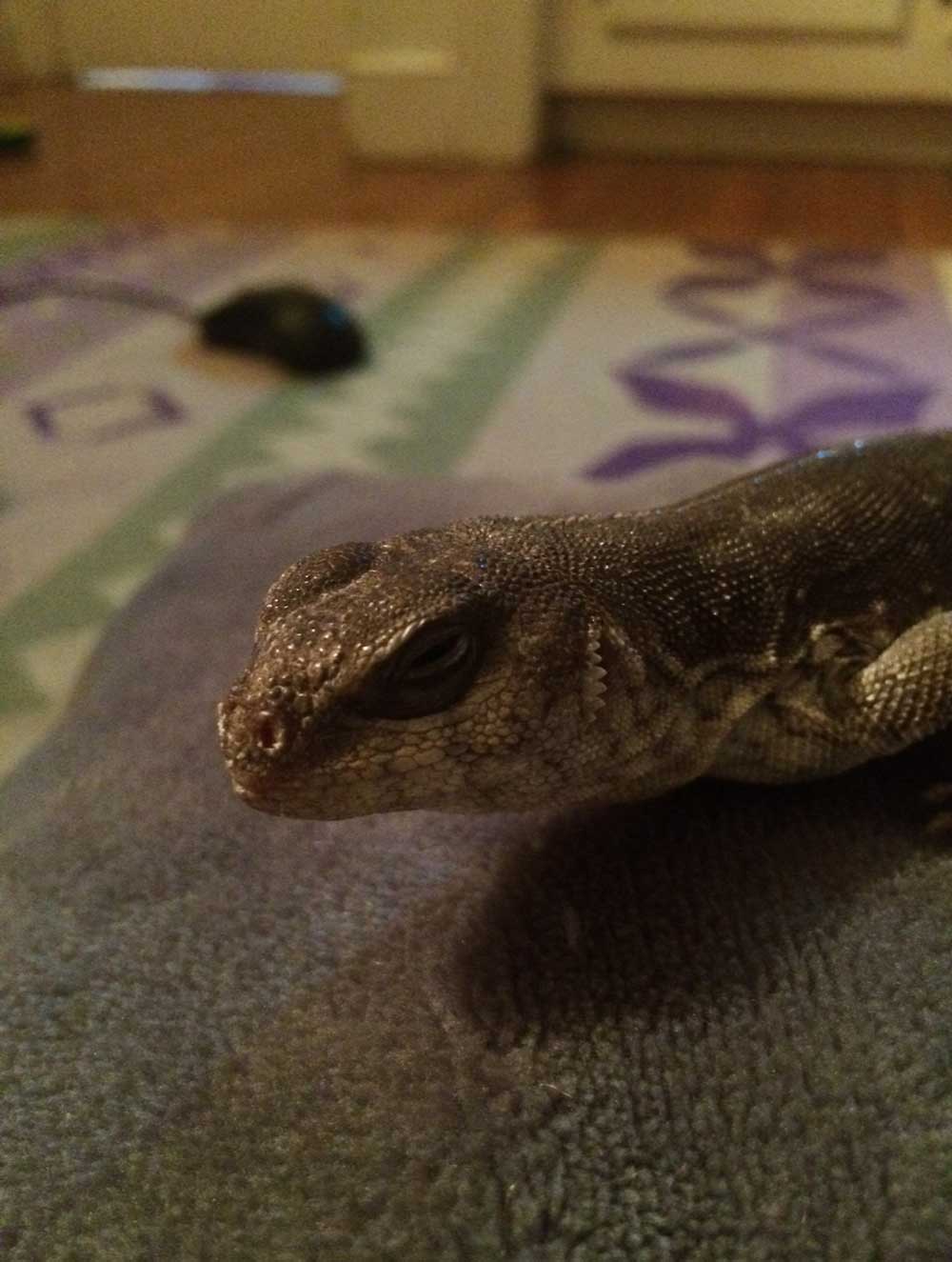
Zak. Photo by Andrew Cohen
The cage should be filled with about 8 to 10 inches of sandy substrate, decorated with objects to encourage healthy behaviors. Almost any sandy substance will do; calcium sand is digestible but some claim unsafe for reptiles, clean quartz sand is ideal (personally, calcium sand has never caused issues for my desert iguana). Clean the sand about once a month with a filtered scooper, and replace it when it gets dirty. Desert iguanas, again, love to climb and burrow, so add small branches, shells, and basking rocks to the terrarium. Desert lizards do well with low humidity, so misting the cage is not necessary but may be done rarely if the substrate is too dry for burrowing. If nothing else, make sure there are areas in which the iguana can move to escape heat and direct light.
Diet
Desert iguanas are primarily herbivorous. In the wild, they eat leaves and flowers from desert shrubs with occasional insects as a supplement. Captive diets can be much more varied. Desert iguanas will eat a large variety of fruits and vegetables, including berries, grapes, tomatoes, sweet peppers, corn, squash, collard greens, and small nuts. Importantly, dice these foods to the appropriate size for your iguana’s small mouth. In my experience, finding new foods for my iguana to try was great fun, and he has clear favorites (squash and cucumber flowers, and garden raspberries). However, some foods like avocados and eggplant are bad for lizards, as are high quantities of spinach or kale.
While a dish of fresh water should be supplied at all times, desert iguanas very rarely drink directly to hydrate. Moist, leafy greens are great to include as a means for hydration, but should not be relied on for nutrients. They do not need supplements, including insects, if varied vegetable matter is supplied. They will also not overeat, so old excess food should be replaced daily.
Behavior
Desert iguanas are very docile animals and can become very accustomed to handling or eating out of one’s hand. Handling your lizard frequently, especially when young, will make them even friendlier. They enjoy being lifted from beneath, not enclosed, and are cautious about their delicate limbs and tail. Reptile behavior is linked to temperature, and very warm iguanas will be alert and quick. A sluggish lizard is likely too cold.
Wild, frightened, and/or warm individuals can bite, but very rarely. More likely, they will run away suddenly and quickly. Desert iguanas are very fast sprinters, and will be difficult to catch if loose. Your lizard will love being taken outside, but keep an eye on them at all times for this reason.
Desert iguanas shed about once a month, more or less frequently with age. The dead skin can be removed when cleaning the cage, and you must never pull the skin directly to try and remove it. This can damage the skin underneath. For very old or dry lizards, a bit of moisture and tweezers can be used to carefully and slowly remove shed skin stuck to the nose or ear holes.
Desert iguanas will dig, and move around items in their cage. Food and water will be covered with sand unless they are in raised containers. A fun game when cleaning sand, or anytime: move all the sand to one side of the cage, and leave the rest barely covered. Your iguana will spread the sand evenly across the floor within the day.
Health Concerns
Of the health issues that any reptile may face, a few are more common with desert iguanas. In particular, metabolic bone disease (MBD) is a common issue for all iguanas with a calcium deficiency. Dietary issues (too much spinach) or improper lighting are common factors, and the disease can be fatal. Look for muscle twitching and general illness.
Desert iguanas are generally hardy, but have fragile extremities. In an unsafe terrarium, desert iguanas may break their nails or toes. They can drop their tails, but only do so under extreme duress. The tail will not always grow back, depending on the iguana’s age and health.
Breeding
Fair warning: I have not bred the desert iguana myself, but know people who do:
Breeding any reptile can be a challenge, and requires time and space to do properly. Breeding desert iguanas is not recommended for novice reptile keepers, but is possible with the proper expertise. An excellent terrarium is essential, as lizards will only breed in ideal conditions with low stress. In particular, desert iguanas require a deposition site for eggs with soil that is moist and at a temperature between 30ºC and 38ºC (85ºF and 100ºF). A female will lay up to eight eggs, which take 60 to 75 days to hatch depending on incubation temperature. Hatchlings are around 4.5 to 5.5 inches total, growing quickly and reaching maturity at about 33 months. They can be housed together but males must be separated after a few months.
References:
Hulse, A.C. 1992. Dipsosaurus dorsalis. Catalogue of American Amphibians and Reptiles 542: 1-6.
Sprackland, Robert. 2010. Pocket Expert Guide to Lizards: 300+ Essential Species. TFH Publications, Neptune, NJ.
Stebbins, R.C. 2003. A Field Guide to Western Reptiles and Amphibians, Third Edition. Houghton Mifflin Company, Boston, MA.
Sprackland, Robert. 2014. Desert Iguana Care Sheet. @ 2023 Reptiles Magazine
Malone, C. L., Reynoso, V. H., & Buckley, L. (2017). Never judge an iguana by its spines: Systematics of the Yucatan spiny tailed iguana, Ctenosaura defensor (cope, 1866). Molecular Phylogenetics and Evolution, 115, 27–39. https://doi.org/10.1016/j.ympev.2017.07.010