
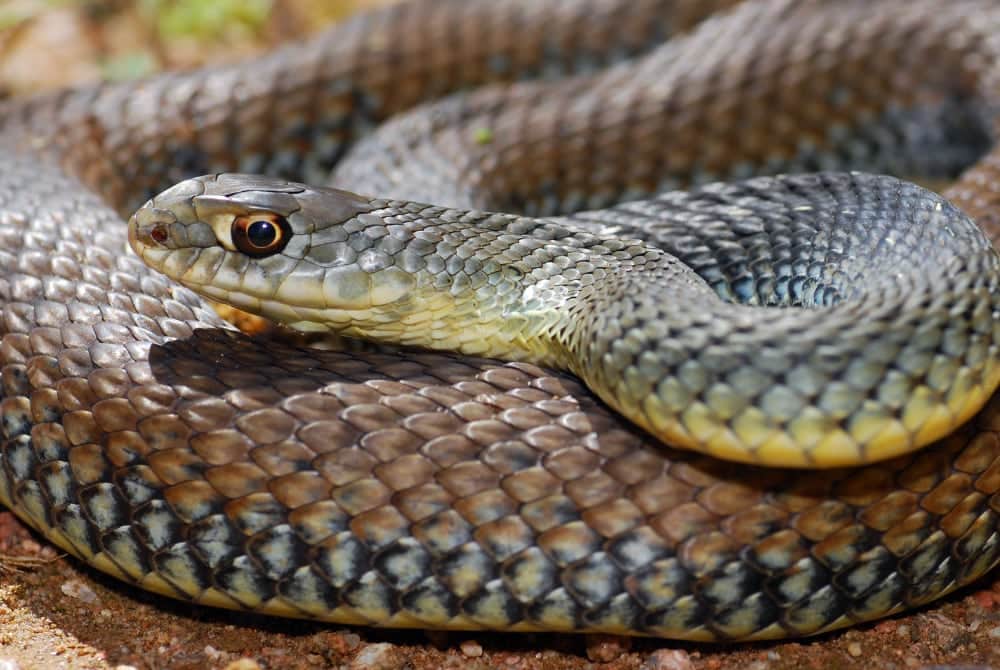
Cannibalism is a widely distributed behavior both in terms of species and geography and has been recorded on all continents where snakes occur
Researchers in Brazil have concluded that there are 207 known snake species that are cannibalistic, based on the Web of Science, Google Scholar and Scopus databases that collect data on cannibal behavior of snakes. From these databases the researchers, Bruna B. Falcão, Vinícius A. São Pedro, Omar M. Entiauspe-Neto of the Universidade Federal de São Carlos, Laboratório de Estudos Zoológicos do Alto Paranapanema in Brazil, and the Laboratório de Coleções Zoológicas, Instituto Butantan in Brazil, classified the occurrences of cannibalism in several ways. This included maternal-offspring cannibalism, cannibalism between offspring, sexual canibalism, combat-dance cannibalism, and undetermined.
The researchers then split the cannibalism events into wild or natural events, when the observation occurred in a natural, wild setting; in captivity, when the event took place in captivity; and unknown, when an animal is dissected and the circumstance in which the cannibalistic event occurred was unknown. They determined that most of the cannibalistic events were opportunistic with the majority of the events occurring in captivity.
Black-headed Python Cannibalism Event Caught On Camera In Australia
The researchers noted that the observed cannibalistic behavior occurred the most in snakes of the family Colubridae (29%) Viperidae (21.2 %) and Elapidae ((18.9 %). In all, the researchers identified 503 cannibalistic events in 299 published papers. Most of the published events were as short communications at 42.9 percent. Full-length articles comprised 28.2 percent, and other, comprised 28.8 percent. Snakes of the Pseudoxyrhophiidae family (Elapidae) has the most cannibal records in Africa. Viperidae was the most prevalent in the Americas, and Colubridae in Asia and Europe.
The researchers concluded that cannibalism is a widely distributed behavior both in terms of species and geography and has been recorded on all continents where snakes occur. They said that for snakes in captivity, confinement in enclosures, movement restriction, lack of enrichment, and close proximity to conspecifics are huge stressors that the researchers say may trigger cannibalism. In the wild, factors that may cause cannibalism include predator abundance, resource availability and microclimate.
The complete paper, “Occurrence and evolution of cannibal behaviour in extant snakes” can be read on the Biological Reviews website.