
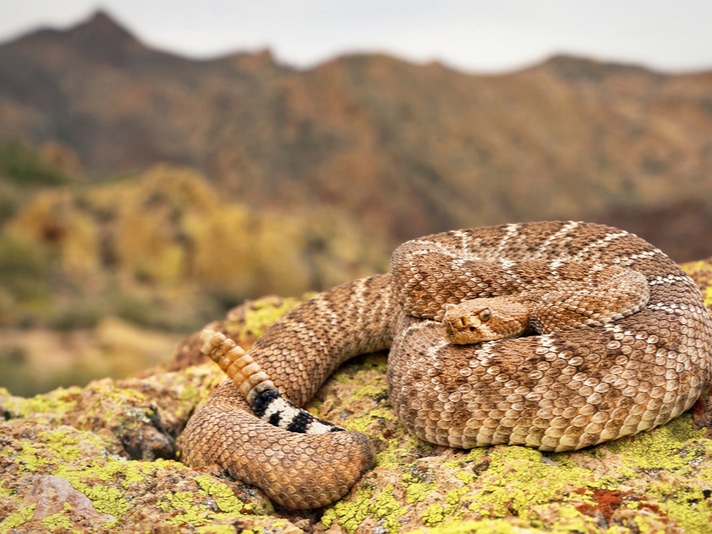
Seeds that have passed through the digestive tracts of the rattlesnakes remain viable and capable of germination for up to one year after they have left the snake’s gut.
Researchers with the Department of Research, Conservation and Collections, Desert Botanical Garden, Phoenix, AZ, Chiricahua Desert Museum, Rodeo, NM, and the Illinois Natural History Survey, University of Illinois, Champaign have published a paper detailing how the western diamondback rattlesnake (Crotalus atrox) disperses seeds that are in the gut of seed-eating rodents.
In lieu of wild seed eating rodents, of which there are restrictions upon and may carry disease, the researchers used frozen thawed lab rodents. They made a small incision mid venter and inserted foothill palo verde plant seeds by hand into the abdominal cavity of the rodent and fed them to the five venomous snakes that were in the study. These snakes were wild-collected as juveniles from southeastern Arizona or southwestern New Mexico and reared at the Chiricahua Desert Museum.
The five snakes were fed a total of 675 seeds. This occurred in six feedings from September 2023 to March 2024. Following the feedings, the seed laden poop was collected and stored in plastic bags in the dark, at room temperature of 19-22 degrees Celsius. Each poop bag included data relevant to the study, including seed type, snake type, date of consumption and excretion. All the poop bags were then sent to the Desert Botanical Garden for germination testing.
The research determined that seeds that have passed through the digestive tracts of these venomous reptiles remain viable and capable of germination for up to one year after they have left the snake’s gut. The researchers also determined that the rattlesnake excrement, (feces and urates) had higher germination success (40.07 percent) than seeds that were planted without the rattlesnake poop (28.95 percent). Control seeds with no snake exposure had a germination success rate of 28.2 percent.
The research suggests that snake poop can facilitate germination and the western diamondback rattlesnake can act as seed rescue and secondary dispersal agents.
The complete study, “The potential for seed rescue and secondary dispersal in rattlesnakes” can be read on the Royal Society Open Science website.