
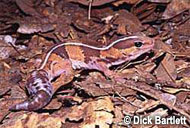
Description:
Cages for fat-tailed geckos can be as simple as 20-gallon aquariums; other enclosures sold in pet stores work just fine. (Lids are always a good idea.) Fat-tailed geckos require humidity, some keepers use orchid bark as substrate or a mixture of potting soil and peat moss. The fat-tailed gecko needs a bowl of fresh water available at all times. An under-cage heating pad should provide a warm spot (up to 90 degrees Fahrenheit) on one end of the cage. A hide box or cork tube should be provided as an area for the fat-tailed gecko to retreat and feel secure. Crickets and mealworms are readily accepted by the fat-tailed gecko and are available at pet stores. A healthy growing fat-tailed gecko should eat about 20 to 25 insects per week; feeder insects should be supplemented with vitamins. Pinky mice may also be given as a treat once or twice a week.
Habitat:
Dry, arid areas.
Range:
Western Africa, ranging from Nigeria to Senegal.
Scientific Name: Hemitheconyx caudicinctus
Species Group: gecko
Family: Eublepharidae
Size: Averages 6 to 10 inches in length.
Level: beginner
Weight:
Dangerous: No