
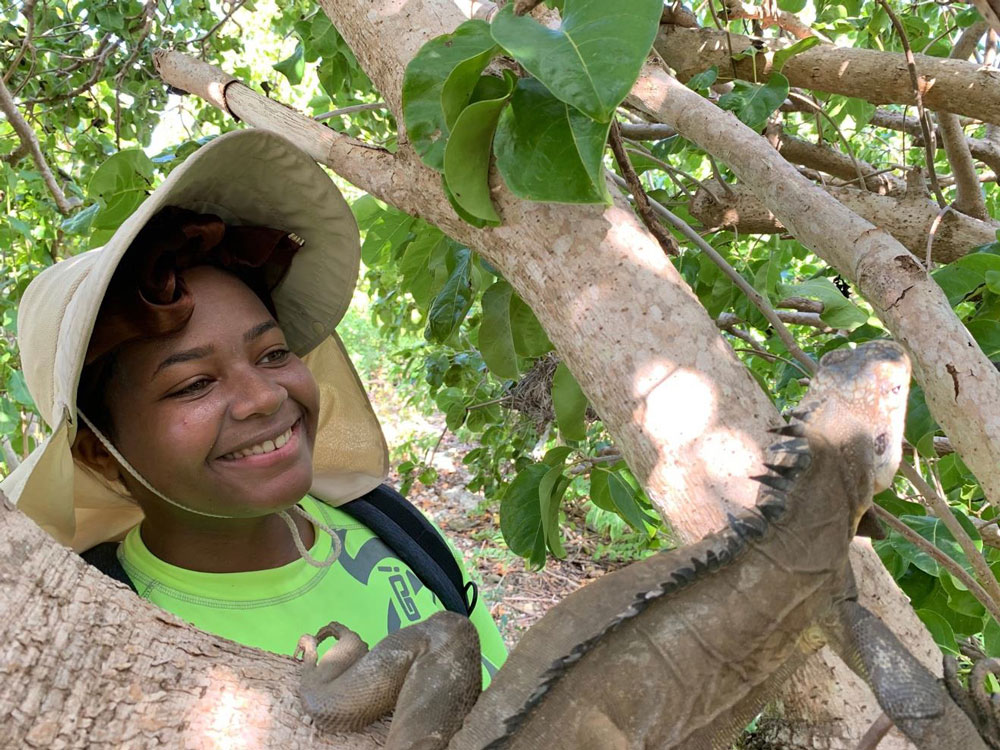
Since the translocation of the 33 iguanas five years ago, Prickly Pear East has seen a surge in the iguana’s populations.
Conservationists with the Anguilla National Trust, Re:wild and the Forestry, Wildlife & Parks Division in Dominica announced that a 2016 translocation effort of 23 Lesser Antillean Iguana has been successful, with the species breeding on the invasive species-free Prickly Pear East Island.
In 2016, Anguilla National Trust conservationists began translocating the critically endangered Lesser Antillean iguana (Iguana delicatissima) from the mainland to Prickly Pear East, an islet that has no invasive species. A total of 23 iguanas were translocated. The researchers determined that the genetic diversity could not be achieved with 23 specimens, so the team contacted the Forestry, Wildlife & Parks Division in Dominica, asking for some young Lesser Antillean iguanas from Dominica. This was in an effort to boost the genetic diversity on the islet. The government of Dominica sent 10 healthy young Lesser Antillean iguanas in 2021. The iguanas were released on Prickly Pear East in hopes that they would breed with the existing population of 23.
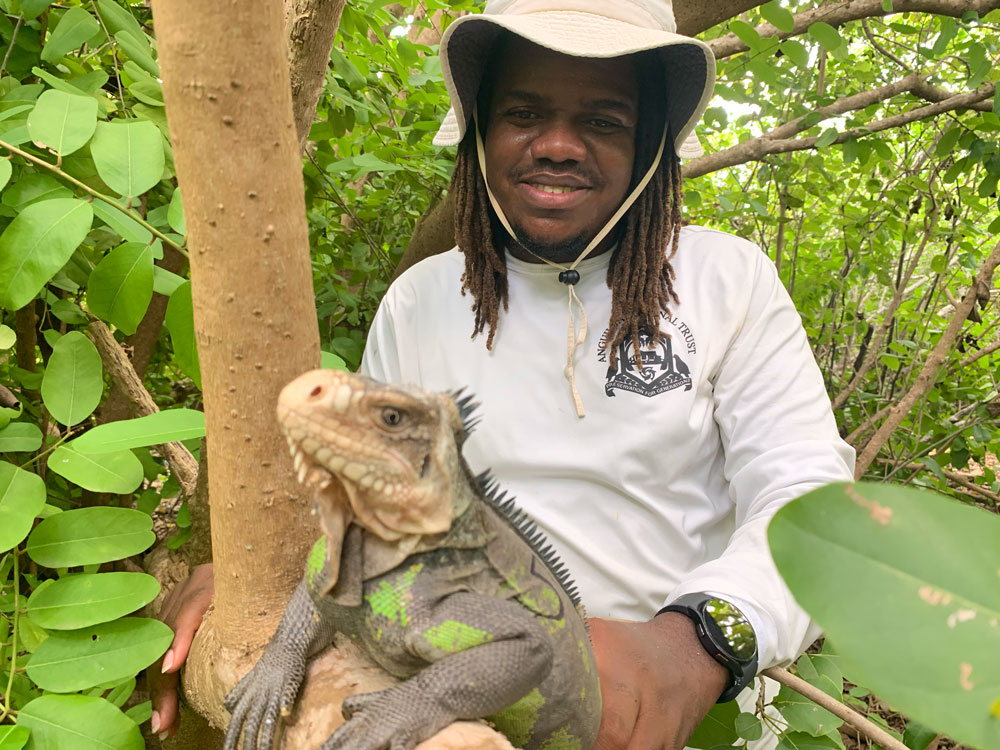
Devon Carter with a Lesser Antillean iguana. Carter is doing population monitoring and genetic testing.
“Thanks to the kind assistance from our friends in Dominica, as well as funding from the UK Government through Darwin Plus, the Lesser Antillean iguana is making a comeback in Anguilla,” Jenny Daltry, Caribbean alliance director, Fauna & Flora and Re:wild said in statement sent to ReptilesMagazine.com. “Prickly Pear East has become a beacon of hope for these gorgeous lizards—and proves that when we give native wildlife the chance, they know what to do!”
Since the translocation of the 33 iguanas five years ago, Prickly Pear East has seen a surge in the iguana’s populations. Surveys have now shown more than 300 adults and young iguanas on the island. The island is one of five sites in the world where the species are thriving and safe from invasive iguanas. A second release site has been established on mainland Anguilla. This site is fenced off to prevent cats, dogs, and the common green iguana from penetrating the release site. it is hope that the iguana can establish in this area as well when they are reintroduced in 2026.
“This is a love story not just of iguanas trying to re-establish their population, but of Anguilla’s people working to restore a part of our natural heritage,” Farah Mukhida, executive director at the Anguilla National Trust said in the statement. “Beyond being important seed dispersers, Lesser Antillean iguanas are an important part of Anguillan culture. With the planned re-introduction to Fountain National Park, we’re hoping to not only re-establish the iguana’s natural ecosystem function within a restored environment, but to also help people reconnect with nature, using the Lesser Antillean iguana as a flagship species and connection point.”
Lesser Antillean Iguana Information
The Lesser Antillean iguana has disappeared from much of its native range in the Eastern Caribbean, due largely to the invasive green or striped tailed iguana, a much larger species that outcompetes and hybridizes with the Lesser Antillean iguana. It has a shortened face when compared to the green iguana and is much smaller, measuring about 17 inches in length for the males and 15 inches in length for the females. It is found in scrub woodlands, rainforests and mangroves in its native range of Lesser Antilles on Saint Barth, Anguilla, St. Eustatius, Guadeloupe, Dominica, and Martinique. Hybridization with the green iguana is the number one reason for its population declines. In one instance, a group of green iguanas washed ashore on the island of Anguilla in 1995. After 20 years, the Lesser Antillean iguana, endemic to Anguilla, was completely gone from the island, according to a research paper in the Journal of Heredity.