From a pink iguana living on a single volcano to a lizard smaller than a coin, meet seven rare and unusual lizards and discover what makes each one truly special.
SPONSORED CONTENT
7 Rare and Unusual Lizards You Probably Have Never Heard Of
Lizards live everywhere from rainforests to deserts and remote islands. Some, like green iguanas, are familiar, while others are rarely seen because they hide in isolated places, blend into their surroundings, or survive in tiny numbers. These seven unusual lizards stand out for their looks, behaviour and the threats they face.
Chinese Crocodile Lizard (Shinisaurus crocodilurus)
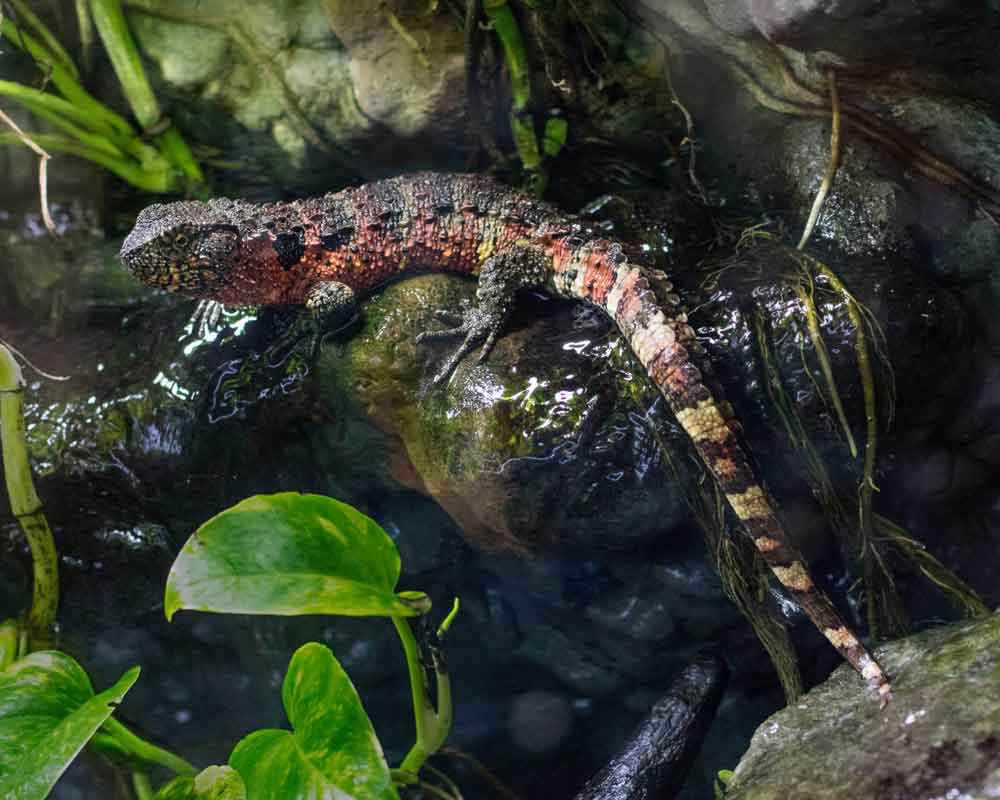
Chinese crocodile lizard. Photo by Greg Hume/WIkipedia
This lizard lives near clear forest streams in southern China and north-eastern Vietnam. It grows to 40–46 cm, and its scaly body and muscular tail give it a crocodile-like look. It rests on branches above water and eats worms, tadpoles, shrimp, and small fish. The IUCN lists it as Endangered due to habitat loss, pollution, and the pet trade.
Bornean Earless Monitor (Lanthanotus borneensis)
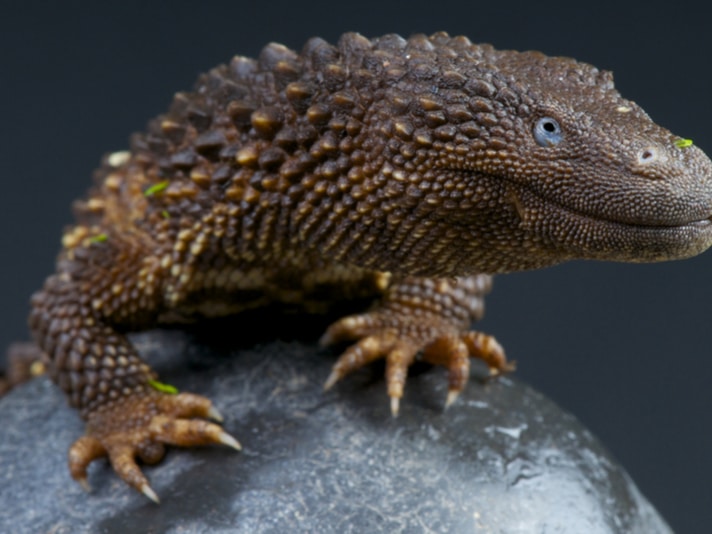
Bornean earless monitor. Photo by reptiles4all/Shutterstock
The earless monitor is the only member of its genus and has no external ear openings. Its key traits are:
- About 20 cm from snout to vent, with a tail of similar length.
- It lives in lowland streams and swamps in Sarawak and Kalimantan, Borneo.
- It is secretive and shelters in burrows or near water.
Protected in Malaysia since 1971, it is still threatened by illegal pet collection. It is listed as Endangered by the IUCN and under CITES since 2017.
Galapagos Pink Land Iguana (Conolophus marthae)
First spotted by park rangers in 1986, this pink iguana was only described as a new species in 2009. It lives solely on Wolf Volcano on Isabela Island, in an area of about 25 square kilometres. Fewer than 200 mature individuals are thought to remain, threatened by introduced cats and rats and by possible eruptions.
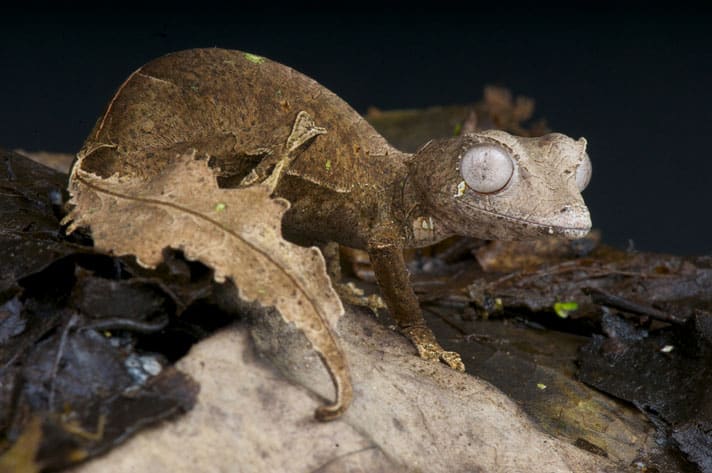
Satanic Leaf-Tailed Gecko (Uroplatus phantasticus)
This gecko lives in the forests of eastern Madagascar. It is a master of disguise, and its main features are:
- A flat, veined body and tail that look like a dead leaf.
- Small horn-like projections above its reddish eyes.
- Nighttime activity and daytime camouflage.
It is listed as Least Concern, but deforestation remains a risk. Trade is regulated under CITES Appendix II.
Nano-Chameleon (Brookesia micra)
Found only on Nosy Hara, a small island off northern Madagascar, this chameleon is under 30 mm long and one of the smallest reptiles known. It was described in 2012. It forages in leaf litter by day and sleeps on low branches at night. The IUCN lists it as Near Threatened, with habitat disturbance posing a risk to its restricted island population.
Thorny Devil (Moloch horridus)

Thorny devil (Moloch horridus). Photo by Robert Dani/Shutterstock
The thorny devil lives in Australia’s deserts, grows up to 21 cm, and can live 15 to 20 years. When threatened, it lowers its head and shows predators a spiny hump that works as a false head. Grooves between its scales channel water to its mouth, and it eats thousands of ants a day. Adult readers who enjoy a bit of chance can explore further on Slotozilla, which lists 100 free spins with no deposit offers and their wagering rules. The thorny devil, though, relies on far more than luck.
Fiji Crested Iguana (Brachylophus vitiensis)
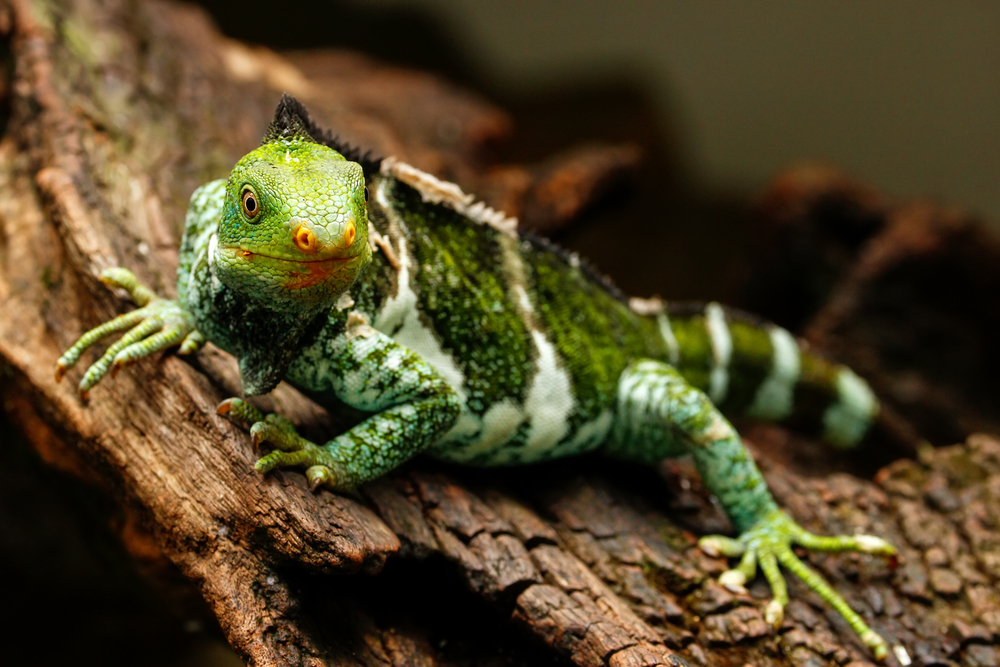
Fiji crested iguana. Photo by Don Mammoser/Shutterstock
This bright green iguana, up to 75 cm long, lives in the dry forests of a few northwestern Fiji islands and can darken to black when threatened. Described in 1981, it is Critically Endangered due to fires, feral goats, invasive plants, and cats. The protected island of Yadua Taba holds up to 4,000 individuals.
The Seven Lizards at a Glance
The main facts are summarised below, with IUCN statuses as cited above:
| Lizard | Range | Size | IUCN status |
| Chinese crocodile lizard | China, Vietnam | 40–46 cm | Endangered |
| Bornean earless monitor | Borneo | ~20 cm snout-to-vent | Endangered |
| Pink land iguana | Isabela Island | 47 cm body (male) | Critically Endangered |
| Satanic leaf-tailed gecko | Eastern Madagascar | Up to ~9 cm | Least Concern |
| Nano-chameleon | Nosy Hara, Madagascar | Under 30 mm | Near Threatened |
| Thorny devil | Central Australia | Up to 21 cm | Least Concern |
| Fiji crested iguana | North-western Fiji | Up to 75 cm | Critically Endangered |
Statuses can change after reassessment, so check the current Red List. Lizards of every size face threats, from the tiny nano-chameleon to the Fiji crested iguana.
What Threatens These Lizards
Most of these species face the same threats: forest clearing, introduced predators such as cats and rats, the exotic pet trade, and fires, storms, or eruptions on small islands. For animals with tiny ranges, a single bad season or a new predator can affect most of the population.
How Readers Can Help
Interest in unusual reptiles can support conservation or harm it. Anyone who loves lizards can make a difference with a few simple choices:
- Never buy wild-caught reptiles, especially those protected under CITES.
- Support reserves and programs that protect forest habitat.
- Choose zoos and sanctuaries that run breeding and research programs.
Small choices add up when many people make them. Rare lizards cannot speak for themselves, so people who know about them need to.