
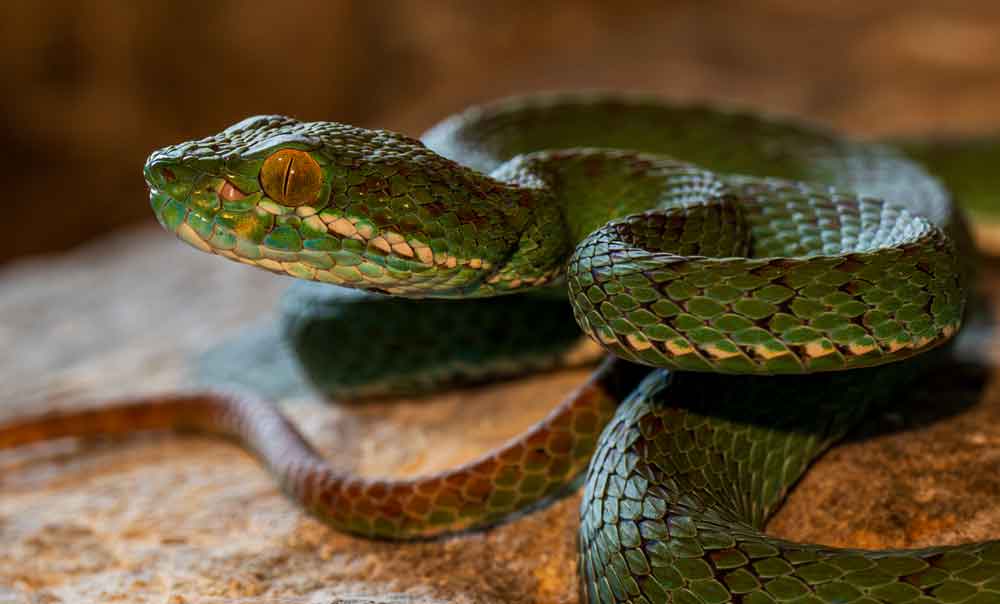
The researchers spent several years exploring more than 60 caves in Battambang Province in western Cambodia.
Researchers with Fauna & Flora and with collaboration from Cambodia’s Ministry of Environment have released information on several new reptile species that call Cambodia’s karst ecosystems home. The researchers spent several years exploring more than 60 caves in Battambang Province in western Cambodia, covering 10 hills. The expedition uncovered three new gecko species, and a new pit viper species.
“Cambodia’s karst areas are a treasure trove of scientific secrets waiting to be uncovered. From undiscovered reptiles and snails, to hidden caves – there is still so much we do not know about these unique ecosystems and the diversity of creatures living within them, Sothearen Thi, Karst Biodiversity Coordinator, Fauna & Flora said in a statement released to the media. “But, without sustainable management, we may never find out what these areas truly hold. Karst landscapes are facing many human-driven challenges, and biologically significant species could go extinct before they have even been discovered. We are working with the Cambodian government and local partners to increase protection of the landscapes, with sustainable management being the number one priority.”
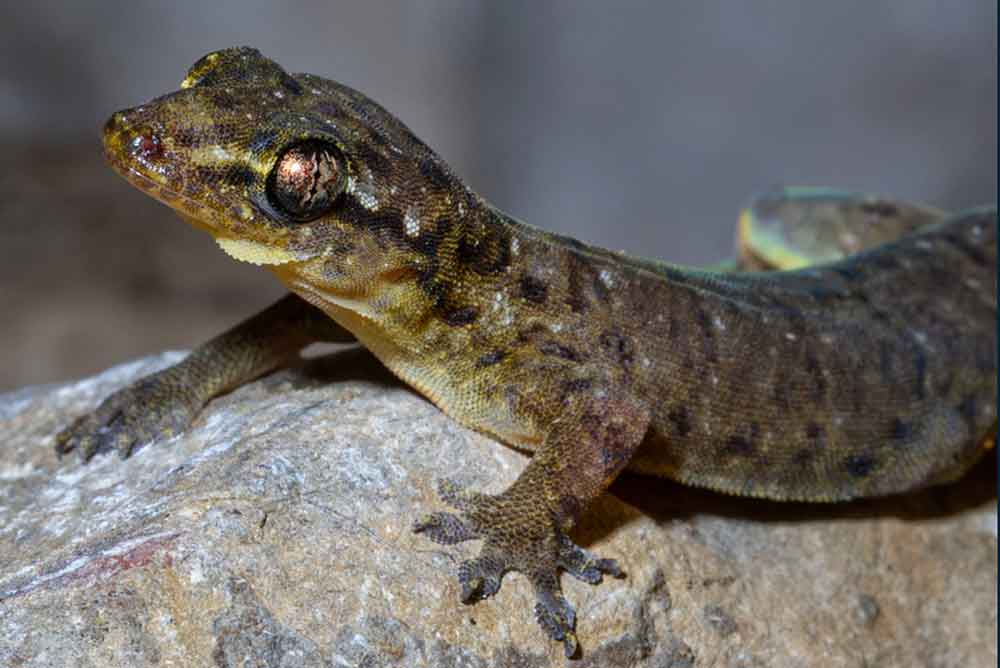
Gehyra species. Photo © Phyroum Chourn /Fauna & Flora
“Battambang is composed of isolated karstic hills and caves; each acting as its own laboratory of natural selection and evolution,” Dr. Lee Grismer, professor of biology at La Sierra University, USA and a supporter of the survey team said. “Think of it as their own vignette of biodiversity, where nature is performing the same experiment over and over again independently. We go to these separate places and analyse the DNA of the species, and we see how the experiment has run. Some look alike, some look different, and by analysing this we can get an idea of what the driving forces are behind the way they evolve. If we are truly going to conserve the biodiversity on this planet, we need to understand what is there. We can’t protect something if we don’t know it exists.”
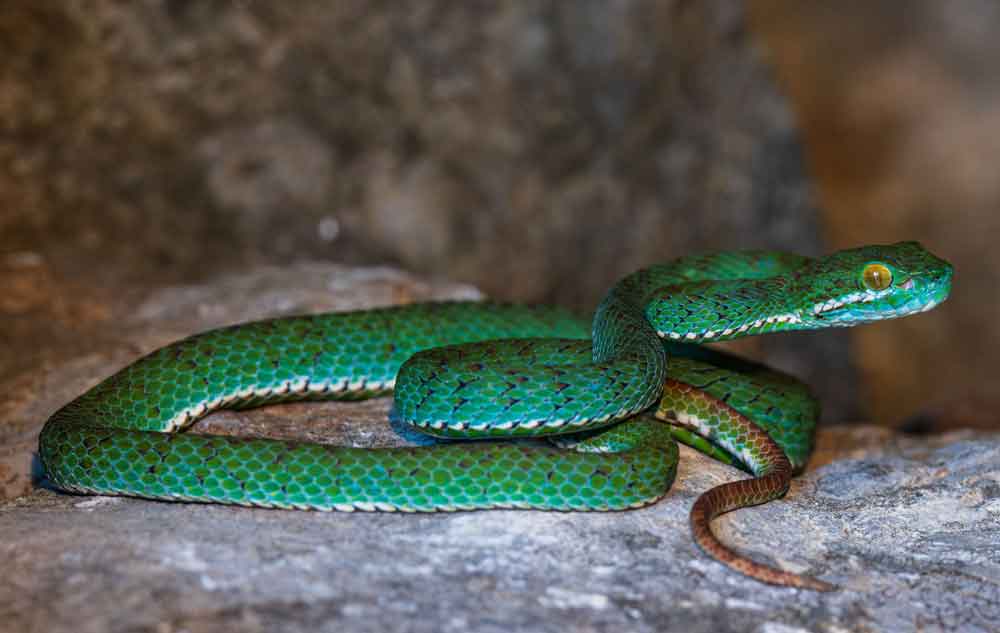
Trimeresurus sp. Photo © Phyroum Chourn /Fauna & Flora
A new species of pit viper from the Trimeresurus genus was found during the survey. It is currently being described. The venomous snake is green in coloration with yellowish eyes and rust-red coloration on top of the tail while retaining the green body coloration on the botton. The tip of the tail is also a rust red. The Trimeresurus genus of pit vipers are found in Asia. Currently, 44 recognized species have been described. This one will be the 45th. They are also known as Asian palm pit vipers, Asian lanceheads and green pit vipers.
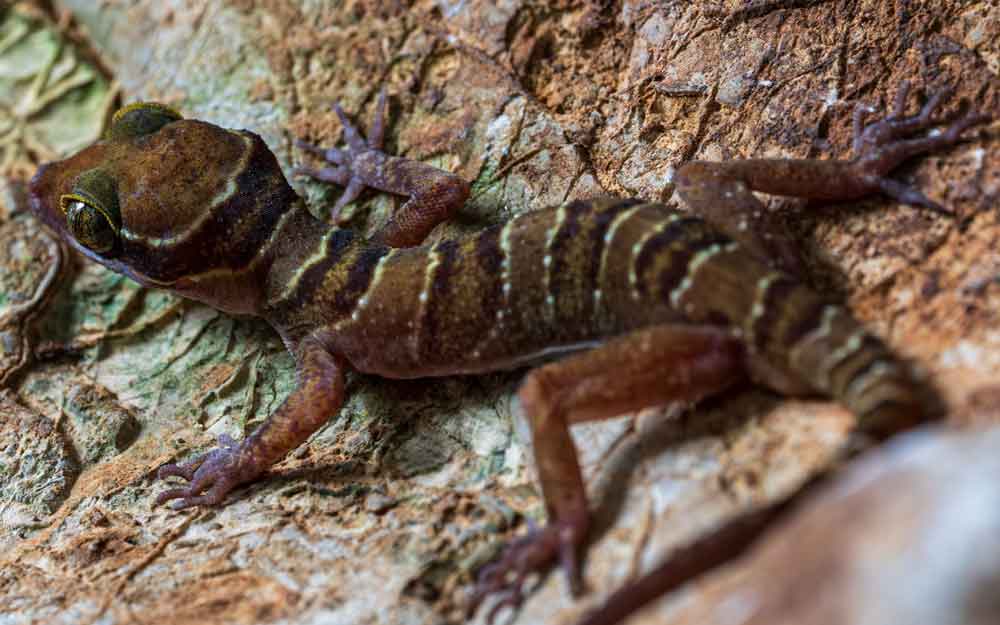
Cyrtodactylus. Photo by Phyroum Chourn /Fauna & Flora
The researchers discovered four populations of a new species of gecko from the genus Cyrtodactylus. The gecko, named the Kamping Poi bent-toed gecko was found in the karst formations, The researchers think that the four populations may be distinct and on separate evolutionary trajectories. Further genetic testing will determine if they are four species instead of one.
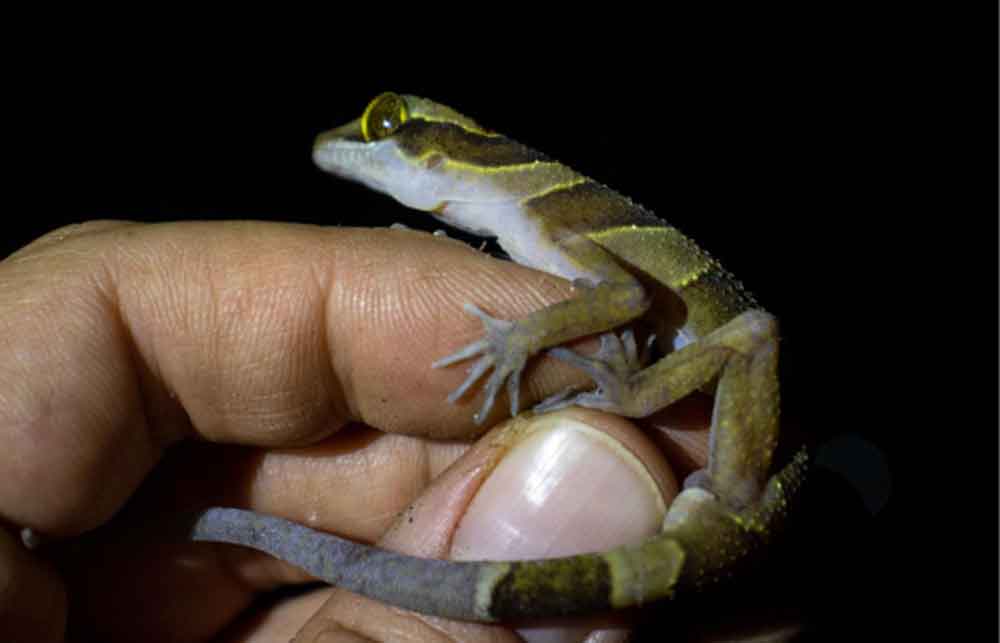
Cyrtodactylus kampingpoiensis Photo © Phyroum Chourn /Fauna & Flora
The Battambang leaf-toed gecko, Dixonius noctivagus, is covered in small leopard-like spots, the researchers said. It is named after its nocturnal lifestyle. Noctivagus means night wanderer in Latin.
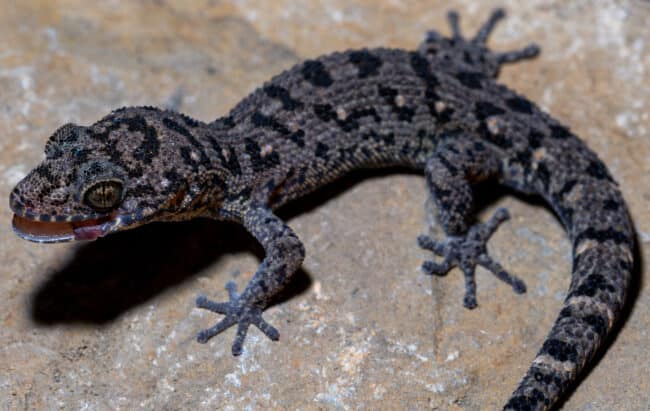
Dixonius sp (Phnom Thippadei Battambang) Photo © Phyroum Chourn /Fauna & Flora
A new species of gecko in the Gehyra genus has been discovered and is currently being described. The gecko has toe pads and claws and communicates via clicks and chirps that the researchers say is similar to house geckos.
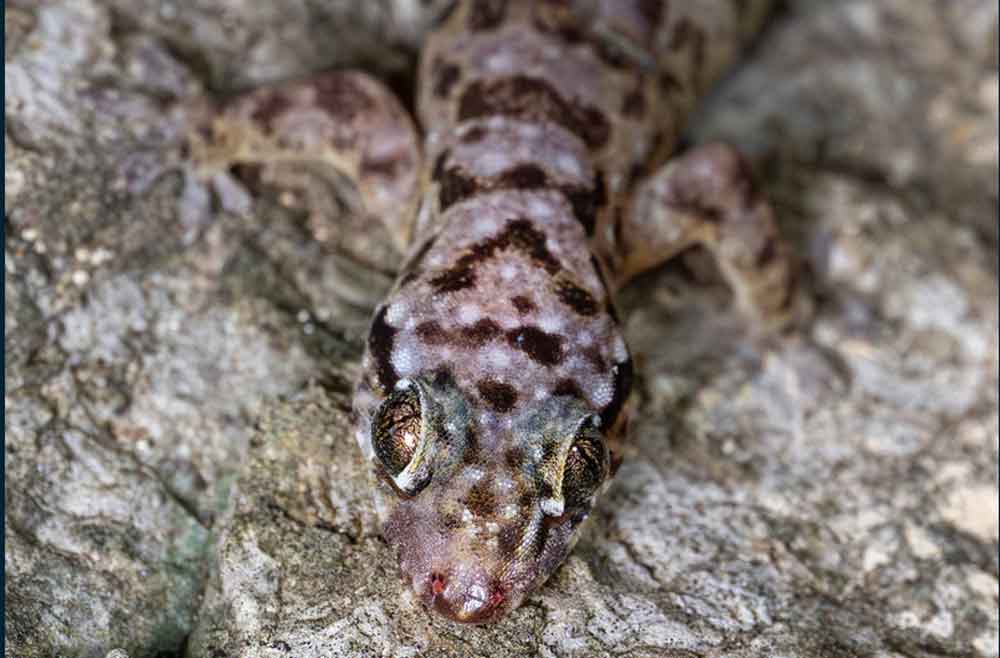
Dixonius sp. Photo © Phyroum Chourn / Fauna & Flora
Researchers Discover And Describe New Gecko Species From Cambodia