
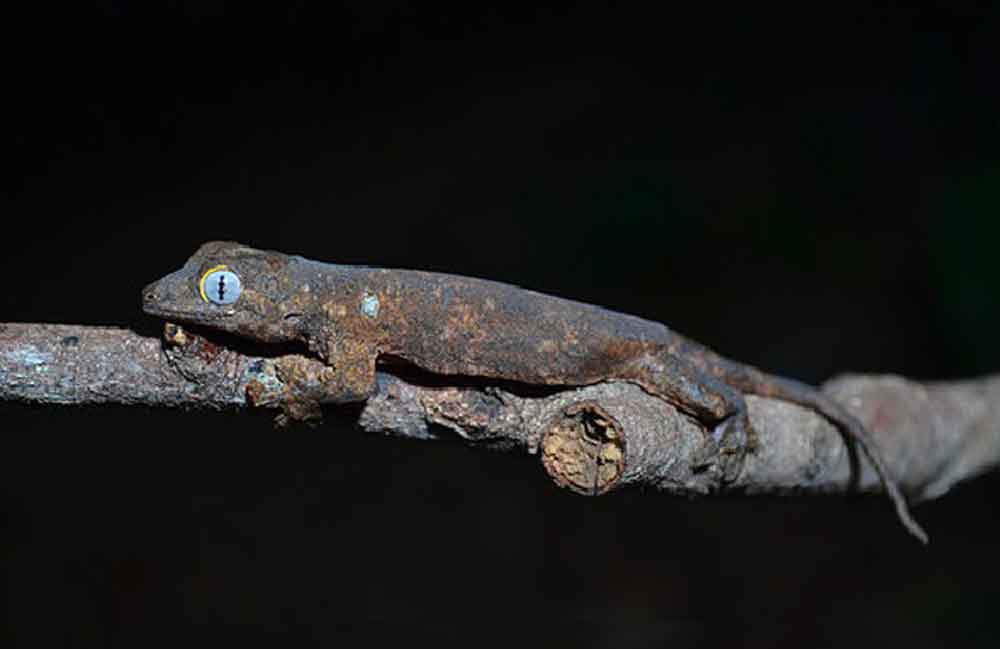
Luperosaurus alvarezi is currently known to exist only in a protected forest area that surrounds Mt. Guiting-Guiting National Park, in central Sibuyan Island in the Romblon Island group.
A new forest gecko species from the central Philippines has been discovered and described. The gecko, Luperosaurus alvarezi, is described based on two species collected from Sibuyan Island in Romblon Province in the Central Philippines.
Its closest relatives are L. cumingii (southern Luzon), L. angliit (northern Luzon), L. corfieldi (from Panay and Negros islands), and L. macgregori (the Babuyan and Batanes island groups), according to the researchers. These lizards are far from the locality of Luperosaurus alvarezi, which is currently known to only exist on the deep water Sibuyan Island in the middle of the island archipelago.
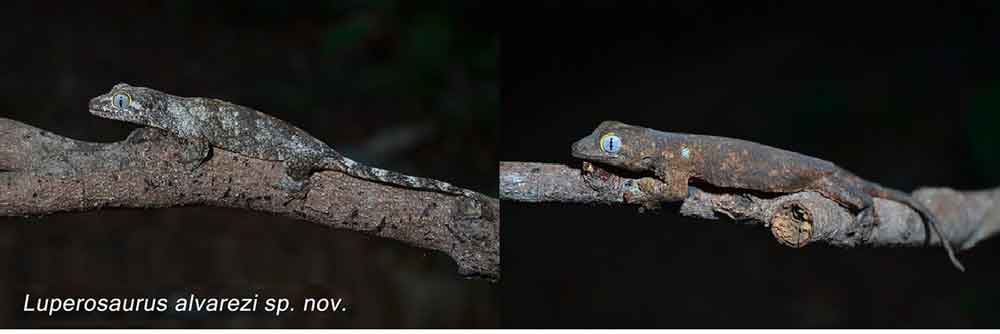
Luperosaurus alvarezi is described based on two species collected from Sibuyan Island in Romblon Province in the Central Philippines. Photographs by Camila G. Meneses and Rafe M. Brown.
The gecko is named after the late James Alvarez, a renowned Filipino taxonomist-ecologist and bat expert who fell ill and died while trekking up Mt. Apo in 2018. The mountain is the country’s highest peak at 9,692 feet (2,954 meters) and close to Kidapawan City, where Alvarez began his ill-fated expedition.
Luperosaurus alvarezi has a snout to vent length of 66.1mm (male) and 78.3mm (female). The gecko is mottled dark brown in coloration on the extremities, midbody, tail and dorsal surface of the head. The color pattern is rough, sparse and uneven. Coloration above the eyes are bright yellow. Ventral surfaces of the head are yellow, and the iris is a light gray to blue.
Deforestation Leads To Hybrid Leyte Chorus Frog In The Philippines
Luperosaurus alvarezi is currently known to exist only in a protected forest area that surrounds Mt. Guiting-Guiting National Park, in central Sibuyan Island in the Romblon Island group.
The complete paper describing the species, “A new species of fringed Forest Gecko, genus Luperosaurus (Squamata: Gekkonidae), from Sibuyan Island, Central Philippines,” can be read on the PeerJ Journal website.