
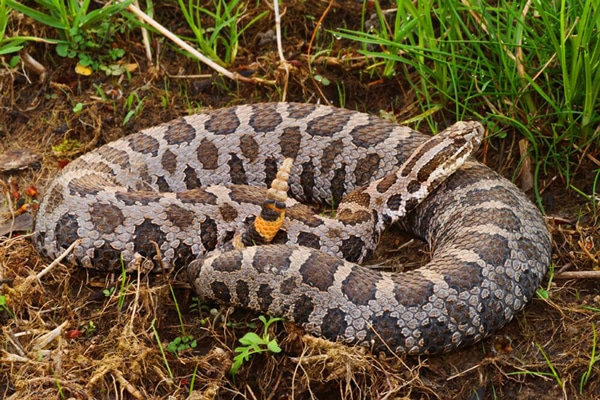
These rattlesnakes are the result of a captive breeding effort that launched at the zoo in 2009.
The Lincoln Park Zoo announced on Facebook February 23 that nine Eastern Massasauga rattlesnakes were born at the zoo’s Regenstein Small Mammal-Reptile House. These rattlesnakes are the result of a captive breeding effort that launched at the zoo in 2009. They are third generation offspring of the original breeding stock that was brought to the zoo back then.
“People tend to fear Eastern massasauga rattlesnakes because they’re venomous, but they’re actually a rather shy species and an important part of the Great Lakes region’s ecosystem,” Dan Boehm, a curator at Lincoln Park Zoo told WTTW News.
It is a small rattlesnake, growing from 24 to 30 inches including the tail. It is gray or tan in coloration with large and rounded brown/black blotches down the center of the back and three rows of alternating spots on the sides. It lives near wetlands that have sedges, shrubby peatlands, wet meadows and floodplains. The feed on small mammals, birds and bird eggs as well as lizards, inverebrates such as centipedes and other insects, small snakes and frogs.
Snake Fungal Disease Changes Skin Microbiome of Eastern Massasauga Rattlesnakes
The venomous snake species has suffered from a variety of issues, mostly man made, including habitat loss; an increase in woody invasive species that disrupt’s the snake’s habitat structure; flooding; drought; snake fungal disease; and persecution by humans who don’t understand the value of these venomous animals
Eastern Massasagua Rattlesnake Information
The Eastern Massasagua rattlesnake was listed as threatened in 2016, one year after the United States Fish and Wildlife Service proposed protections for the species under the Endangered Species Act. The eastern Massasauga rattlesnake is one of the smallest rattlesnakes in the United States. The rarely seen snake, which grows to about 2 to 2 1/2 feet in length, is found in wetland areas in states including Illinois, Indiana, Iowa, Michigan, Minnesota, Missouri, New York, Ohio, Pennsylvania, and Wisconsin. The venomous snake is listed as an endangered species in Illinois, Indiana, Iowa, Minnesota, Missouri (considered extirpated), New York, Ohio, Pennsylvania, and Wisconsin. The venomous snake is also highly susceptible to snake fungal disease. In addition to its common name, massasauga rattlesnake, the venomous snake is also known as the swamp rattler, swamp massasauga, swamp rattlesnake, and triple-spotted rattlesnake, to name a few.