There is a current trend in the herpetocultural community toward providing larger enclosures for fewer animals, with a strong emphasis on naturalistic design.
The review of this product is part of an ongoing overhaul of many of my reptile and invertebrate enclosures. To recap from previous reviews, most of the animals that I keep have been in my collection for years and have traditionally been housed in standard aquarium tanks outfitted with a screen cover. As stated before, this is all we had to work with decades ago and, while functional, such designs do not allow for cross-ventilation, the screen covers could be difficult to secure, and when servicing these enclosures, the only option was to go in through the top. Flighty, arboreal lizards could escape with ease if care was not taken when removing the cover. In addition, if the screen covers were not secured, snakes could easily push themselves out through gaps around the rim. While leopard geckos do not fit any of those characteristics, I still wanted to get them out of the old 40-gallon, screen-covered aquarium that they were housed in and into a newer, more attractive vivarium with new landscape features.
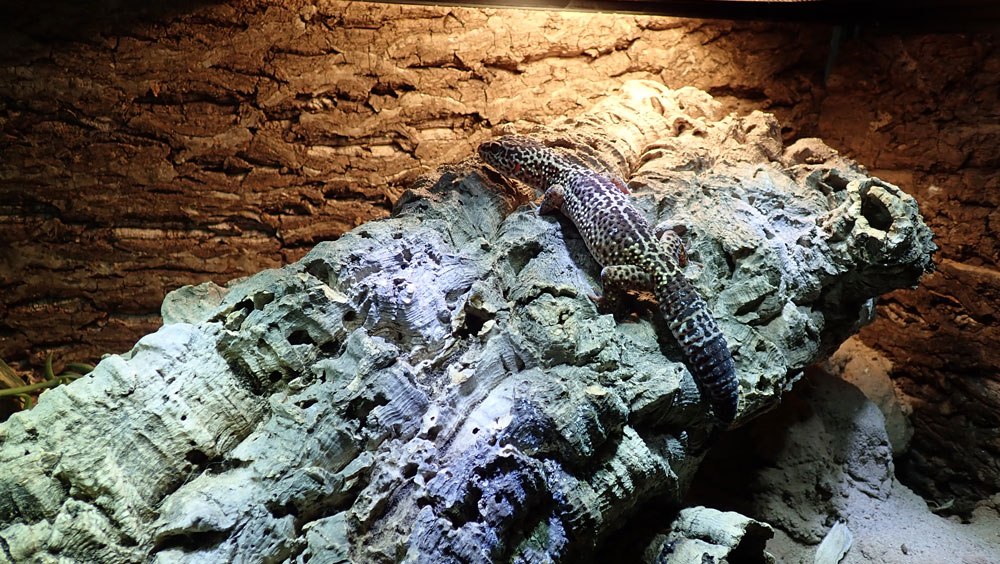
The Zoo Med 40 Gallon ReptiHabitat is a 36 X 18 X 18-inch (91.4 X 45.7 X 45.7 cm) enclosure that features front opening doors. Photo by Foster Reves
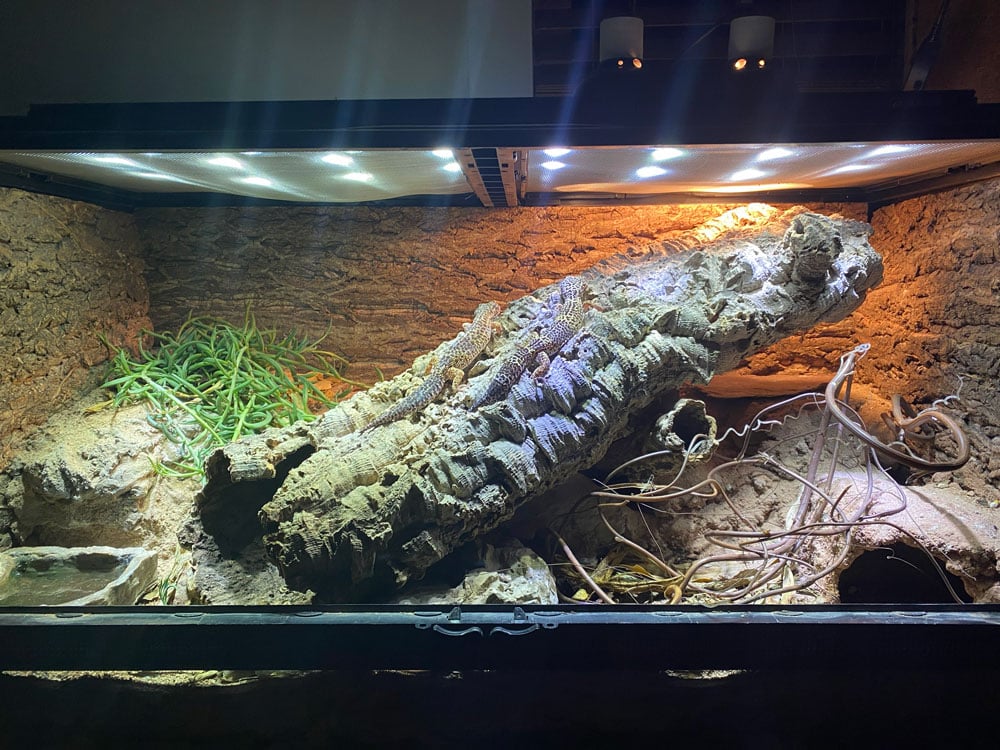
The Zoo Med 40 Gallon ReptiHabitat is a 36 X 18 X 18-inch (91.4 X 45.7 X 45.7 cm) enclosure that features front opening doors with an option to add a lock if desired, and twin screen covers that lock into place. In addition, a cross-bar ventilation feature runs along the front of the unit just below the doors. The enclosure is sleek and attractive. As with the company’s other models, the artwork on the packaging is sleek and engaging. Various species of reptiles and amphibians are listed under the caption of “Suitable Animals for Terrarium.” The wording does not explicitly state that the pictured animals are suitable for a 40-gallon tank however and with this said, several species depicted would require larger enclosures as adults, such as a Chinese water dragon (Physignathus cocincinus). Size being relative, the 36 X 18-inch footprint is an excellent capacity for a vast array of smaller herps, invertebrates, and other animals. As with the other Zoo Med enclosures that I have reviewed, a pictured paper background is included. The flip side of the background depicts a short guide on how to set up a naturalistic vivarium as well as a number of accessory products that the company offers. Additional selling points, as outlined on the packaging include:
- All glass habitats are made in the USA
- Used and recommended by zoos worldwide
- Backed by science and 42 Years of reptile experience
- Industry leading warranties and customer service
- Helping support education and conservation efforts
Cover
As previously mentioned, this model features dual screen tops which lock into place. One drawback, and this is not only with this product, but nearly all commercial enclosures, regardless of manufacturer, is that the screen tops are weaker when compared to screen covers designed for standard aquariums. While well designed to accommodate the lighting and heating equipment made for these units, the screen would be unable to support any additional significant weight without potential risk of damage. Even though the tops of reptile enclosures should not be used as storage areas for anything, I have, for decades, routinely placed potted houseplants on top corners of many of my screen covered aquariums. This trade-off is minimal however given that the locking mechanisms make the enclosure virtually escape-proof for all but perhaps hatchlings of nano species.
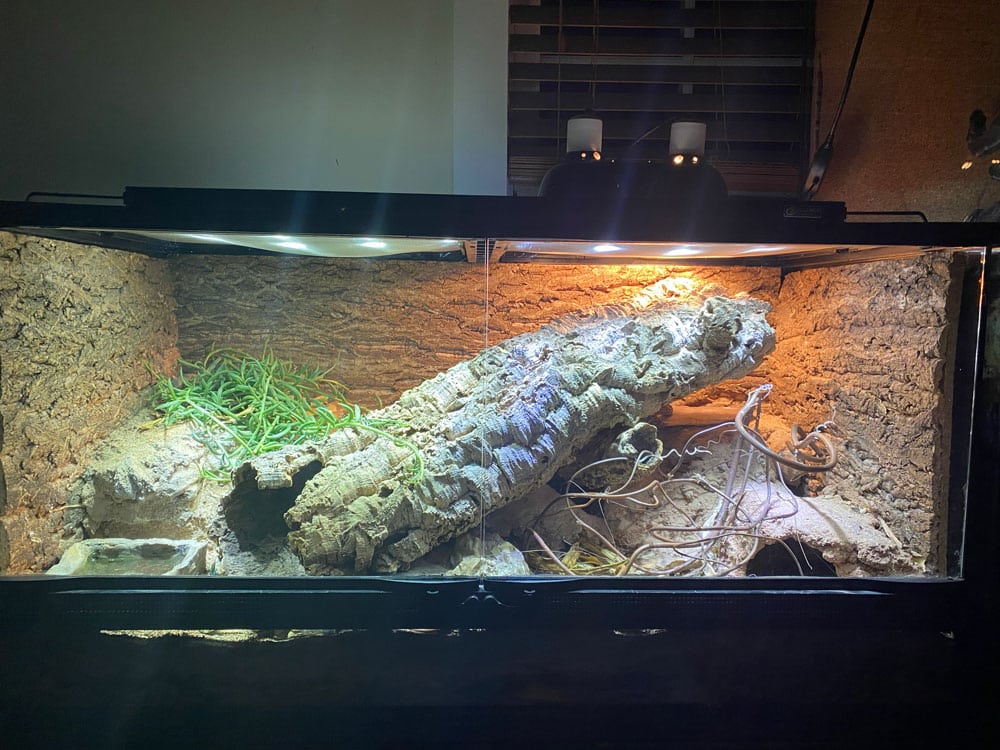
The Zoo Med Day/Night desert Lighting Kit provides a hot spot on one side of the enclosure. The enclosure includes large pieces of cork bark for basking and hiding. Photo by Foster Reves
Lighting
Lighting is provided by the Zoo Med ReptiSun LED Terrarium Hood. The company’s description of this product on their website is as follows: This unit features include 6500K daylight high output lighting, 620 nm Red LEDs to stimulate plant growth, moon lite 465 nm Blue Led simulates a lunar effect, boasts a 20,000-hour life range, sliding side rails makes for easy mounting over the vivarium, as well as instructions for changing or replacing LED modules.
The red and blue secondary light features definitely add to the display potential. Leopard geckos are frequently thought of as a nocturnal species, thus requiring no UVB. Eublepharis macularius is in fact more crepuscular in nature, being active at dawn and dusk. Leopard geckos do in fact benefit from UVB exposure. In addition, over the years the author has observed his animals frequently basking during the day. The Zoo Med ReptiSun Terrarium Hood provides an excellent source of UVB. In addition to heat, the Day/Night desert Lighting Kit also provides additional UVB benefits.
Heating
Heating is supplied by the Zoo Med Day/Night desert Lighting Kit. The kit includes a twin, deep dome light fixture, a 75 watt Repti Basking Spot Lamp, and a 75 watt Nocturnal Infrared Heat Lamp. Both bulbs are excellent sources of heat and are placed over a section of sand covered shale, which amplifies the amount of heat produced by warming up under the lamps. A piece of slate situated under the day lamp will absorb heat throughout the day and provide a source of belly heat for a while after the lights are turned off in the evenings. The temperature on the surface of the slate averages around 92 degrees Fahrenheit (33.3 degrees Celsius).
Background
I have always been a huge fan of the cork tile background, unlike many other commercial vivarium backgrounds there is no artificial quality to it. The background looks good in most naturalistic enclosures, whether tropical or desert in design. The cork walls also greatly expand the surface area available for climbing with arboreal species. Despite being a terrestrial species, I even notice my leopard geckos scaling the cork walls with some frequency.
Landscape Construction
The majority of the reptiles and amphibians in my collection hail from either tropical or temperate forest habitats. The leopard geckos are an exception of course. Often thought of as creatures of the desert, Eublepharis macularius are in fact more of an arid scrubland species. This provided a wonderful opportunity to utilize the Zoo Med Excavator Clay Burrowing Substrate. I enjoy designing intricate vivariums and have always wanted to work with this medium, which allows for creativity when designing landscape and constructing shelters.
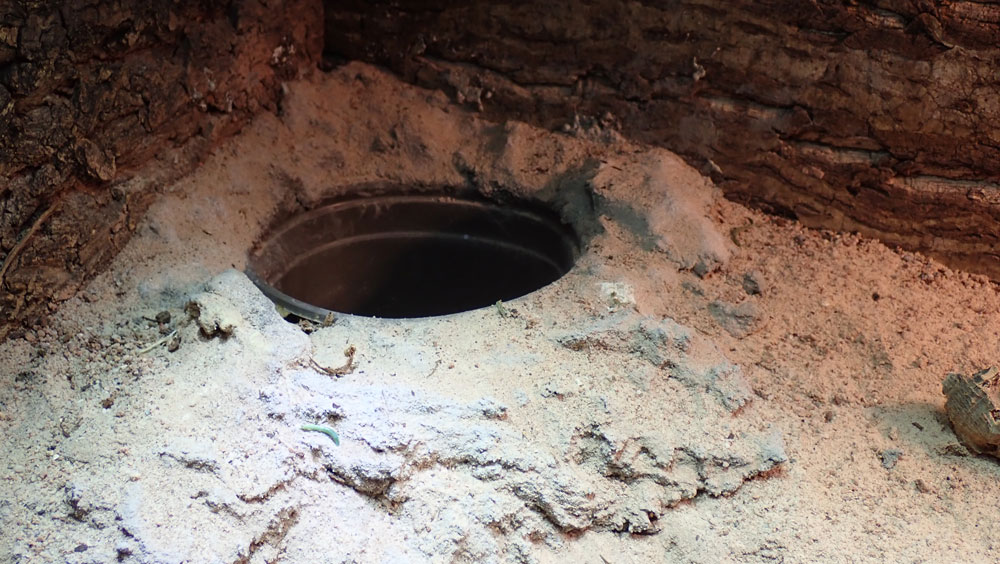
Creating a spot for the succulents
Leopard geckos are commonly housed in enclosures that are largely flat, with little to no access to vertical space. While not truly arboreal, E. macularius will climb up and over rocks, logs, and low-lying vegetation.
I began the build with the drainage layer. Since my original plan involved placing plants in several locations, a uniform drainage layer was added in order to prevent root rot. An approximate 1.5-inch (3.81 cm) layer of clay pellets was used. Two adjacent sheets of Zoo Med Substrate Mesh were then placed over the pellets. The two adjacent sheets fit the enclosure perfectly, so no additional trimming was required. Later I discovered that when using the Excavator Clay, it was easy to inadvertently shift the positioning of the mesh.
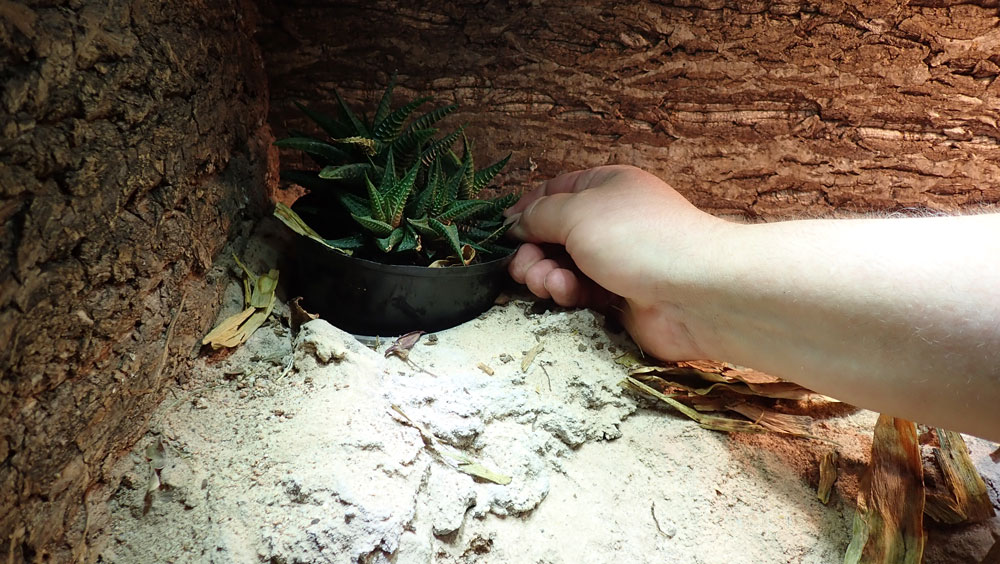
Placing the succulents into the spot
I sketched out the design that I had in mind, although the details were modified repeatedly during the process of the build. The base design was to consist of two tiers, with the taller one in the back, running the length of the enclosure. After the tiers were created, multiple hides, using the Excavator Clay, were fashioned. The use of small balloons to mold the shape of subterranean hides is a very useful concept. This build incorporated the use of single bags of Excavator Clay substrate, with a few balloons being purchased separately. The Excavator Kit comes with balloons as part of the contents. A balloon can be inflated to the desired size, set into place, and then moist clay can be molded around it. My goal was to create subterranean hides for the geckos that are hidden from view to be aesthetically pleasing yet still easily accessible. A humid area was created by placing a deep plastic saucer filled with damp sand inside one the hides. Despite the molding capability, the Excavator Sand is also a very attractive substrate while dry. I mixed in ReptiSoil, some dry coco coir that I had on hand, and a small amount of play sand in order to give a more xeric appearance.
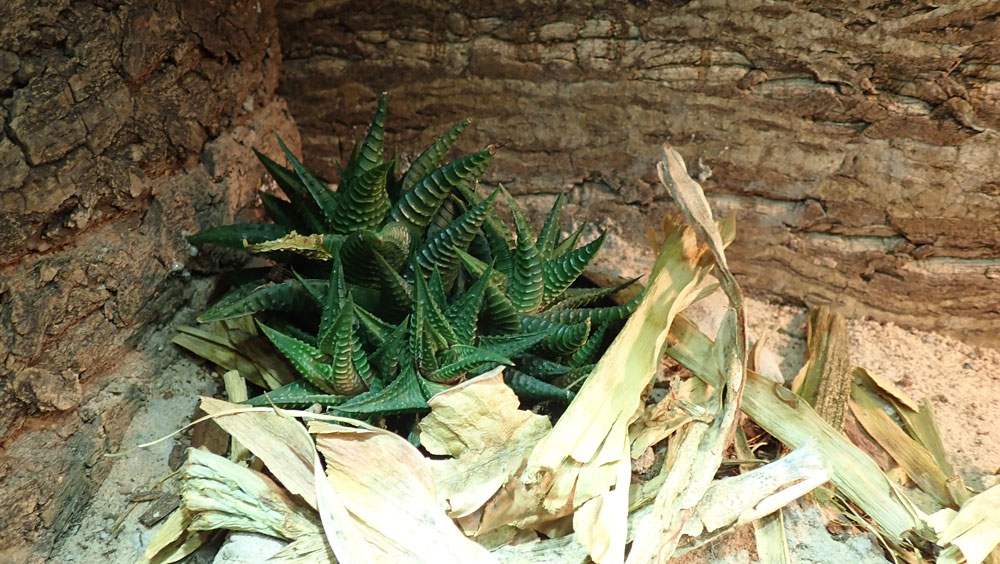
I realize that there is some online controversy about using loose substrate, however animals in this group have been kept on a sand and soil mixed substrate for over three and a half decades and there has never been a problem with impaction. Dried and crumpled leaves from my various houseplants were added for aesthetic appeal as well as for a food source for the isopods. As previously mentioned in another review (http://bit.ly/4mQ4w2p), I am generally not a fan of artificial vegetation. This said I incorporated a Zoo Med Naturalistic Flora Flexible Hanging Vine. I love the appearance, and it adds aesthetic appeal in both tropical and desert vivariums.
Leopard geckos will utilize one corner of their enclosure as what is termed a defectorium, or an area to defecate. Isopods will help to a degree however regular cleaning of this area is required.
A large, oval shaped cork hollow was incorporated for several reasons. The shape of this particular piece allows for a spacious hiding area. The height provides additional surface area for climbing. In addition, placing the cork at a slope, with one end underneath the heat lamp, provides the additional benefit of creating a heat gradient, both on the surface and within the cavity. Surface depressions carved out using the Excavator Clay are converted into shelters once the cork tube is in place. The cork round can easily be moved in order to check on the status of the lizards.
Plants
Plant selection for desert and arid vivariums is more limited when compared to tropical setups. On the surface cacti and other succulent plants are readily available, usually with a diverse selection, from most big box home and garden stores. The issue is that many species have sharp spines which would pose a constant threat within the confines of a vivarium. In addition, most that are readily available will simply eventually grow too large for the average enclosure. Succulents that do stay on the smaller size may have somewhat fragile leaves that a leopard gecko would eventually demolish.
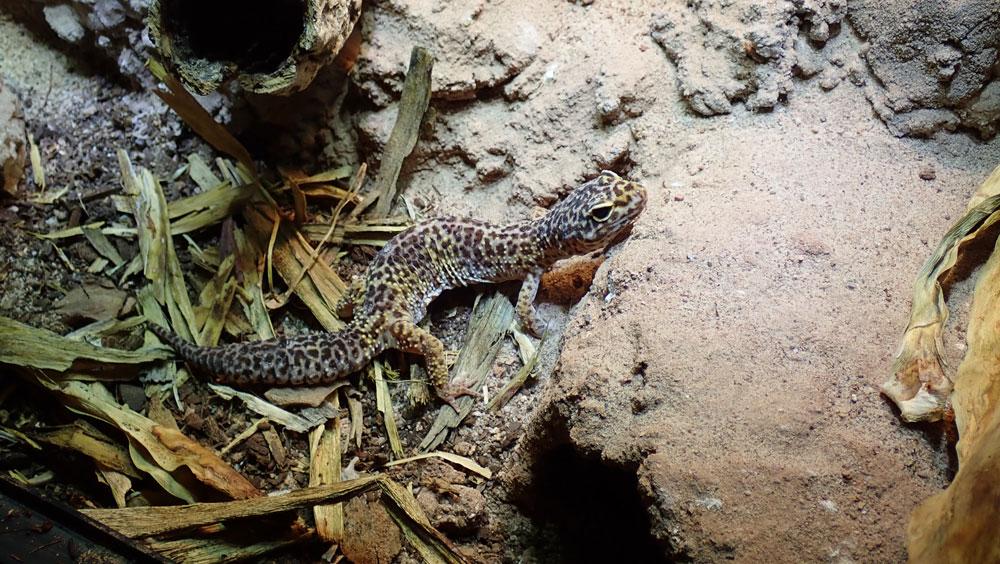
Excavator clay used to create a cave.
There are some exceptions, however. I found myself frequently changing my mind as to which species to utilize. Traditionally compact cultivars of Dracaena (formally Sanseveria) trifasciata have been the only species ever utilized with my leopard geckos. Advantages include ready availability, small size, absence of spines, and the ability to do well under vivarium conditions.
As previously mentioned, I wanted to provide as much usable space as possible. Incorporating too many plants would limit the surface area available for the geckos to move around. The use of a single, showpiece plant will give the enclosure an attractive, but not overly complicated, look. This said, I wanted to deviate from my normal plant selection with this build. As a succulent enthusiast as well, I used this self-imposed dilemma to justify hours of internet browsing, referencing my various plant books, and looking at the local selections offered at various nurseries and big box stores in order to find a personally acceptable alternative.
Finally at one point I recalled a passage from an old herp husbandry book addressing a very similar situation. My apologies to the author, I remember reading this decades ago. I no longer have this book, nor can I recall the title. The suggestion given was to rotate desert plants out. The advantages of rotation include being able to replace specimens after growing too large, changing up the aesthetic appearance of the vivarium, and giving individual plants a chance to receive natural sunlight, either on the windowsill or outdoors during the warmer months.
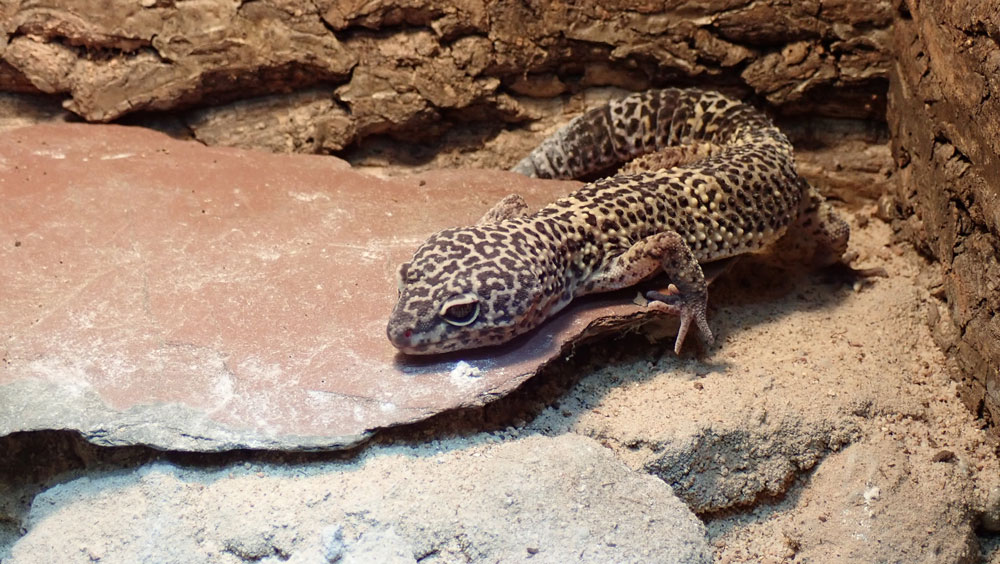
A spot for the leopard gecko to thermoregulate. Photo by Foster Reves.
The new plan now being in place, a cavity was constructed that would perfectly accommodate a 4-inch (10.16 cm) plastic pot. A potted plant can now be set directly inside the foundation container and easily switched out at will. The cavity was formed using expanding foam. A false bottom was incorporated to allow for water drainage. A succulent plant can be gently watered while in place with no concern over the surrounding sand becoming saturated. Should a heavy watering ever be required, it is easy enough to remove the plant and do this in a sink, replacing the pot after the water has drained. A small hollow adjacent to the foundation pot was created and filled with a small amount of damp sphagnum moss. This area can be used by the isopods for additional shelter, with the humidity aiding in molting.
Isopods for the Leopard Gecko Enclosure
The Giant Canyon isopod is a European species that has also been introduced to America. I have been using Porcellio dilatatus for years in a variety of vivariums. The species is highly adaptable to a diversity of conditions, including the semi-arid E. macularius vivarium, living within the nooks and crannies of the cork bark.
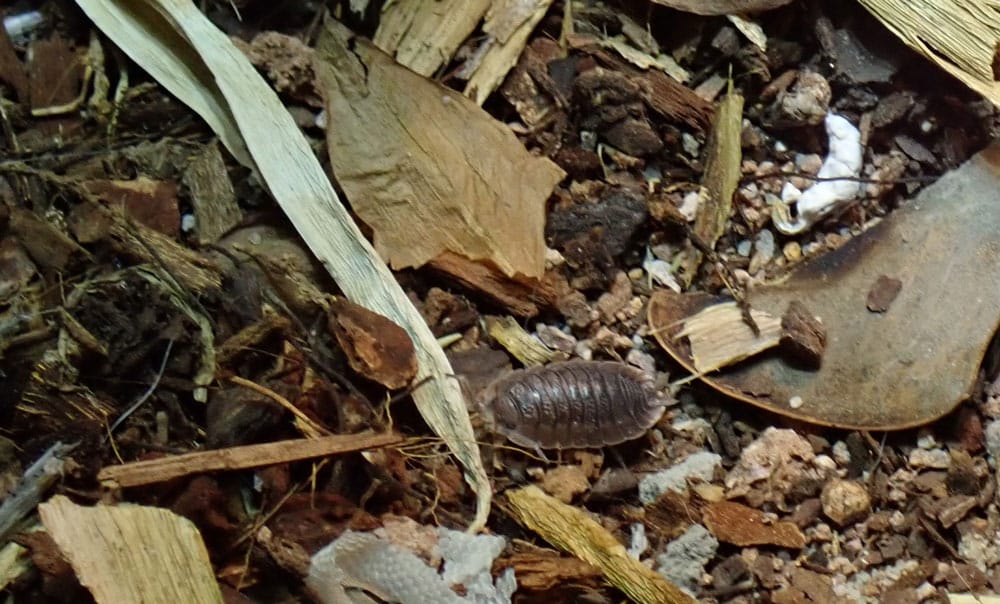
Isopods serve as both the cleanup crew and feeder insects. Photo by Foster Reves.
In addition to consuming decaying organic matter such as dead plant leaves and crickets, P. dilatatus offers an additional advantage of not overproducing, which can happen in more humid enclosures. Giant Canyon isopods are also preyed upon by not only leopard geckos, but a variety of other herp species as well. Mexican Alligator lizards (Abronia graminea), various Goniurosaurus, Anolis species, newts, salamanders, and many others in general have all accepted P. dilatatus as a food source over the years.
Can You Cohabitate Leopard Geckos?
Following various discussion forums and online videos, I have found it both interesting and perplexing that there is this current trend against cohabitating animals. I have kept my E. macularius in groups of one male and several females since 1988. The size of the enclosures varied in the early years, however for the past several decades I have kept them in 40-gallon enclosures. My oldest female is from this original group and at the time of this writing is approximately 38 years old. The other four animals from the original 1988 group have passed away within the last five years. The geckos frequently hide under the same shelters despite having multiple options to choose from.
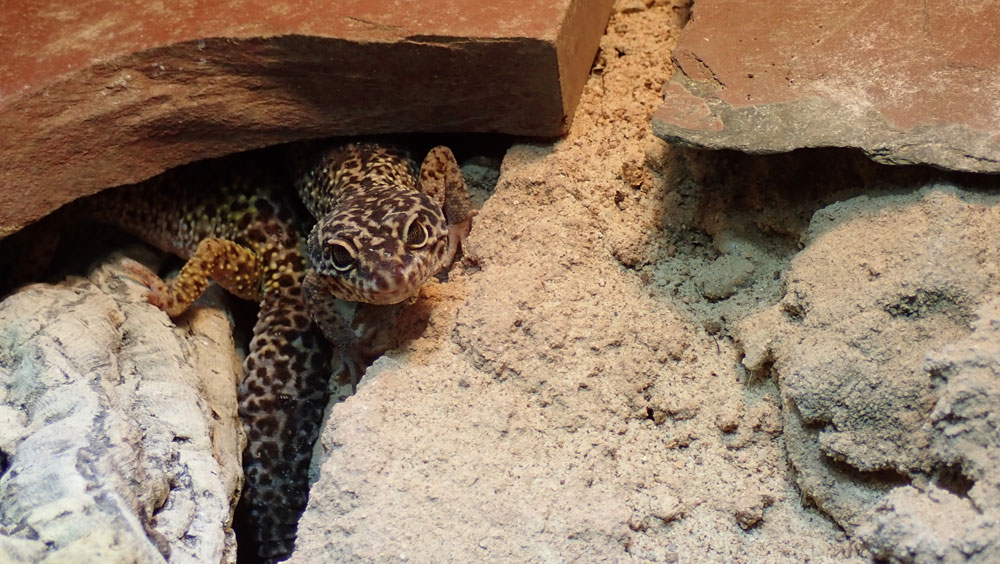
Leopard gecko poking its head out of a cave. Photo by Foster Reves
I wrote an article detailing my care experience with these animals in the October 2013 issue of REPTILES (http://bit.ly/4mLFa5w). I have been asked on occasion, over the years what my “secret” is to keeping them alive so long. There really is not anything special that I do. Back in 1988 when the original group was obtained, one perished about six months later. I feared that perhaps it had a contagious virus or bacteria, so I took the body to the Virginia Tech School of Veterinary Medicine for an autopsy. The report basically said that the cause of death was from a fatty liver most likely due to over-feeding. Around that same time, I had the opportunity to attend a conference on reptile medicine at the same school. One of the speakers was Ray Pauley, reptile curator for the Brookfield Zoo in Chicago at the time. During a break I was telling Ray about my experience, and he said that at the zoo, they feed their E. macularius three crickets each, twice a week. I initiated that regimen with my own animals, rotating in other prey items for variety. A notable caveat to point out however is that most of the time I feed each animal individually using forceps. This not only ensures that everyone receives the correct number of insects but also allows a few moments of personal interaction, which I deeply enjoy. I do let them hunt naturally on occasion.
Conclusion
There is a current trend in the herpetocultural community toward providing larger enclosures for fewer animals, with a strong emphasis on naturalistic design. When considering housing small to mid-sized, depending on species, terrestrial reptiles and amphibians, the 40-gallon ReptiHabitat is a quality enclosure that fits the bill. I would not use this model for vertically inclined species; however, Zoo Med produces an array of other vivariums appropriate for arboreal animals. Again, in line with the current trend, the company produces an impressive array of accessory products designed specifically for their enclosures, with the focus being on the actual needs of reptiles. In addition to herps, this vivarium would also make attractive housing for large, terrestrial tarantulas such as Lasiodora, Theraphosa, and Xenesthis species. A group of communal scorpion species such as Pandinus imperator would also be appropriate for this model. In closing, the ReptiHabitat is a sleek and attractive vivarium that looks great, either integrated with multiple enclosures, or as a stand-alone showpiece in the living room.
Foster Reves is a Registered Nurse and Freelance writer who lives in SW Virginia with his wife, two children, and a menagerie of reptiles, amphibians, fish, dogs, cats, tarantulas, and other creatures.