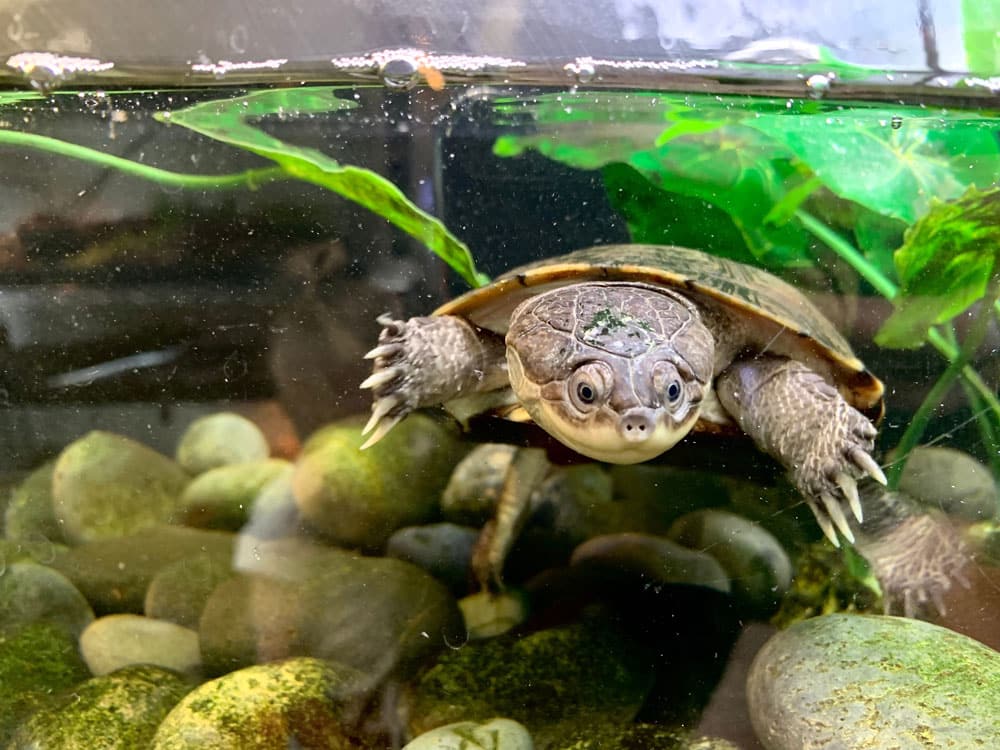
The West African mud turtle, also known as the African side-necked turtle or swamp terrapin, is a small aquatic turtle that is known for its elongated neck that it uses to capture fish in its native habitat.
Description:The West African mud turtle, also known as the African side-necked turtle or swamp terrapin, is a small aquatic turtle that is known for its elongated neck that it uses to capture fish in its native habitat. The turtle is not as popular as other semi-aquatic turtles largely due to its coloration, which is a plain brown, to mimic the mud in which it seems to spend a lot of its time. The West African mud turtle can grow to about 10 inches in carapace length and can live up to 50 years or more in captivity with proper care.
Native Range: The West African mud turtle is native to much of West and Central Africa, including Angola, Guinea, Ghana, Senegal, Liberia, Sierra Leone, and the Republic of the Congo.
Natural Habitat: The West African mud turtle lives in rivers and mud holes and other bodies of water where prey items such as fish are plentiful.
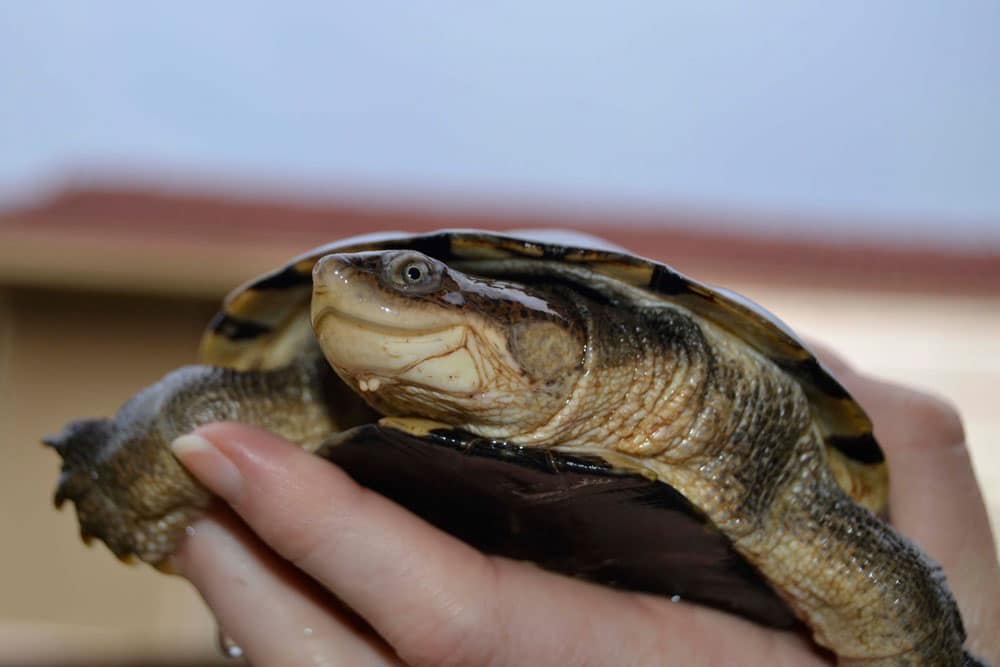
West African mud turtle. Photo by Debbz87/Shutterstock
Enclosure: The ideal tank for this small turtle should be about 100 gallons in capacity with 125 gallons ideal. The tank should have a water depth of 8-12 inches for adults and 4 to 6 inches for juveniles. This ensures that the turtle has ample room to swim about because that is what they do most of the time. Ensure that the fine river sand substrate is sloped to provide a haul out area for your turtle to bask and dry out when it needs to get out of the water. The water should be cleaned with a canister filter that can filter 250 to 300 gallons per hour for a 100-125 gallon tank. Canister filters sit outside the tank for easy maintenance. And make sure that you keep a maintenance schedule because aquatic turtles such as the West African mud turtle can be and are messy eaters.
Maintain a water temperature of 75 to 82 degrees Fahrenheit (24 to 28 degrees Celsius) with a pH level of 6.8 to 7.8. Perform weekly water changes of between 25 and 50 percent of the water. The basking platform can be either in the water or on the sand. Ensure the platform has a light above it that can reach 90 to 95 degrees Fahrenheit (32 to 35 degrees Celsius). Ambient temperature in the rest of the tank should be 78 to 85 degrees Fahrenheit (25 to 29 degrees Celsius). UVB lighting should be provided with 10.0 T5 UVB tube over the length of the enclosure. Change out to tube according to the manufacturer’s recommendation. Run the UVB light for 10-12 hours a day.
Diet: Juveniles should be fed a daily diet of earthworms, crickets, roaches, shrimp, krill, snails and chopped fish. You can also try and feed them occasional vegetables such as dandelion greens, romaine and duckweed as juveniles. As adults they are primarily carnivorous. Feed them high quality turtle pellets as well to ensure complete nutrition. Adults should be fed every other day. Dust their foods with calcium powder and a multiivitamin.
Reptile Keeper Level: Intermediate to advanced. The West African mud turtle requires specialized care and frequent water changes to ensure it remains healthy.
Extra: The West African mud turtle reaches sexual maturity in four to six years. They have a side neck that enables them to reach sideways under their shell. They will learn to recognize their keeper and beg for food.