
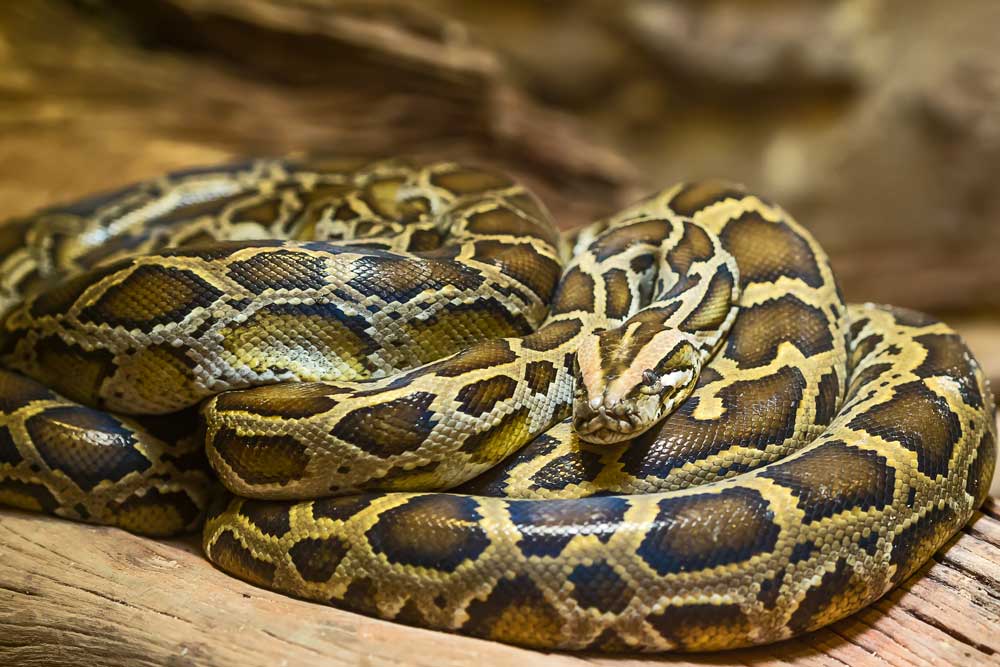
The researchers at the University of Colorado, Boulder were not even looking for a weight loss solution when they were studying the Burmese python.
Researchers at Stanford Medicine and the University of Colorado, Boulder have studied what happens to the blood of the Burmese python (Python bivittatus) after a meal and have determined that a metabolite called pTOS in the blood that spikes in pythons after a meal also causes fat laboratory mice to refuse their food and lose weight. The researchers say that this phenomenon mimics the effects of drugs such as Ozempic and Wegovy.
The researchers note that they are uncertain that the metabolite in the Burmese python will result in a new pharmaceutical drug to reduce weight loss in humans. They do say that the study bolsters “the power of studying extremes in the animal kingdom.”
The researchers say that reptiles have contributed so much in creating drugs to help humans. They cite snake venom in creating blood pressure medicines and anticoagulants as well as a semaglutide that was discovered in a Gila monster hormone that regulates blood sugar levels.
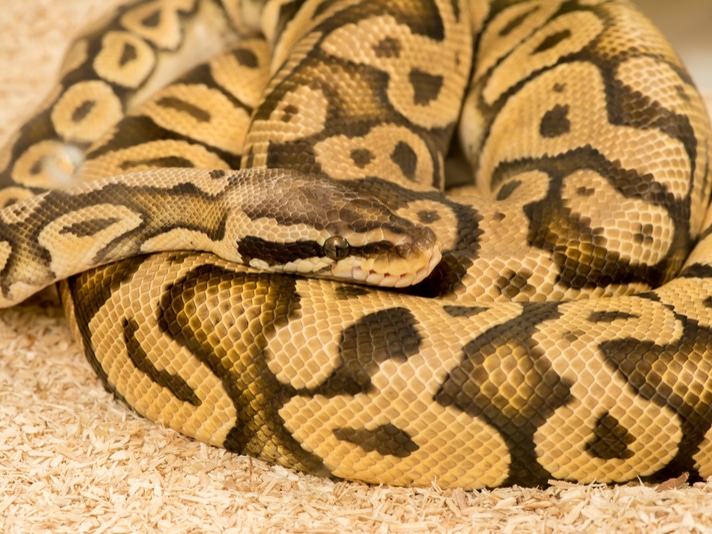
The researchers conducted tests on the ball python (Python regius) and were able to identify more than 200 metabolites that increased 32-fold in the blood of the ball python hours after feeding and 24 that decreased by an equal margin. Photo by RAYphotographer/Shutterstock
The researchers at the University of Colorado, Boulder were not even looking for a weight loss solution when they were studying the Burmese python. They wondered about the sudden growth of the heart after a Burmese python feeds, and upon examining the blood, they came across the metabolite. They then conducted tests on the ball python (Python regius) and were able to identify more than 200 metabolites that increased 32-fold in the blood of the ball python hours after feeding and 24 that decreased by an equal margin. The pTOS metabolite increased more than a thousand times after the meal.
“We wondered whether this metabolite affected any of the post-feeding physiological changes in the snake,” co-author Jonathan Long, PhD, associate professor of pathology and a member of the Wu Tsai Neurosciences Institute told the Stanford Medicine News Center.
“But when we administered pTOS to laboratory mice at levels similar to what we saw in the pythons after eating, we didn’t see any effect on energy expenditure, beta cell proliferation or organ size. What it did regulate was the appetite and feeding behaviors of the mice.”
The complete study, “Python metabolomics uncovers a conserved postprandial metabolite and gut–brain feeding pathway” can be read on the nature metabolism website.