
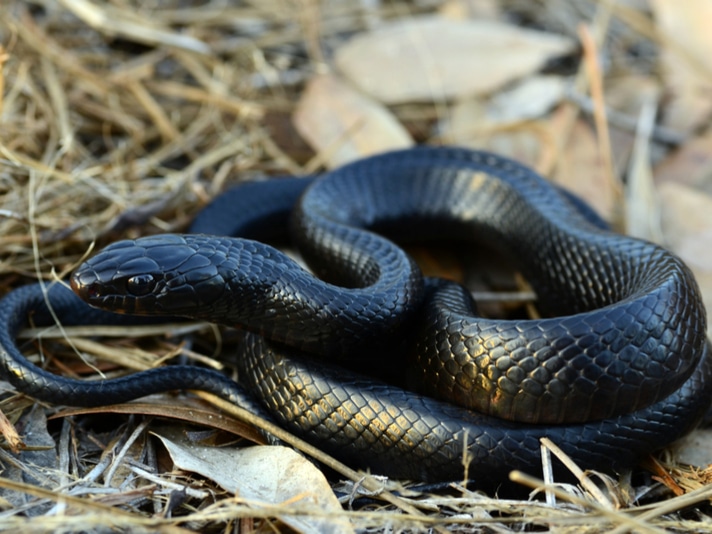
When the SCCF surveys snakes, the foundation researchers measure, photograph and mark them and obtain genetic samples for other studies
The Sanibel-Captiva Conservation Foundation launched its annual eastern indigo snake (Drymarchon couperi) surveys in early November, spurred by a cold front that induced breeding activity with the species. The foundation says that the wintertime breeding activity is one of the principal factors that led to the decline of the species across their limited range in South Georgia and Florida.
“These state and federally protected snakes cover more ground while looking for mates, while road use from winter tourists and part-time residents is at its peak,” Wildlife & Habitat Management Director Chris Lechowicz said in a statement released by SCCF announcing the survey. “This leads to high occurrences of road mortality and is the main reason they are now extirpated from Sanibel and Captiva islands.”
42 Eastern Indigo Snakes Released Into Florida’s Apalachicola Bluffs and Ravines Preserve
The foundation is hoping for a successful survey on Sanibel, as the last documented sighting of an eastern indigo snake on the island was in 1999. They still can be found on nearby islands in the Pine Island Sound in small numbers, the foundation said.
When the SCCF surveys snakes, the foundation researchers measure, photograph and mark them and obtain genetic samples for other studies. This enables the researchers to better understand population size, longevity, sex ratios and the snakes’ movements in their environments.
Eastern indigo snakes were listed as a threatened species under the U.S. Endangered Species Act in 1978. Prior to listing, the snake was collected for the pet trade, but the main factor that led to their dwindling populations in the wild were the cutting of large swaths of their habitats with roads, which caused massive road mortalities of the species.
“Indigo snake researchers often mention how once a road is built through their habitat, the demise of that eastern indigo snake population has begun,” Lechowicz said. “This threat is still increasing quickly throughout Florida with all the rapid development.”
Eastern Indigo Snake Information
The Eastern indigo snake is the longest native snake in the United States. It is known to sometimes reach more than 8 feet in length. The snake is a federally threatened species and certain restrictions are in place with regard to possessing them. A member of the Colubridae family, indigo snakes feed on a variety of animals. These include small mammals, amphibians, birds, lizards, baby turtles, and other snakes, including every species of venomous snake found in Florida.
Eastern Diamondback Rattlesnake Survives Getting Swallowed By Eastern Indigo Snake
Depending on their geographic location, the eastern indigo snake inhabits, long leaf pine, sandhill habitats, flat woods, dry glades, stream bottoms, cane fields, riparian thickets and other locales with abundant prey items. They also are known to inhabit gopher tortoise burrows in Georgia.
The snake was historically found in southern Georgia, Alabama, eastern Mississippi and throughout much of Florida.
The SCCF is asking anyone who thinks they have seen an eastern indigo snake to take a photo of the snake without disturbing it, record the location in which the snake was observed and send it to indigo@sccf.org or call 239-472-3984.