
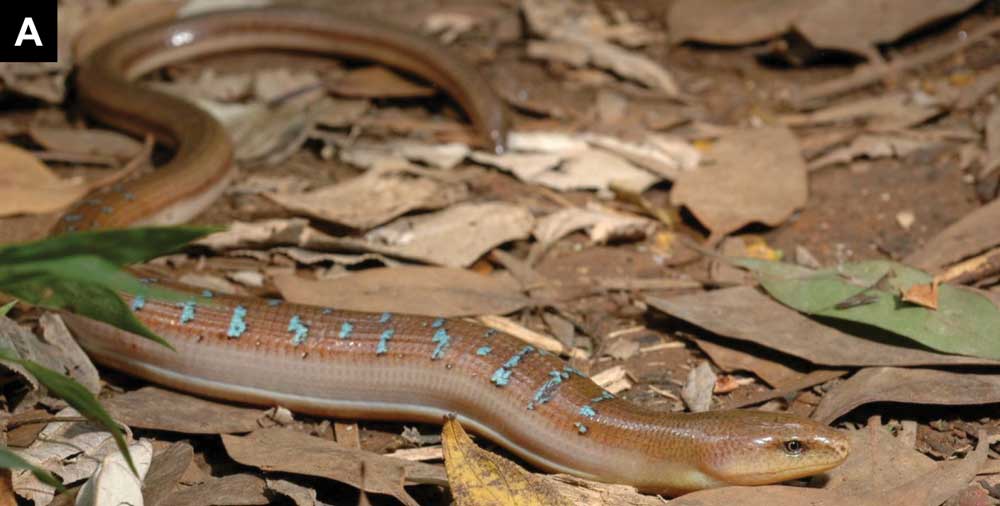
For many years, science has described a single legless lizard living on the island nation of Taiwan. Classified as Dopasia harti, the reptile was considered a single species due to the loss of the original Dopasia formosensis type specimen after World War II.
And then there were two. For many years, science has described a single legless lizard living on the island nation of Taiwan. Classified as Dopasia harti, the reptile was considered a single species due to the loss of the original Dopasia formosensis type specimen after World War II. The scientists from National Taiwan Normal University stabilized the identity of the species to re-establish it as distinct from D. harti by designating it a neotype, or a new type specimen that is selected to replace the original type specimen that was lost or destroyed.
First There Were Two
The two legless lizards were described as two species until 2003, when scientists synonymized the two species because they couldn’t define any consistent molecular or scalation differences. They also interpreted the presence or absence of the bluish blotches as sexual dichromatism. Due to the fact that D. harti from its original location (Fujian province) where it was first described was not studied in the research, and the original data of D. formosensis was lost, the use of these names in Taiwanese populations remained uncertain, until now.
The researchers designated a neotype of D. formosensis and published a detailed rediscription based on the vouchered specimens from Taiwan. The updated data includes “standardized morphometric and meristic datasets, including X-ray–based vertebral counts, and generate new mitochondrial sequences to document genetic variation.”
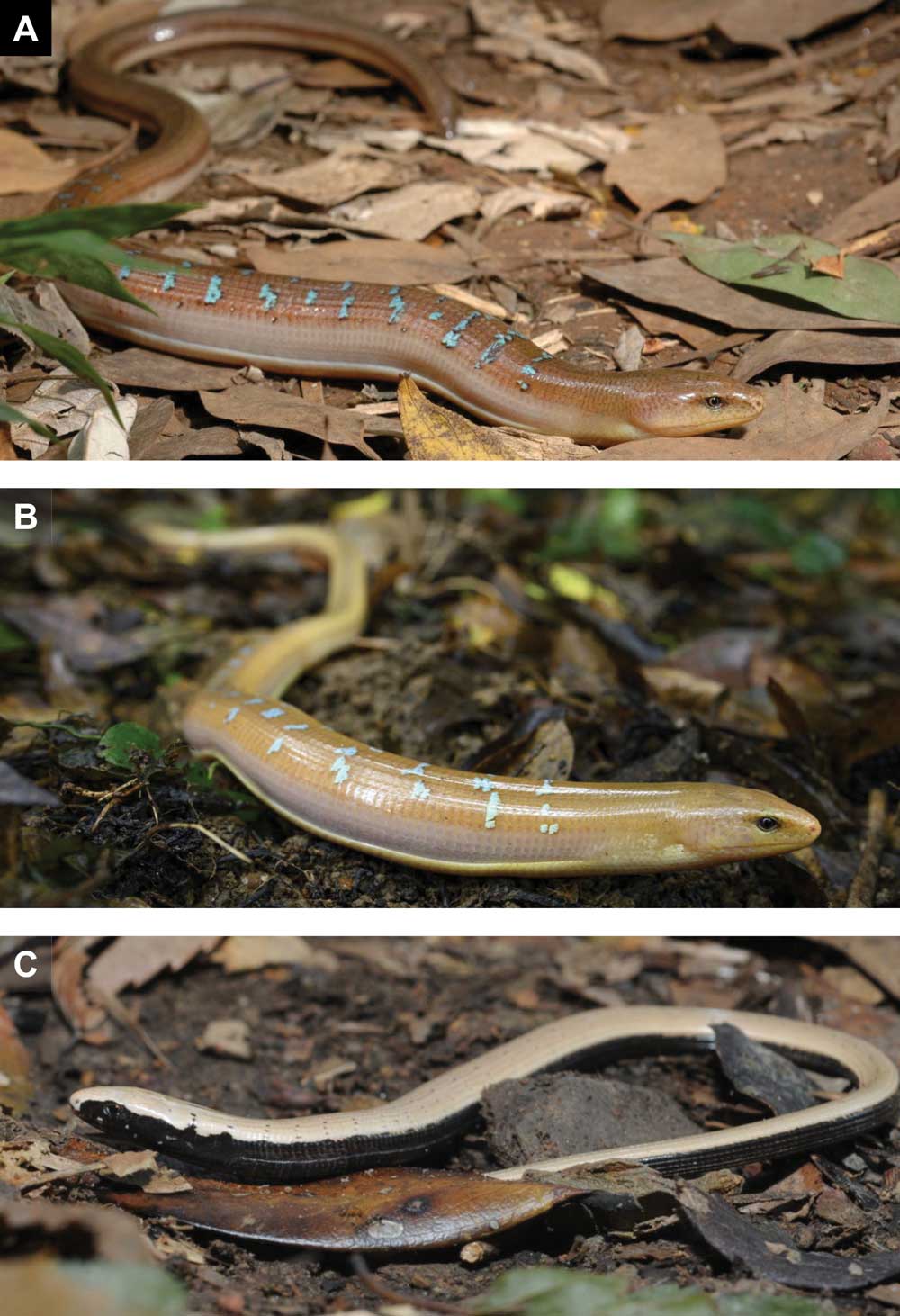
Dopasia formosensis in natural habitat. A. A fully mature adult male showing its dorsal bluish marking; B. A relatively younger male; C. A young individual with pale brown dorsal coloration and sharply contrasting black ventral surface. Photographed by Y-JL.
The researchers made their observations with the assistance of citizen science data. They used the Taiwan Roadkill Observation Network to obtain information to make their assessments. One notable clarification has to do with the color of the lizard. It was previously thought that the bright blue spots present on the lizard indicated a different species than those without them. The markings, however, were a form of sexual dichromatism. Females lacked the blue markings and were only present on males.
Notable traits with this species is the females provide a level of parental care to the eggs, guarding the clutch from predators and external hazards until the offspring hatch. The males offer up an interesting fighting behavior whereby they circle each other with their mouths open, their throats flattened and their forebodes elevated. This moves on to physical combat that includes biting and rolling as each attempts to subdue the other.
Formosan Legless Lizard Information
The Formosan legless lizard lives under leaf litter and humus in forests that are moist. Because they live in this type of environment, hidden away, field observations and the study of this species is not easy, the researchers said. It feeds on earthworms, slugs and snails, insect larvae and soft-bodied insects such as ants and termites.
The paper with the redescription data, “Redescription and neotype designation of Dopasia formosensis (Kishida, 1930) (Squamata, Anguidae) from Taiwan” can be read on the ZooKeys Journal website.